

Maddy summaryThis bill establishes the Taiwan Critical Undersea Infrastructure Resilience Initiative to protect submarine cables and energy pipelines near Taiwan from sabotage, particularly by the People's Republic of China. It directs the State Department to create a program that includes advanced monitoring systems, rapid response protocols, enhanced maritime surveillance, and international cooperation to detect and mitigate threats to these critical communication and energy assets. The legislation authorizes $20 million annually through 2032 for these activities and mandates the hardening of undersea infrastructure to reduce vulnerability to damage. Additionally, the bill authorizes the President to impose sanctions on foreign entities that sabotage or facilitate attacks on undersea infrastructure critical to Taiwan or U.S. allies, and requires the creation of a Cross-Strait Contingency Planning Group to coordinate U.S. government responses to potential crises involving Taiwan.
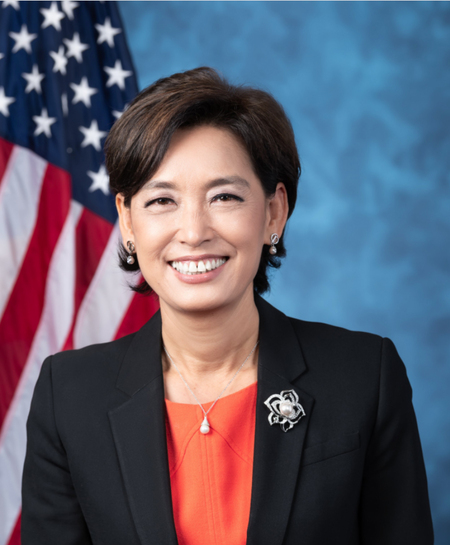
Rep. Young Kim
Sponsored bills
Maddy summaryThis bill requires group health plans and health insurers that cover obstetrical services to also cover infertility and iatrogenic infertility treatments, including procedures like in vitro fertilization and egg freezing. It defines infertility as the inability to achieve pregnancy after 12 months of unprotected intercourse or after standard medical treatment, and iatrogenic infertility as fertility damage caused by medical procedures such as chemotherapy or radiation therapy. The legislation establishes coverage standards that cannot be more restrictive than those applied to other medical benefits, prohibits penalties against providers for offering these services, and requires annual compliance reporting to the federal government.
Maddy summaryHRES 971 is a non-binding resolution condemning China's economic and military actions against Japan following Japanese officials' comments about Taiwan. It specifically addresses China's travel advisory (causing $1.2 billion in tourism losses), a ban on Japanese seafood imports, and military drills near Japanese territory. The resolution reaffirms U.S. support for the U.S.-Japan alliance under their mutual security treaty and calls on China to cease coercion. It emphasizes U.S. commitment to upholding a "free and open Indo-Pacific" based on international law. This resolution directly affects Japan's economy and security, with no new legal obligations but serving as a formal U.S. policy statement.
Maddy summaryHR 7675, the Securing Partner Supply Chains Act, establishes a 3-year U.S. initiative to help allied and partner countries strengthen their screening of foreign investments for national security risks. The initiative, led by the Secretary of State, will provide technical assistance, training, and advisory services to partner countries - defined as those with U.S. trade or defense agreements - to improve their ability to assess risks to critical infrastructure, sensitive technology, and supply chains. It requires annual reports to Congress detailing the assistance provided, partner countries' progress, and emerging security risks. The bill does not directly affect U.S. citizens or businesses but focuses on building international capacity to address shared security concerns through cooperation.
Maddy summaryThe GUIDE Act authorizes the State Department to create a program hiring, training, and retaining specialized disaster response professionals for its Bureau of Disaster and Humanitarian Response. This directly affects the Bureau by requiring it to build staff expertise in key areas like procurement, logistics, public health, engineering, and finance. The bill mandates that these professionals must possess specific skills to effectively plan and manage international disaster operations. It focuses on addressing staffing gaps through targeted recruitment rather than changing broader disaster policy. The program aims to strengthen the Bureau’s capacity for complex humanitarian missions.
Maddy summaryThis bill requires U.S. foreign aid agencies (like USAID) to increase direct funding to local organizations in recipient countries, including local nonprofits, governments, and private businesses. It mandates specific changes to simplify access for these partners, such as allowing applications in local languages, reducing complex accounting requirements, and permitting limited local-only contracts for certain projects. Agencies must also report annually on progress, including how much aid went directly to local partners and how they are enabling local leadership in program design and management. The goal is to shift aid delivery toward locally led development and humanitarian response, making assistance more efficient and sustainable by prioritizing community-driven solutions.
Maddy summaryThis resolution formally recognizes the 100th anniversary of the Sporting Arms and Ammunition Manufacturers' Institute (SAAMI), a trade organization founded in 1926. The bill commends SAAMI for developing industry standards that ensure firearms and ammunition are safe, reliable, and interchangeable. It acknowledges the organization's work in coordinating with government bodies, international standards groups, and industry stakeholders to maintain consistent safety practices. This measure is a ceremonial resolution that does not change any laws or regulations but serves to honor SAAMI's century of leadership in the firearms industry.
Maddy summaryThe Military Financial Literacy Act of 2026 expands personalized financial and housing counseling services for members of the Armed Forces. It requires the Department of Defense to establish a one-on-one counseling program within one year that covers credit management, budgeting, anti-predatory lending, rental planning, VA home loans, and legal protections under the Servicemembers Civil Relief Act. The program must partner with HUD-approved, tax-exempt Veteran Service Organizations that have expertise in financial literacy and housing stability. The Secretary of Defense must submit a report to Congress within two years detailing the number of service members who received counseling, completion rates, and indicators of financial stress or housing instability among participants.
Maddy summaryThe DPA Private-Sector Outreach Act of 2026 requires the Department of Commerce to create a toolkit and online resource center within 365 days of enactment to help private companies understand how to access federal authorities under the Defense Production Act. This toolkit will include information on how to submit offers, available funding opportunities for small businesses, details on past awards, and contact information for federal agencies. The bill also mandates that the Department develop annual outreach plans to educate the private sector about commercial opportunities available through these authorities. Additionally, the bill requires a report on the outreach activities conducted and makes minor corrections to the official title of the Defense Production Act.
Maddy summaryThis bill requires that U.S. Representatives and Senators have their pay withheld for each day a government shutdown occurs during their pay period. If a shutdown happens, Congress's payroll office would withhold an amount equal to one day's salary for each full day of the shutdown, either reducing the current pay or holding funds in a special account until after the November 2026 election (for shutdowns before that date). The law applies to all federal agency shutdowns and specifies that withheld funds must be released to members on the 2026 election date to comply with constitutional pay protections. It takes effect for shutdowns occurring after the 2026 election.