

Maddy summaryH.Res. 1291 is a non-binding resolution that formally recognizes May 3 through May 9, 2026, as Wildfire Preparedness Week. The bill aims to raise public awareness about wildfire risks and promote educational initiatives regarding fire safety and evacuation planning. It highlights the dangers of smoke exposure for both the general public and firefighters while noting that human activity causes the majority of wildland fires. This measure does not change laws or allocate funding, but rather expresses the House of Representatives' support for these preparedness goals.
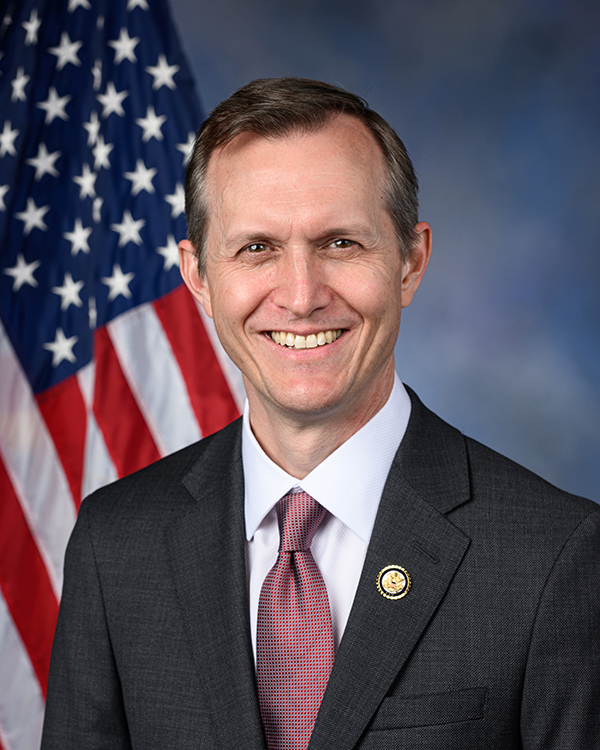
Rep. George Whitesides
Sponsored bills
Maddy summaryThe Protecting Our Democracy Act is a comprehensive legislative bill designed to prevent abuses of presidential power, restore checks and balances, and defend elections against foreign interference. Key provisions include prohibiting the President from granting self-pardons, requiring congressional oversight for pardons involving the President or their family, and banning the President from accepting payments from individuals who have received clemency. The bill also strengthens enforcement of the Hatch Act and ethics rules for political appointees, mandates greater transparency in presidential tax returns and campaign finances, and restricts the use of federal property for political conventions. Additionally, it expands reporting requirements for foreign contacts in federal campaigns and imposes stricter penalties for violations of election laws.
Maddy summaryHR 3924, the Wildfire Risk Evaluation Act, requires the Secretaries of Agriculture, Interior, and Homeland Security to conduct a comprehensive review of wildfire management every four years for 20 years. Each review must analyze how changes in natural and built environments affect wildfire prevention, response, and recovery, while also examining wildfire impacts on public health in coordination with the EPA and Health and Human Services. The agencies must submit detailed reports to Congress annually, including evaluations of progress toward national wildfire management goals, anticipated challenges for the next two decades, and specific recommendations for policy or program adjustments. This process establishes a regular federal mechanism to adapt wildfire strategies based on evolving risks and scientific data.
Maddy summaryThe Supporting Newborn Parents Act of 2026 creates a new tax credit of $2,000 for each child born to a taxpayer during the tax year. To receive this credit, parents must have earned income, with the maximum amount limited to 20% of their earnings, and the benefit phases out as family income rises. The bill allows parents to request an advance payment of the credit shortly after a child's birth by providing their information when applying for a Social Security number. Additionally, the legislation requires the Treasury to establish an online portal to help parents understand how to make elections regarding advance payments and estimated income figures.
Maddy summaryThis bill requires the Secretary of the Interior to enforce stricter environmental and safety rules before approving new large-scale mineral extraction projects near cities or sensitive areas. Companies seeking to extract over one million tons of materials annually must submit detailed plans covering truck routes, water usage, noise control, and the feasibility of using rail transport instead of trucks. The legislation also mandates that local governments have a formal process to request project modifications and ensures that all approved projects annually report their resource consumption and operational data. If a company fails to follow these new requirements, the Secretary has the authority to suspend operations or cancel the project's permit.
Maddy summaryThe COPS Reauthorization Act of 2026 extends funding for the COPS ON THE BEAT grant program through fiscal year 2031, allowing the Department of Justice to continue providing grants to local law enforcement agencies for hiring and retaining officers. The bill also formally establishes the Office of Community Oriented Policing Services as a separate office within the Department of Justice, headed by a Director appointed by the President. These changes aim to maintain and clarify the administrative structure and financial support for community policing initiatives across the United States.
Maddy summaryH.R. 1242 is a resolution that officially designates the first Friday of May as National Space Day to honor the contributions of the aerospace community. It recognizes the achievements of government agencies like NASA and the Space Force, as well as private industry and educational partners, in advancing space exploration and technology. The bill highlights specific milestones such as the Apollo moon landing, the Artemis program, and the development of the James Webb Space Telescope. By supporting this observance, the House aims to celebrate past innovations and encourage STEM education for future generations.
Maddy summaryThis bill temporarily suspends a portion of the federal fuel excise tax when the national average price of gasoline rises above $3.99 per gallon. Instead of reducing government revenue, the money saved from this tax cut is transferred back into the Highway Trust Fund and the Leaking Underground Storage Tank Trust Fund. Additionally, the legislation disallows certain tax credits and deductions for oil and gas companies for costs incurred or production occurring during these high-price months. These changes would only take effect for taxable years beginning after December 31, 2025.
Maddy summaryHR 2488 designates the U.S. Postal Service facility at 3817 Marysville Boulevard in Sacramento, California, as the "Grantland Johnson Post Office." This bill updates all federal references in laws, maps, and documents to use the new name for that specific location. It directly affects the postal service facility and any federal records mentioning it. The bill is purely procedural, with no policy changes or financial impacts beyond the name designation.
Maddy summaryThe American Leadership in AI Act establishes a new Center for AI Standards and Innovation at the National Institute of Standards and Technology to develop voluntary guidelines and testing methods for ensuring artificial intelligence systems are safe, secure, and reliable. It creates a large National Artificial Intelligence Research Resource to provide researchers and students with access to advanced computing power and data, while also launching prize competitions to solve specific challenges in areas like national security and health care. The bill mandates that every federal agency appoint a full-time Chief Artificial Intelligence Officer to oversee responsible AI use and requires the development of federal standards for AI procurement and security. Additionally, the legislation strengthens penalties for financial crimes committed using AI, protects workers who report AI safety violations from retaliation, and expands educational programs to improve AI literacy among K-12 students and the broader workforce.