

Maddy summaryThe Pell Grant Preservation and Expansion Act of 2026 aims to increase financial aid for college students by raising the maximum Pell Grant amount to $15,000 by the 2031-2032 award year and ensuring the program is fully funded through mandatory spending rather than annual appropriations. The bill also expands eligibility for students who receive means-tested government benefits by automatically assigning them a lower financial need score, while simultaneously allowing Dreamer students - undocumented immigrants who meet specific criteria such as graduating high school or serving in the military - to qualify for federal aid. Additional provisions restore the total number of semesters a student can receive Pell Grants from 12 to 18 and adjust the rules for satisfactory academic progress to reduce penalties for students who struggle to meet grade requirements. Finally, the legislation restores Pell Grant eligibility for some students who previously received outside scholarships and sets the law's effective date for July 1, 2026.
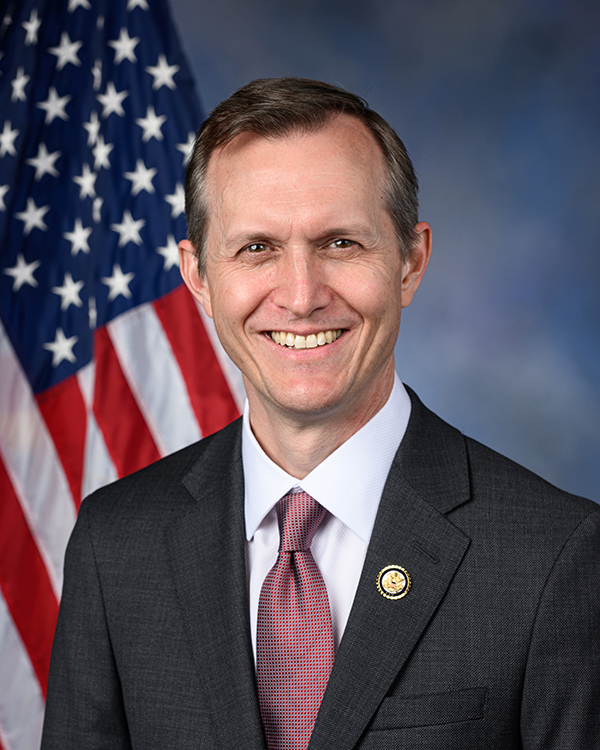
Rep. George Whitesides
Sponsored bills
Maddy summaryThis bill establishes the Veteran Scam Victims Foundation, a private nonprofit corporation designed to help prevent veterans and their families from falling victim to scams. The foundation will operate independently of the federal government but will work in coordination with the Department of Veterans Affairs to accept private donations and run educational programs or support services for affected individuals. A governing board will be formed with the Secretary of Veterans Affairs as chairman and six additional members appointed by various federal agency heads to oversee the organization's activities. The legislation explicitly states that the foundation cannot provide direct monetary compensation for financial losses and will not be liable for any debts or actions taken by the foundation.
Maddy summaryThis bill directs the government auditor (Comptroller General) to study how wildfire prevention programs operate across different land ownerships - including federal, state, tribal, and private lands. The study will examine current federal rules, funding access, and specific wildfire mitigation activities from the 2003 Healthy Forests Restoration Act. It will identify barriers and opportunities to improve cross-boundary collaboration, with a report due to Congress within two years. The bill itself does not create new programs or funding, only requiring this analysis.
Maddy summaryThe Disaster Ready Infrastructure Act of 2026 requires federal transportation planning documents to identify infrastructure vulnerable to frequent natural disasters. Specifically, it mandates that both metropolitan and statewide plans list which facilities are at risk, which are critical for maintaining operations during or after a disaster, and what improvements are needed to keep them running. This change directly affects transportation planners and agencies responsible for creating these regional and state-level plans. By adding these specific identification steps to existing laws, the bill aims to ensure that disaster resilience is a formal part of transportation planning.
Maddy summaryThis bill, known as the Alice Cogswell and Anne Sullivan Macy Act, amends the Individuals with Disabilities Education Act to improve special education services for children who are deaf, hard of hearing, deafdisabled, blind, visually impaired, or deafblind. It requires states to identify these students regardless of how they are currently classified, ensuring they receive specialized instruction in their primary language and access to qualified professionals. Key provisions mandate that state plans include specific strategies for language development, Braille instruction, and the use of assistive technologies, while also establishing a new national center to support research and training for educators of students with visual disabilities. Additionally, the legislation clarifies definitions for deafblindness and interveners, updates data reporting requirements to track these populations more accurately, and ensures early intervention services are delivered in natural environments to support language and communication milestones.
Maddy summaryThis joint resolution seeks to officially reject a final rule issued by the Department of Education regarding federal student loan programs. If passed, the measure would prevent the new regulations from taking effect, leaving the previous rules in place. The bill directly impacts borrowers, lenders, and the Department of Education by nullifying the specific changes outlined in the "Reimagining and Improving Student Education" proposal. It is a procedural action that uses the Congressional Review Act to disapprove the agency's policy without altering the underlying law.
Maddy summaryThis bill authorizes the U.S. Mint to produce commemorative $5 gold and $1 silver coins marking the 25th anniversary of the September 11, 2001, terrorist attacks. The coins must feature designs honoring victims and first responders (including the inscription "Never Forget") and will be sold only during 2027-2028. All surcharges ($35 per gold coin, $10 per silver coin) collected from sales will fund the National September 11 Memorial and Museum at the World Trade Center, with no net cost to the federal government. The coins are legal tender but primarily intended for collectors, not circulation.
Maddy summaryThis bill directs the Department of Defense to connect military recruits who cannot enlist with the Job Corps program for training in skilled industrial jobs within the defense industry. It expands specific workforce incentives to include Job Corps centers and gives local operators more flexibility to hire staff, partner with educational institutions, and manage their programs without waiting for federal approval. The legislation also updates rules to allow Job Corps centers to accept cash donations and grants more easily while streamlining enrollment for veterans and active-duty service members. Overall, the act aims to reduce shortages of skilled workers in defense manufacturing by aligning Job Corps training with the needs of the defense industrial base.
Maddy summaryThis bill creates federal programs to advance alternative protein production through biomanufacturing and bioprocessing. It authorizes $15 million annually for research centers focused on protein diversification, $50 million for grants to companies building food biomanufacturing facilities, and $25 million for workforce development programs. The bill also requires a national strategy on protein security coordinated across multiple federal agencies. These provisions aim to strengthen food supply chains, create jobs in the growing protein sector, and reduce reliance on foreign commodities. The bill explicitly excludes insect-based food production from its scope.
Maddy summaryThe One Giant LEAP Act directs the Secretary of Transportation to create an online portal for processing commercial space launch licenses within one year of the bill's enactment. This system will allow applicants to submit and modify applications, track all communications between the government and stakeholders, and manage related documentation in one place. The portal will also display detailed timelines and status updates for each application to both the Secretary and the public, increasing transparency in the approval process.