Healthy Forests for Hunters Act of 2021 This bill establishes categorical exclusions from environmental review requirements under the National Environmental Policy Act of 1969 for certain forest management activities relating to early successional forests or outdoor recreation.
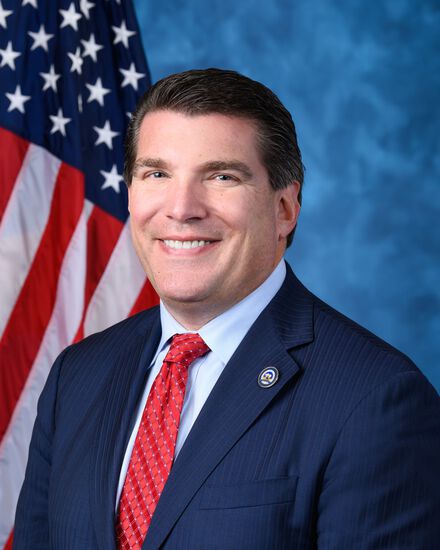
Rep. Jay Obernolte
Sponsored bills
Forest Litigation Reform Act of 2021 This bill sets forth provisions regarding legal challenges to federal forest management activities on land suitable for timber production. The bill revises the standard of review for a court considering a request for injunctive relief applicable to an agency's qualified forest management activity. Specifically, a court must balance the impact to the ecosystem of undertaking the agency action against not undertaking the agency action. The bill also limits the length of preliminary injunctive relief and stays pending appeal in such cases to 60 days. Additionally, the bill directs the Department of Agriculture, with respect to National Forest System lands, and the Department of the Interior, with respect to public lands, to each establish a discretionary arbitration pilot program as an alternative dispute resolution process for challenges to qualified forest management activities. The bill prohibits amounts from being obligated or expended from the Claims and Judgment Fund and awards to pay any fees or other expenses to any plaintiff related to an action challenging a qualified forest management activity.
Salvaging American Lumber Via Action with Greater Efficiency Act or the SALVAGE Act This bill provides for certain activities related to salvage operations and certain reforestation activities conducted on National Forest System lands or public lands. The bill categorically excludes salvage operations carried out by the Department of Agriculture (USDA) and the Department of the Interior, on certain National Forest System lands or certain public lands, respectively, from the requirement to prepare an environmental assessment or an environmental impact statement. Each salvage operation covered by the categorical exclusion may not contain treatment units that exceed a total of 10,000 acres. An environmental assessment for a salvage operation or reforestation activity proposed to be conducted on National Forest System lands or public lands that are adversely impacted by a large-scale catastrophic event shall be completed within 60 days after the conclusion of the event. In the case of such reforestation activities USDA and Interior shall, to the maximum extent practicable, achieve reforestation of at least 75% of the impacted lands during the five-year period following the conclusion of the catastrophic event. No later than 60 days after a wildfire is contained on National Forest System lands, USDA shall convert any timber sales on lands impacted by such wildfire to salvage sales. No restraining order, preliminary injunction, or injunction pending appeal shall be issued by any U.S. court respecting any decision to prepare or conduct a salvage operation or reforestation activity in response to a large-scale catastrophic event.

Protecting and Restoring Our Trees by Enhancing Conservation and Treatments Act or the PROTECT Act This bill categorically excludes forest management activities carried out on specified public lands from requirements to conduct environmental assessments and environmental impact statements. In order to be excluded from environmental review, the primary purposes of such activities must be to address insect or disease infestations, reduce hazardous fuel loads, protect municipal water sources, protect critical habitats from catastrophic disturbances, increase water yield, remove dead or dying trees or trees at high risk of dying, or facilitate native species restoration. The bill limits the categorical exclusion to activities that manage up to 10,000 acres of land. However, activities that manage up to 30,000 acres of land may be categorically excluded from environmental review if the activities are developed through a collaborative process, proposed by certain resource advisory committees, or covered by community wildfire protection plans.
Tribal Biochar Promotion Act of 2021 This bill establishes biochar demonstration projects. Biochar refers to carbonized biomass produced by converting feedstock through reductive thermal processing for nonfuel uses. Specifically, the bill directs the Department of the Interior (for land under Bureau of Land Management jurisdiction) and the Department of Agriculture (for land under Forest Service jurisdiction) to enter into agreements with tribes or tribal organizations to carry out biochar demonstration projects. These projects must support the development and commercialization of biochar on Indian forest land or rangeland and in nearby communities by providing them with reliable supplies of feedstock from federal lands.
Active Forest Management, Wildfire Prevention and Community Protection Act This bill establishes forest management, forest conservation, and wildfire prevention programs and activities. The bill establishes a collaborative prescribed fire program, an incentive program for large, cross-boundary prescribed fires, a program to remove or treat bark beetle-killed or infested trees, the Restoration and Resilience Partnership Program, and Forest Reserve Revenue Areas to generate revenue for counties. The bill also provides for, among other things the removal of certain trees or parts of those trees that come within 500 feet of an electric power line as hazard trees, the selection and implementation of landscape-scale forest restoration projects, removing the maximum term limits on stewardship end result contracting projects, study of only two alternatives (action vs. nonaction) in proposed collaborative forest management activities, the balancing of the long- and short-term effects of forest management activities on the affected ecosystem while considering injunctive relief, categorical exclusions from certain environmental requirements for specified forest management activities, and the expansion of the fire regime areas outside the wildland-urban interface for which a collaborative restoration project may be conducted.
Leadership in Global Tech Standards Act of 2021 This bill requires the Small Business Administration (SBA) to establish a program that supports the participation of U.S. small businesses in meetings and proceedings of standards development organizations to develop voluntary technical standards. To carry out this program, the SBA must award grants to small businesses for the reasonable costs of participation in standards development organizations. These grants may only be awarded to small businesses that (1) demonstrate technical expertise in key emerging technologies and technical standards (e.g., artificial intelligence), (2) commit personnel with such expertise to regular participation in global bodies responsible for developing standards for those technologies, (3) agree to coordinate between the public and private sectors to ensure protection of national security interests in the setting of global standards, and (4) provide a plan detailing the relationship between the above activities and the proposed standards to be adopted.
This resolution honors the veterans of the Philippine Commonwealth Army during World War II for their sacrifice to the United States and for their selfless service.
Alexander Lofgren Veterans in Parks (VIP) Act This bill makes the America the Beautiful-National Parks and Federal Recreational Lands Pass available, without charge, to members of the Armed Forces, veterans, and Gold Star Families. The pass covers the entrance fee and standard amenity recreation fee for all federal recreational lands and waters.
Removing Federal Barriers to Offering of Mobile Wagers on Indian Lands Act This bill establishes provisions related to the regulation of certain online wagers (i.e., bets) as Indian gaming. The bill deems an online wager as occurring exclusively on Indian lands, and therefore subject to the jurisdictional framework that governs Indian gaming, if (1) the person placing the wager and the server that accepts the wager are located in the same state, and (2) the applicable state and Indian tribe have entered into a gaming compact. For the purposes of regulation as Indian gaming, an online wager is deemed to be made at the physical location of the server or other computer equipment used to accept the wager, unless otherwise agreed to by the state and Indian tribe.