

Puppies Assisting Wounded Servicemembers for Veterans Therapy Act or the PAWS for Veterans Therapy Act This bill implements a program and a policy related to service dog therapy for veterans. Specifically, the bill requires the Department of Veterans Affairs (VA) to implement a five-year pilot program to provide canine training to eligible veterans diagnosed with post-traumatic stress disorder as an element of a complementary and integrative health program. Eligible veterans are those who are enrolled in the VA health care system and have been recommended for participation by a qualified mental health care provider or clinical team. The VA must seek to enter agreements containing specified elements with accredited nongovernmental entities that have demonstrated ability to provide canine training. Veterans who participate in the program are authorized to adopt the dog they assisted in training if their health provider determines it is in the best interest of the veteran. The VA must establish processes to document and track the progress of participating veterans with respect to health benefits and improvements. The Government Accountability Office must brief Congress and submit a report on the program. The bill also authorizes the VA to provide service dogs to veterans with mental illnesses, regardless of whether they have a mobility impairment.
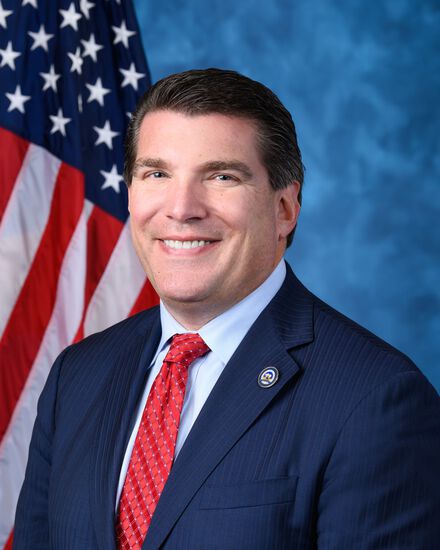
Rep. Jay Obernolte
Sponsored bills
Information Sharing And Advanced Communication Alerting Act or the ISAAC Alerting Act This bill requires the Technological Advisory Council of the Federal Communications Commission, in consultation with relevant stakeholders, to submit a report that identifies measures, barriers, and recommendations for implementing a 9–1–1 disability alerting system. The alerting system must allow an individual to register and create a profile associated with an individual who has a disability that includes information such as whether the individual is a wandering risk, nonverbal, or physically limited. The alerting system then transmits such information to public safety answering points to be conveyed to first responders.
Rare Earth Magnet Manufacturing Production Tax Credit Act of 2021 This bill allows a new tax credit for the domestic production of rare earth magnets manufactured in the ordinary course of a taxpayer's trade or business. The bill defines rare earth magnet as a permanent magnet comprised of (1) an alloy of neodymium, praseodymium, iron, boron, terbium, or dysprosium; or (2) an alloy of samarium, gadolinium, and cobalt.
Creative Economy Revitalization Act This bill requires the Department of Labor to award grants to government and nonprofit agencies to provide programs that employ individuals and provide public access to art or arts programming.
Border Security for America Act of 2021 This bill addresses border security and related issues. For example, the bill requires the Department of Homeland Security (DHS) to resume all activities to construct a border barrier system along the U.S.-Mexico border that were underway or planned prior to January 20, 2021; requires DHS to deploy, in addition to physical barriers, tactical infrastructure and technology to achieve situational awareness and operational control of the southwest border; authorizes U.S. Customs and Border Protection (CBP) to carry out a program to acquire innovative commercial items through a competitive selection of proposals; imposes certain requirements for DHS border security technology acquisition programs that have a total expenditure of at least $300 million; requires CBP to implement certain technologies, including a program to establish a biometric exit data system at ports of entry; requires CBP to increase or maintain certain staffing levels for agents, officers, processing coordinators, and other positions; requires CBP to implement a workload staffing model for the U.S. Border Patrol and for CBP's Air and Marine Operations; and provides statutory authority through FY2026 for Operation Stonegarden, a Federal Emergency Management Agency program that provides grants to states and territories involved in certain active CBP border security operations.
Forest Improvements through Research and Emergency Stewardship for Healthy Ecosystem Development and Sustainability Act or the FIRESHEDS Act This bill directs the Department of Agriculture (USDA), with respect to National Forest System lands, and the Department of the Interior, with respect to public lands, no later than 90 days after receiving a request from a state, to enter into an agreement with such state to jointly designate one or more fireshed management areas within such state, and conduct fireshed management projects in such fireshed management areas. Not later than 90 days after entering into an agreement, the USDA or Interior, as appropriate, and such state shall jointly conduct a stewardship and fireshed assessment. The USDA and Interior shall carry out fireshed management projects in accordance with the timeline and project size limitations included in the stewardship and fireshed assessment. Fireshed management projects shall be categorically excluded from the preparation of an environmental assessment or an environmental impact statement and exempt from the special administrative review process. The bill makes permanent the authority for a state to use revenue from timber sales under a good neighbor agreement for forest, rangeland, and watershed restoration services.
Commonsense Coordination Act This bill allows a federal agency to categorically exclude certain actions from the preparation of an environmental assessment or an environmental impact statement if another agency has categorically excluded such actions. Such a categorical exclusion shall not be subject to judicial review. The bill also categorically excludes certain forest management activities from requirements for environmental assessments or environmental impact statements. The forest management activities designated for such a categorical exclusion are those carried out by the Department of Agriculture (USDA) or the Department of the Interior jointly with another federal agency on certain National Forest System lands or certain public lands, respectively; and for which a categorical exclusion applies with respect to such other agency. USDA or Interior, as appropriate, may use the categorical exclusion after first obtaining written confirmation from the other federal agency that the categorical exclusion applies to the proposed forest management activity.
Resilient Federal Forests Act This bill modifies and sets forth provisions regarding forest management activities on National Forest System, public, and tribal lands. The bill provides for, among other things the Departments of Agriculture (USDA) and Interior to conduct fireshed management projects in fireshed management areas, certain categorical exclusions for various purposes, the balancing of the short- and long-term effects of forest management activities while considering injunctive relief, USDA and Interior to establish their own discretionary arbitration pilot programs as an alternative dispute resolution process for forest management activities, increasing the maximum term for a stewardship end result contract to 20 years, demonstration projects to support the development and commercialization of biochar on Indian forest lands or rangelands and in nearby communities by providing reliable supplies of feedstock from federal lands, the decommissioning of certain Forest Service Roads within designated high fire-prone areas, repealing of the Eastside Screens requirements on National Forest System lands, making the Northwest Forest Plan Survey and Manage Mitigation Measure Standards and Guidelines inapplicable to any National Forest System lands or public lands, development of a protection plan for giant sequoia trees on National Forest System lands and public lands, and permanent rights of access to the Oregon and California Railroad grant lands and the Coos Bay Wagon Road grant lands for private landowners issued reciprocal road rights-of-way.
Action Versus No Action Act This bill limits the scope of certain environmental assessments or impact statements related to forest management activities on National Forest System lands or public lands suitable for timber production to a consideration only of the effects of the forest management activity and the alternative of no action. Specifically, the bill applies to assessments or impact statements prepared by the Department of Agriculture (USDA), with respect to National Forest System lands, or the Department of the Interior, with respect to public lands, for forest management activities that meet at least one of the criteria specified. In the case of the alternative of no action, USDA or Interior shall consider whether to evaluate the effect of no action on, among other things, forest health, wildfire potential, insect and disease potential, and timber production; and the implications of a resulting decline in forest health, loss of habitat diversity, wildfire, or insect or disease infestation on potential losses of life and property, domestic water supply in the project area, and wildlife habitat loss.
Stop Causing Alarming Tree, Air, and Soil Trauma Resulting from Obstructive Progressives' and Hypocritical Environmentalists' Schemes Act or the Stop CATASTROPHES Act This bill categorically excludes certain forest management activities from the requirement to prepare an environmental assessment or an environmental impact statement. The activities are those that are carried out by the Department of Agriculture on National Forest System Lands or the Department of the Interior on public lands where the primary purpose is to improve or restore such lands or reduce the risk of wildfire on such lands. To be excluded, the area of the forest management activity may not exceed 10,000 acres.