

Maddy summaryHR 7235, the "Protecting Motherhood Act," requires all federal agencies to stop using the term "birthing person" in official documents and instead use specific terms like "female," "mother," "pregnant woman," or "woman." It directly affects federal agencies that produce regulations, forms, or communications, mandating the use of these defined terms when referring to individuals based on biological sex. The bill provides detailed definitions for terms like "female" (based on biological sex at conception) and "pregnant woman" (an adult human female carrying a child). The law takes effect 30 days after enactment. This is a procedural change focused solely on terminology in government documents, with no direct impact on healthcare access or services.
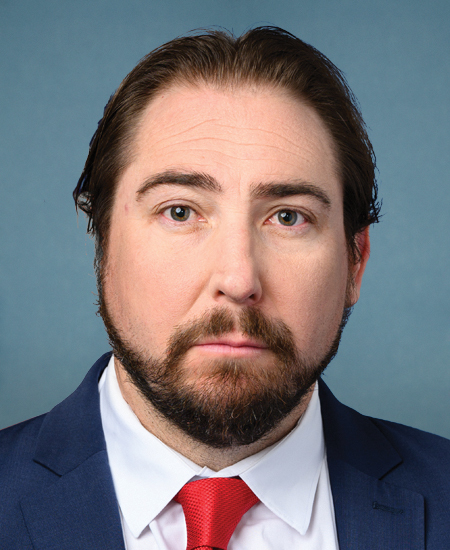
Rep. Elijah Crane
Sponsored bills
Maddy summaryHR 4255, the Enhancing Safety for Animals Act of 2025, would remove the Mexican wolf (Canis lupus baileyi) from the U.S. Endangered Species Act protections. It directly affects ranchers in the Mexican Wolf Experimental Population Area, who report livestock losses and safety concerns, and shifts regulatory authority from the U.S. Fish and Wildlife Service to state and local management. Key provisions include formally delisting the wolf, nullifying two existing federal rules governing the species, and prohibiting future consideration of Mexican wolf populations in Mexico when making ESA decisions. The bill aims to streamline livestock compensation for ranchers by changing evidentiary standards for wolf depredation claims.
Maddy summaryThe AI OVERWATCH Act requires U.S. exporters to obtain a license for sending certain high-performance integrated circuits (defined by specific technical specifications like processing power or bandwidth) to countries designated as "concerns," including China, Russia, Iran, and North Korea. Before approving such licenses, the Commerce Department must submit detailed certifications to Congress, including assurances the export won’t support military/intelligence capabilities of the recipient country and won’t harm U.S. semiconductor availability or AI leadership. The bill also creates an exemption for U.S. companies meeting strict security and ownership standards ("trusted United States persons") to export these chips to non-target countries without a license. Additionally, it mandates a national security strategy assessing how such exports affect U.S. AI competitiveness, particularly regarding China’s semiconductor production and capabilities.
Maddy summaryHR 7156, the SCAM Act, would expand grounds for revoking U.S. citizenship (denaturalization) for naturalized citizens who commit specific offenses within 10 years of becoming citizens. It targets individuals convicted of defrauding federal, state, or local governments (e.g., $10,000+ in public benefit fraud), affiliating with foreign terrorist organizations, or committing aggravated felonies or espionage. If convicted in these categories, the government could automatically revoke citizenship retroactively (as if it never existed) based on evidence that the person lacked good moral character or loyalty to the U.S. at the time of naturalization. This bill directly affects naturalized citizens who commit these offenses within a decade of gaining citizenship, with revocation triggering immediate deportability.
Maddy summaryThis bill authorizes a Congressional Gold Medal for Nick Shirley in recognition of his investigative work on X (formerly Twitter) regarding alleged fraud in Minnesota. It cites his post claiming to uncover $110 million in fraud against taxpayers, though the bill does not verify these claims. The medal would be struck by the U.S. Mint, with bronze duplicates available for sale to cover costs. The bill is purely ceremonial and does not create new policies or affect any government programs. It follows standard procedure for Congressional Gold Medals awarded for non-legislative achievements.
Maddy summaryHR 6941, the Atmosphere Study Act, requires the Secretary of Energy to study potential negative health and environmental effects of federally funded or involved geoengineering projects within 180 days of the bill's enactment. The study must cover specific techniques like injecting aerosols into the atmosphere or spraying sea salt into clouds to alter climate. The Secretary must submit a report to Congress one year after completing the study, defining "geoengineering" as large-scale climate interventions and "covered projects" as those using federal funds or agency participation. This bill does not implement new policies but mandates a review of existing or planned projects.
Maddy summaryThis bill, HR 6942 (Nick Shirley Congressional Gold Medal Act), authorizes a Congressional Gold Medal for Nick Shirley in recognition of his investigative journalism as described in the bill. It directs the Treasury Secretary to strike a gold medal honoring Shirley for "uncovering waste, fraud, and abuse" against taxpayers, as stated in the bill's findings. The medal would be presented by congressional leaders, with bronze duplicates available for sale to cover costs. The bill is procedural and commemorative, not a policy measure affecting laws or regulations. (Note: The bill's claims about fraud in Minnesota and its references to specific events contain demonstrably false information, but the summary reflects only the text provided.)
Maddy summaryThis bill, the Yavapai-Apache Nation Water Rights Settlement Act of 2025, resolves long-standing water rights claims for the Yavapai-Apache Nation in Arizona by approving a settlement agreement and authorizing a new water infrastructure project. The legislation confirms the Nation's water rights to approximately 6,837 acre-feet per year from the C.C. Cragin Dam and Reservoir and establishes a pipeline to deliver this water to the reservation, along with a drinking water treatment facility. The bill also creates two separate trust funds to manage settlement payments and infrastructure costs, totaling over $900 million in federal funding. Additionally, the legislation requires the transfer of several parcels of land into federal trust for the Nation and includes provisions for the Nation to lease or exchange water rights within Arizona while prohibiting permanent sale of water.
Maddy summaryThe DEFEND Act requires the Department of Homeland Security to produce annual assessments (starting 270 days after enactment) on terrorism threats posed by foreign adversaries and terrorist groups using drones. These assessments must analyze how adversaries acquire, deploy, and technologically enhance drones for surveillance, attacks on infrastructure, or mass casualties - including emerging tactics like AI-driven swarms or chemical payloads - and include lessons from global conflicts. The reports, submitted to Congress and accompanied by classified briefings, also mandate DHS to develop training for law enforcement on recognizing and responding to drone threats. This bill directly affects DHS operations, congressional oversight, and state/local law enforcement preparedness, without creating new regulations or funding.
Maddy summaryHR 3492, the Protect Children’s Innocence Act, makes it a federal crime to perform genital or bodily mutilation or chemical castration on minors under 18, except for specific medical reasons. The bill broadly defines prohibited procedures to include gender transition-related surgeries (like hysterectomies or mastectomies) and medical treatments such as puberty blockers or cross-sex hormones administered to minors. It criminalizes these acts when they occur across state lines, involve payments, or use interstate commerce, while explicitly banning religious tradition as a defense. Exceptions include medically necessary procedures for health emergencies, childbirth, or conditions certified by a physician.