

Maddy summaryThis bill provides temporary funding to ensure Transportation Security Administration employees receive their regular pay, benefits, and allowances during a potential government funding gap in fiscal year 2026. It allows the agency to use Treasury funds to cover salaries and benefits starting February 14, 2026, until a full-year budget is passed or the fiscal year ends on September 30, 2026. The legislation prevents employees from receiving duplicate payments by restricting these funds to periods when no other pay sources are available and requires any costs to be transferred to the permanent budget once enacted. The bill takes effect retroactively as if it were passed on February 13, 2026, to cover the initial days of the potential funding lapse.
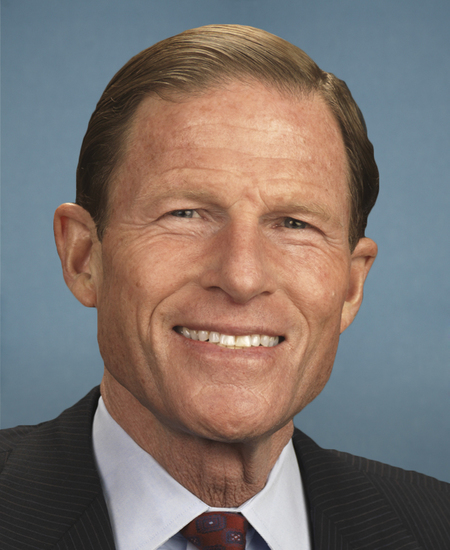
Sen. Richard Blumenthal
Sponsored bills
Maddy summaryThis bill amends VA medical coverage to explicitly include adaptive prostheses and terminal devices designed for sports and recreational activities alongside standard artificial limbs. It directly affects eligible veterans using prosthetic devices who wish to participate in sports or recreational therapy. The key provision expands existing VA coverage under 38 U.S.C. §1701 to cover these specific adaptive devices without requiring separate authorization. This change ensures veterans can access equipment for recreational purposes through the VA's standard medical services. The bill does not create new benefits but clarifies and broadens existing coverage for a defined category of prosthetic devices.
Maddy summaryThis bill expands eligibility for temporary lodging at VA Fisher Houses to include more veterans' families and caregivers traveling for medical care. It adds new categories allowing family members of veterans or active-duty service members (defined as "eligible individuals") to stay at Fisher Houses "on a space-available basis" when they travel significant distances for VA or non-VA medical care. The bill also clarifies that "Fisher Houses" are facilities near VA medical centers, donated by the Fisher Foundation, and available for temporary stays by patients and their support networks. This change directly affects veterans, active-duty service members, and their families needing short-term housing during medical treatment.
Maddy summaryThis bill requires the VA to create and maintain a standardized list (the "Formulary") of covered prosthetic and rehabilitative items and services for veterans. It mandates that the VA develop this list using evidence-based research, ensure all listed items are available at every VA facility nationwide, and regularly update and publish the Formulary online. Veterans will receive clear communication about covered items and how to appeal denied requests, while VA clinicians can still prescribe non-Formulary items when medically necessary, with oversight to evaluate if those items should be added to the Formulary. The policy directly affects veterans receiving prosthetic care through the VA system.
Maddy summaryS 2264, the AVERT Crises Act of 2025, requires the Department of Veterans Affairs (VA) to submit three reports to Congress within 90-180 days of enactment. The first report will assess VA's emergency management roles, organizational structure, and potential for consolidating offices to improve coordination. The second will detail the operations and inventory of VA's Regional Readiness Centers, including supply requests and emergency response capabilities. The third will examine barriers to sharing resources like fuel with FEMA during emergencies and whether congressional action is needed to enable better coordination. These reports aim to identify inefficiencies and improve the VA's emergency response systems for veterans.
Maddy summaryThis bill establishes a collaborative research initiative to study health conditions affecting descendants of veterans exposed to toxic substances during military service. Within 180 days, it requires an interagency task force (including the Agency for Toxic Substances and Disease Registry) to research diagnosis and treatment options for these health conditions. The task force must maintain a public website sharing research findings and evidence reviews on links between specific toxic exposures and health outcomes. It also mandates annual reports on research progress and strategic plan implementation for five years. The bill directly affects descendants of veterans with toxic exposure histories, focusing on evidence-based research rather than immediate healthcare benefits.
Automotive Support Services to Improve Safe Transportation Act of 2025 or the ASSIST Act of 2025 This bill expands the definition of medical services for purposes of veterans’ benefits to include additional medically necessary automobile adaptations. Under the bill, the Department of Veterans Affairs may provide funding for the following medically necessary automobile adaptations for driver or passenger use: ramp and kneeling systems, lowered floors, occupied and unoccupied mobility lifts, ingress or egress accessibility modifications, and adapted seating. The bill also extends the limitation on pension amounts for certain hospitalized or institutionalized veterans through September 30, 2032.
Maddy summaryThis bill requires the Department of Veterans Affairs to notify veterans who participated in secrecy oath programs (where they signed non-disclosure agreements) about eligible benefits within 90 days of their release from the oath. It specifically directs the VA to identify and notify veterans who were part of the Edgewood Arsenal program (1948-1975) about all available benefits and services. The bill also changes the effective date for disability compensation awards to begin the day after a veteran’s discharge or release from such programs. This applies to veterans who participated in the Edgewood Arsenal program or any other secrecy oath program.
Guard and Reserve GI Bill Parity Act of 2025 This bill expands eligibility for Post-9/11 educational assistance for members of the reserve components of the Armed Forces and members of the National Guard. Specifically, the bill expands the types of activities that count towards Post-9/11 GI Bill eligibility to include active duty, inactive-duty training, annual training duty, and full-time National Guard duty or active duty. (Generally, under current law, only federal active duty counts towards educational assistance eligibility.)
Maddy summaryThe Love Lives On Act of 2025 modifies veterans' and military survivors' benefit rules to prevent remarriage from automatically ending eligibility. It directly affects surviving spouses of veterans or military members who remarried, ensuring they retain access to key benefits. Key provisions include: (1) preventing termination of veterans' dependency compensation (under 38 U.S.C. §1311/1562) due to remarriage; (2) stopping termination of military Survivor Benefit Plan annuities solely for remarriage, with specific rules for those who remarried before age 55; and (3) expanding TRICARE coverage to include remarried widows/widowers whose subsequent marriage ended (via death, divorce, or annulment). These changes restore or maintain benefits that were previously lost upon remarriage.