

Maddy summaryThis bill proposes a new windfall profits tax on crude oil producers and importers, targeting companies that extract or import more than 300,000 barrels of oil per day. The tax rate would be 50% of the amount by which current crude oil prices exceed a baseline set at the 2025 average, with adjustments for inflation in subsequent years. Revenue collected from this tax would be placed in a dedicated fund and then rebated directly to individual taxpayers as a credit against their income taxes. The rebate amount would be calculated quarterly based on the total tax revenue collected and distributed to eligible individuals, with higher amounts for joint filers and income-based phase-outs. The bill applies to oil extracted or imported after December 31, 2025, and includes provisions for territories with mirror tax systems to receive equivalent benefits.
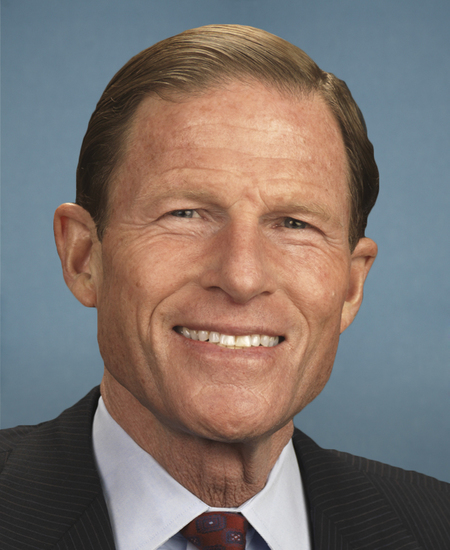
Sen. Richard Blumenthal
Sponsored bills
Maddy summaryThis bill, titled the Antitrust Accountability and Transparency Act, amends the Clayton Act to increase transparency and oversight in antitrust enforcement by the Federal Trade Commission and the Department of Justice. The legislation requires that proposed consent judgments and voluntary dismissals be published in the Federal Register at least 45 days before taking effect, allowing for public comment and review. It also clarifies the public interest standard courts must apply when evaluating antitrust settlements and expands intervention rights for state attorneys general in certain cases. Additionally, the bill strengthens protections against improper communications between government officials and private parties during antitrust proceedings.
Maddy summaryThis bill directs the Bureau of Justice Statistics to create a public database tracking corporate offenses and enforcement actions taken against businesses and their employees. The database will collect information from federal agencies about violations of federal law committed by corporations, partnerships, or individuals acting in their occupational roles, including details about the entities involved, the types of offenses, and the outcomes of enforcement actions. Federal agencies will be required to submit relevant data to the Bureau within 180 days of the bill's enactment, and the database will be made searchable and downloadable online within one year. The Director must also submit annual reports to Congress analyzing the data, including information on recidivism and the impact of corporate offenses on victims, along with recommendations for improving how agencies monitor and deter such offenses.
Maddy summaryThe Children and Teens' Online Privacy Protection Act (S 836) extends COPPA protections to teens aged 13-17 by requiring websites, apps, and online services to obtain verifiable consent from parents for children or from teens themselves before collecting or using their personal information for purposes beyond the service. It defines "personal information" broadly to include biometric data, voice recordings, persistent identifiers, and geolocation information, and prohibits using such information for individual-specific advertising without consent. The bill mandates clear notice about data practices and gives children and teens rights to access, correct, and delete their personal information. Additionally, it requires the FTC to conduct studies on mobile app oversight and the GAO to study teen privacy in financial technology products.
Maddy summaryThis bill, known as the Fair Wages for Home Care Workers Act, would change federal labor rules to require overtime pay and minimum wage protections for certain babysitters who currently do not receive these benefits. It specifically targets casual babysitting jobs that are irregular or intermittent and not performed by individuals whose primary occupation is babysitting. The law would also clarify that trained medical professionals like nurses and home health aides remain exempt from these new requirements, ensuring the changes apply only to casual domestic caregivers. By amending the Fair Labor Standards Act of 1938, the bill aims to extend wage protections to a specific group of home care workers while maintaining existing exemptions for professional medical staff.
Maddy summaryThis bill, titled the Take Back Our Hospitals Act of 2026, would prohibit Medicare from paying hospitals and skilled nursing facilities owned or controlled by private equity funds, real estate investment trusts, or corporations owned by private equity funds. The law defines ownership control as holding 10 percent or more of voting securities and includes provisions for a three-year transition period for existing facilities before the ban takes full effect. Facilities found in violation would face penalties, and the owning firms would be held jointly and severally liable for those penalties. The measure aims to restrict investment by specific financial entities in healthcare facilities that receive Medicare funding.
Maddy summaryThis bill, titled the Working Americans' Tax Cut Act, proposes two main tax changes: it creates an alternative maximum tax rate of 25.5% for low- and middle-income individuals earning less than 175% of a cost-of-living exemption, and it imposes a progressive surcharge on high-income individuals earning over $1 million. The low-income provision calculates taxes based on income above a living expense threshold that adjusts annually with inflation, while the high-income surcharge applies rates of 5%, 10%, and 12% to income brackets above $1 million, $2 million, and $5 million respectively. Both provisions use modified adjusted gross income as the base for calculations and apply to taxable years beginning after December 31, 2025. The bill would directly affect individual taxpayers by altering how their income is taxed under the Internal Revenue Code.
Maddy summaryThis bill provides temporary funding to ensure Transportation Security Administration (TSA) employees continue receiving standard pay and benefits during a potential government funding gap between February 14, 2026, and when regular fiscal year 2026 appropriations are enacted. It directly affects TSA employees who might otherwise face pay interruptions if Congress fails to pass a full-year budget by that date. The bill authorizes using Treasury funds for standard pay, allowances, and benefits during this interim period, with these costs later charged to the appropriate future appropriations. The funding expires automatically on September 30, 2026, or when regular appropriations are passed, whichever occurs first.
Maddy summaryThis bill reorganizes AmeriCorps by converting it from a government corporation into a new executive department called the AmeriCorps Administration. It creates an advisory board with seven members appointed by various officials, including the President and congressional leaders, to guide policy and program oversight. The legislation increases financial benefits for participants, doubling educational awards to twice the average in-state tuition and raising living allowances to 175-210 percent of the federal minimum wage. It also establishes a new National Service Foundation to accept private donations and gifts for the program, and sets a goal of serving one million participants annually by 2036.
Maddy summaryThis bill, the Prediction Markets Security and Integrity Act of 2026, establishes federal safeguards for online prediction markets while returning regulatory oversight to individual States. It requires platforms to prevent fraud and manipulation, verify user identities, and prohibit underage access by restricting registration to individuals aged 21 and older. The legislation mandates that States must apply for approval from the Attorney General to operate wagering programs, with the federal government setting baseline standards for consumer protection, data security, and responsible gaming practices. Operators must comply with State regulations, report suspicious transactions, and implement measures to prevent gambling addiction through self-exclusion lists and restrictions on predatory marketing tactics.