

Maddy summaryThe WIPPES Act (S 1092) requires manufacturers and retailers to label specific wipes with a clear "Do Not Flush" notice and symbol. It directly affects producers of baby wipes, antibacterial wipes, cleaning wipes, and personal care wipes (like makeup remover or feminine hygiene wipes) that could be flushed. The law mandates precise labeling on packaging - ensuring visibility, high contrast, and specific placement depending on package type - while banning all claims that these wipes are flushable. Enforcement falls to the Federal Trade Commission under existing consumer protection laws, and the federal standard preempts conflicting state regulations.
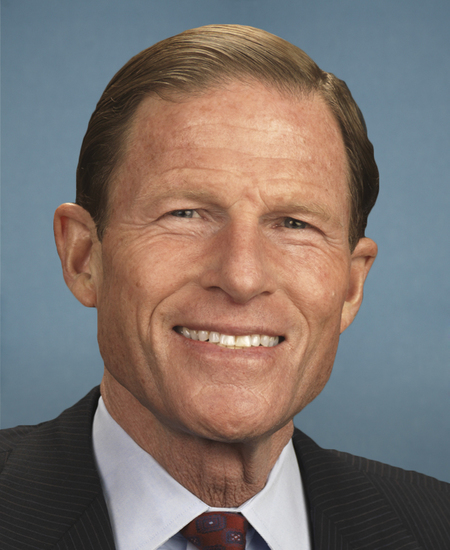
Sen. Richard Blumenthal
Sponsored bills
Maddy summaryThis bill amends the Marine Mammal Protection Act to create new provisions specifically for sea turtles. It establishes a dedicated $5 million annual grant program (2025-2030) for sea turtle rescue and rehabilitation, funded through a new "Sea Turtle Rescue, Rehabilitation, and Rapid Response Fund" with $500,000 yearly. Eligible applicants include coastal organizations with Endangered Species Act authorizations or cooperative agreements, required to follow specific care standards and data reporting. The law directly affects wildlife rehabilitation groups and coastal communities handling stranded sea turtles by providing targeted federal funding and clear grant eligibility criteria.
Maddy summaryThis bill, known as the Social Determinants for Moms Act, requires the Secretary of Health and Human Services to create a task force aimed at reducing preventable maternal deaths and health disparities in the United States. The task force would include federal agency leaders, community organization representatives, and maternity care providers to develop coordinated strategies addressing both medical and non-medical factors like housing, nutrition, and access to care. Additionally, the bill authorizes $100 million over five years to provide grants to community organizations working in areas with high maternal mortality rates and poverty, focusing on social determinants such as transportation, employment, and environmental conditions. The task force must submit reports to Congress every two years outlining its progress and recommendations for future funding and actions.
Maddy summaryThis bill, titled the Fair Prices for Local Businesses Act, amends the Clayton Act to broaden the federal prohibition against price discrimination. It expands the law's scope to cover products and services rather than just physical goods, and extends its reach to include activities that affect commerce beyond direct commercial transactions. The bill also clarifies definitions of purchasing and adds liability for entities that induce or benefit from price discrimination, while providing a higher sales threshold for smaller businesses. Additionally, it strengthens legal remedies for victims of price discrimination by establishing a presumption of injury and allowing for additional damages beyond the amount of the discrimination itself.
Maddy summaryThe Family Vaccine Protection Act establishes formal procedures for the Advisory Committee on Immunization Practices (ACIP) within the Public Health Service Act. It requires the CDC Director to adopt ACIP vaccine recommendations unless they lack scientific support, in which case the Director must publish the rationale and notify Congress within 48 hours. The bill specifies the committee's composition, including required expertise for members and ex-officio members from key health agencies like the FDA and CMS. These provisions affect vaccine recommendations that determine coverage for health insurance plans and the Vaccines for Children Program, ensuring all recommendations are based on peer-reviewed scientific evidence.
Maddy summaryS 2903, the Safe Step Act, requires health insurance plans and employers offering health coverage to establish a clear, timely process for patients or doctors to request exceptions when step therapy protocols (where insurers require trying cheaper drugs first) would harm a patient. It mandates approval for exceptions if prior drugs failed, delay would cause severe harm, a drug is unsafe, or a patient is stable on their current medication. Plans must respond to requests within 72 hours (or 24 hours in emergencies) and cover the requested drug without extra cost-sharing. The bill also requires annual reports to the government on exception requests, approvals, denials, and trends by medical condition or specialty. This directly affects patients on health plans with step therapy, their doctors, and the insurers managing those plans.
Maddy summaryThis bill (S 1677, Ensuring Lasting Smiles Act) requires health insurance plans to cover medically necessary treatments for congenital anomalies or birth defects affecting the eyes, ears, teeth, mouth, or jaw. It mandates coverage for reconstructive services, dental/orthodontic care, and related treatments during the course of medical treatment, while excluding purely cosmetic procedures not medically necessary. Plans may apply cost-sharing requirements similar to those for other medical services but must provide notice about these coverage requirements to participants by January 1, 2026. The bill also directs a study on provider network adequacy and cost impacts related to these coverage requirements, to be completed by December 2027.
Maddy summaryThe HELP Copays Act requires that financial assistance from non-profit organizations or prescription drug manufacturers counts toward patients' annual out-of-pocket cost-sharing limits (like deductibles and copays) for certain prescription drugs. It directly affects individuals enrolled in group health plans or individual insurance who receive such assistance, ensuring payments from these sources reduce their total out-of-pocket spending. The bill amends key healthcare laws to include these payments in calculating cost-sharing thresholds, specifically for specialty drugs and drugs subject to utilization management (like prior authorization). It takes effect for plan years beginning in 2026 and does not change how utilization management tools are applied.
Maddy summaryS. Res. 650 is a Senate resolution that formally recognizes the heritage, culture, and contributions of American Indian, Alaska Native, and Native Hawaiian women in the United States. The resolution highlights their achievements in military service, business ownership, healthcare, science, arts, and civil rights advocacy through specific examples of individual women. It does not create new laws or funding but serves as a symbolic acknowledgment of their historical and ongoing contributions to American society.
Maddy summaryThis bill requires the U.S. Secretary of State to work with the Secretary of Defense and submit a report to Congress within 180 days on emerging threats facing Estonia, Latvia, and Lithuania. The report will examine military, cyber, and political dangers from countries like Russia, Belarus, China, and Iran, while also assessing current U.S. and NATO security presence in the region. It includes recommendations for improving defense cooperation, cybersecurity, and democratic resilience in the Baltic states, and highlights opportunities to strengthen bilateral and multilateral partnerships. The legislation reflects Congress's view that supporting these NATO allies aligns with U.S. national security interests.