

Maddy summaryHR 3277, the Ensuring Lasting Smiles Act, requires group health plans and health insurance issuers to cover medically necessary outpatient and inpatient treatments for congenital anomalies or birth defects primarily affecting the eyes, ears, teeth, mouth, or jaw. This includes reconstructive procedures, dental/orthodontic support during treatment, and follow-up care, but excludes purely cosmetic surgery not tied to a medical diagnosis. Cost-sharing (like copays) for these services must not be stricter than for other medical benefits. The law takes effect for plan years beginning January 1, 2026, and mandates insurers to provide notice about this coverage to beneficiaries.
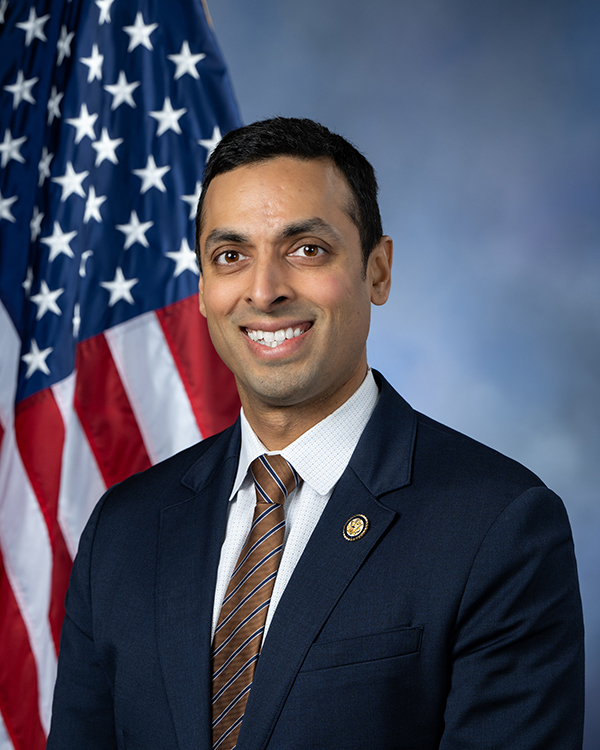
Rep. Suhas Subramanyam
Sponsored bills
Maddy summaryHR 3243, the Therapeutic Fraud Prevention Act of 2025, bans the provision of paid conversion therapy aimed at changing a person's sexual orientation or gender identity, and prohibits advertising such therapy as effective, safe, or without risk. It directly affects LGBTQ+ individuals and their families who might be targeted by these practices, as professionals have determined conversion therapy is ineffective and harmful. The law treats violations as deceptive acts under consumer protection laws, empowering the Federal Trade Commission and state attorneys general to enforce it through civil actions. It explicitly excludes legitimate gender transition support and non-discriminatory counseling from the ban.
Maddy summaryHR 3184, the PFAS Alternatives Act, funds research to develop turnout gear (firefighter safety clothing) without harmful PFAS chemicals, directly affecting firefighters who wear this gear. It authorizes $25 million annually (2025-2029) for grants to eligible organizations to research and test PFAS-free gear, requiring partnerships with firefighting groups to translate findings into practice. The bill also allocates $2 million yearly (2027-2031) for training programs on safe gear use and decontamination. Its goal is to reduce firefighters' exposure to chemicals linked to occupational illnesses during operations.
Maddy summaryHR 3204, the BASIC ACT, increases tax incentives for semiconductor manufacturing. It raises the advanced manufacturing investment credit from 25% to 35% for qualifying semiconductor production facilities and extends the deadline for claiming the credit from 2026 to 2030. The bill directly affects companies building or expanding semiconductor manufacturing plants in the U.S. The changes apply to property placed in service after the bill's enactment date. This provides longer-term financial support for domestic semiconductor investment.
Maddy summaryThis bill creates a federal grant program to help cover medical costs for retired Federal working dogs (like police or military K9s). It authorizes $1 million annually (2026-2030) for eligible nonprofits with a two-year history of providing such care to dogs that have received official retirement letters and are now with their handlers. The grants allow these organizations to pay for veterinary expenses, directly supporting retired service dogs and their handlers. The program is administered through the Department of Homeland Security under existing grant authority.
Maddy summaryThe SALUTE Act establishes a 5-year pilot program to provide supplemental insurance for military members and their TRICARE-eligible dependents who face uncovered cancer-related costs. It requires the Secretary of Defense to partner with up to two insurance companies to offer fixed indemnity plans that pay direct cash benefits for cancer screening, diagnosis, and treatment expenses not covered by standard military health benefits. These plans must operate separately from existing coverage, be available through TRICARE's online portal, and be funded entirely by enrollee premiums with no government subsidies. The program targets active-duty service members (Army, Navy, Marine Corps, Air Force, Space Force) and their TRICARE-enrolled dependents facing out-of-pocket cancer costs.
Maddy summaryHRES 366 is a non-binding resolution recognizing the 50th anniversary of the Fall of Saigon on April 30, 1975, known as Black April in Vietnamese history. It honors the Vietnamese American community - now over 2.3 million strong - who resettled in the U.S. after 1975 and have contributed to American society through diverse fields like public service and business. The resolution commemorates the service of U.S. and South Vietnamese military personnel during the Vietnam War and reaffirms U.S. support for democracy and human rights in Vietnam. As a symbolic gesture, it does not create new laws but encourages public observance of this historical event and the community's resilience.
Maddy summaryThis resolution requests the President to provide unredacted documents within 14 days about government use of electronic communication platforms like Signal, WhatsApp, and Slack for official communications. It specifically seeks information on how the administration preserves national security communications sent via these platforms and ensures compliance with federal recordkeeping laws. The resolution targets communications containing highly sensitive national security information, whether sent on government or personal devices. It does not change policy but seeks transparency regarding current practices.
Maddy summaryHRES 286 is a non-binding House resolution (not a law) requesting the President to provide specific documents about a fictional "United States DOGE Service" and its AI use. It asks for records related to AI deployments at federal agencies since January 2025, including data sources, personnel involved in decisions, and analyses of potential program cuts, all framed around alleged violations of privacy laws and transparency requirements. The resolution specifically targets documents concerning "Elon Musk or an individual associated with the United States DOGE Service," which does not exist as a government entity. This is a procedural request for information, not a policy change, and references fictional elements (e.g., "Trump Administration" in 2025).
Maddy summaryThis resolution (HRES 264) requests the President to provide the House of Representatives with unredacted documents about security clearances held by specific individuals, including Elon Musk and six others (Akash Bobba, Edward Coristine, Ethan Shaotran, Luke Farritor, Gautier Cole Killian, and Gavin Kliger). It specifically targets documents related to security clearances for people associated with the "United States Department of Government Efficiency Service" (referred to as "DOGE" in the bill). The request requires the President to submit all relevant communications and background investigations within 14 days of the resolution's adoption. This is a procedural inquiry resolution, not a policy bill, and references fictional government entities (DOGE is not a real agency).