

Maddy summaryHR 433, the Department of Education Protection Act, prohibits the use of federal funds to reorganize the Department of Education. Specifically, it blocks any spending from current fiscal year appropriations on activities that would decentralize the department, reduce staffing, or alter its structure, responsibilities, or authority relative to its organization as of January 1, 2025. The bill directly affects the Department of Education by preventing structural changes to its existing offices and operations. This is a procedural measure focused solely on preserving the current departmental framework, not on changing education policy or funding.
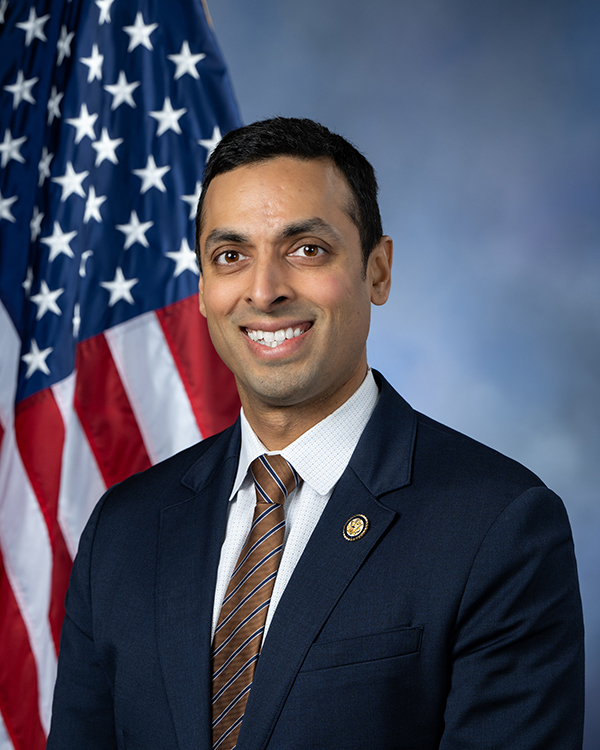
Rep. Suhas Subramanyam
Sponsored bills
Maddy summaryHRES 41 is a symbolic resolution introduced in the U.S. House of Representatives to express support for designating January as "Tamil Language and Heritage Month." It does not create new laws or policies but formally recognizes the cultural significance of Tamil language, history, and contributions. The resolution highlights Tamil's 2,600-year history, the presence of 360,000 Tamil speakers in the U.S., and the Pongal harvest festival celebrated by Tamil communities. It aims to encourage Americans to learn about Tamil heritage and aligns with existing state-level recognitions in places like Michigan and Massachusetts. As a non-binding resolution, it directly affects public awareness and cultural celebration, not legal obligations.
Maddy summaryThis resolution expresses the House's support for Korean American Day, commemorating January 13, 1903 - the arrival of the first large wave of Korean immigrants to the U.S. It urges all Americans to observe the day to recognize Korean Americans' contributions to U.S. society, including their economic, cultural, and military service. The resolution honors the 122nd anniversary of this historical arrival, acknowledging the resilience of early Korean immigrants and their descendants. As a symbolic gesture, it does not create new laws or affect any specific group directly.
Maddy summaryThe Proxy Voting for New Parents Resolution (HRES 23) would allow U.S. House Members who have given birth or whose spouse has given birth to appoint another Member as a proxy to cast their vote or record their presence in the House and committees for up to 12 weeks after childbirth. To use this, the new parent must submit a signed letter to the Clerk detailing the birth or medical condition and naming the proxy; the proxy must vote exactly as instructed and announce the vote as "by proxy." The proxy vote does not count toward quorum, and the new parent can revoke the proxy at any time by submitting a new letter or casting their own vote. This resolution applies to all House Members, including Delegates and the Resident Commissioner, though they cannot cast votes for the House itself.
Maddy summaryThis bill increases healthcare affordability for low- and middle-income people by expanding eligibility for premium tax credits under the Affordable Care Act. It removes the previous 400% of poverty level cap for subsidy eligibility and replaces it with a new sliding scale based on income tiers, ranging from 0% to 8.5% of household income for coverage costs. The scale adjusts linearly across income levels, with households earning 300-400% of poverty paying 6.0%-8.5% of income (up from the prior fixed 400% cap), while lower-income households pay progressively less. These changes apply to tax years beginning after December 31, 2025, directly affecting individuals purchasing health insurance through marketplace plans.
Washington, D.C. Admission Act This bill provides for the establishment of the State of Washington, Douglass Commonwealth, and its admission into the United States. The state is composed of most of the territory of the District of Columbia (DC), excluding a specified area that encompasses the U.S. Capitol, the White House, the U.S. Supreme Court building, federal monuments, and federal office buildings adjacent to the National Mall and the U.S. Capitol. The excluded territory shall be known as the Capital and serve as the seat of the government of the United States, as provided for in Article I of the Constitution. The state may not impose taxes on federal property except as Congress permits. The bill provides for the DC Mayor to issue a proclamation for the first elections to Congress of two Senators and one Representative of the state. The bill eliminates the office of Delegate to the House of Representatives. The bill applies current DC laws to the state. DC judicial proceedings and contractual obligations shall continue under the state’s authority. The bill also provides for specified federal obligations to transfer to the state upon its certification that it has funds and laws in place to assume the obligations. These include maintaining a retirement fund for judges and operating public defender services. The bill establishes a commission that is generally comprised of members who are appointed by DC and federal government officials to advise on an orderly transition to statehood.