

Maddy summaryHR 3526, the Uplifting First-Time Homebuyers Act of 2025, increases the maximum amount first-time homebuyers can withdraw penalty-free from retirement accounts. It amends the Internal Revenue Code to raise the limit from $10,000 to $50,000 for qualified first-time homebuyer distributions. This change directly affects individuals using retirement savings to purchase their first home, allowing them to access significantly more funds without incurring the usual 10% early withdrawal penalty. The provision applies to taxable years beginning after December 31, 2024.
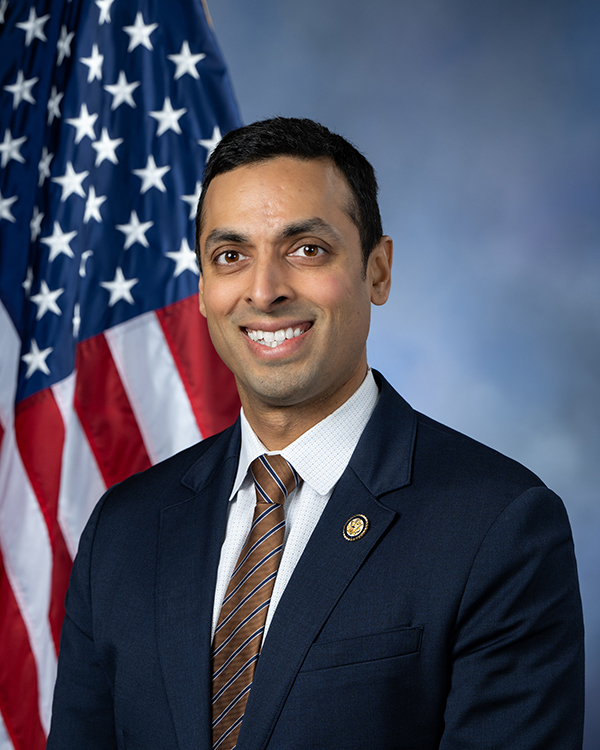
Rep. Suhas Subramanyam
Sponsored bills
Maddy summaryThe AGRITOURISM Act (HR 3470) creates a new Office of Agritourism within the U.S. Department of Agriculture (USDA) to support farm-based tourism businesses. The Office, led by a Director appointed by the Secretary, will coordinate USDA programs and provide technical assistance to help small and family-run farms diversify income through activities like farm tours, on-farm sales, accommodations, and farm-related events. It will update USDA programs to reflect best practices, share resources with agritourism businesses, and facilitate partnerships to promote rural economic development. This bill directly affects rural agricultural businesses and the USDA’s approach to fostering sustainable tourism in rural communities.
Maddy summaryHR 3493, the Global Fairness in Drug Pricing Act, requires the U.S. Health and Human Services Secretary to establish price targets for pharmaceutical manufacturers, ensuring U.S. drug prices align with those in comparable developed countries. It directs the HHS Secretary to certify safe importation of drugs from low-cost countries and facilitate direct-to-consumer purchasing programs at the set prices. The bill also authorizes antitrust enforcement against drug companies for anticompetitive practices and mandates a study on whether manufacturers engage in unfair pricing that forces U.S. patients to subsidize global drug research. This legislation directly affects pharmaceutical manufacturers and American patients seeking affordable prescription drugs.
Maddy summaryHR 3463 (COUNTER Act) expands the U.S. military's authority to counter drone threats by allowing the Department of Defense and Coast Guard to neutralize unmanned aircraft systems without being restricted by certain federal laws. It exempts related technology, procedures, and protocols from public disclosure requirements under federal and state laws, and permits military commanders to delegate these actions. The bill applies to both domestic and overseas operations, clarifying that other federal laws do not apply to U.S. military or Coast Guard activities mitigating drone threats abroad. Key changes include broadening legal authority beyond previous restrictions and extending reporting deadlines for related activities.
Maddy summaryThis bill restores a tax deduction for personal losses caused by disasters, crimes, or scams (like stolen property or damage from hurricanes). It directly affects taxpayers who filed returns before 2025 but couldn’t claim this deduction due to a prior suspension. The bill reinstates the deduction and extends the deadline to file refund claims for these losses until the tax filing deadline for the year the bill becomes law. This allows eligible individuals to claim refunds they were previously barred from receiving.
Maddy summaryThis bill clarifies that the President has no constitutional authority to withhold funds Congress has appropriated. It creates new legal mechanisms allowing private citizens and state/local governments to sue the federal government for impoundments of appropriated funds. The bill strengthens the Comptroller General's oversight role by requiring executive branch cooperation in investigations of potential violations. Federal employees who knowingly violate these provisions would face personal liability and lose immunity protections. The legislation aims to reinforce Congress's constitutional authority over the budget process.
Maddy summaryHR 3368, the "Born in the USA Act of 2025," prohibits federal funding for Executive Order 14160 (which aimed to restrict birthright citizenship for children born in the U.S.). The bill directly affects federal agencies that might implement the executive order by blocking their use of funds for that purpose. Its key provision is a funding ban targeting the executive order and any similar future policies, without changing citizenship law. The bill does not alter birthright citizenship rights but prevents federal resources from being used to enforce the controversial executive order. It is a procedural measure focused on funding, not a substantive policy change to citizenship rules.
Maddy summaryHRES 403 is a non-binding resolution expressing the House of Representatives' support for public servants. It commends federal, state, local, and uniformed service employees for their contributions during Public Service Recognition Week (May 4-10, 2025) and throughout the year. The resolution highlights their roles in areas like national defense, emergency response, Social Security, public health, and infrastructure. It urges the House to salute their dedication, honor those who lost their lives in service, and encourage promoting public service careers. This resolution does not create new policies or funding - it is a symbolic gesture of recognition.
Maddy summaryThis bill increases federal Medicaid funding for states that provide specific community-based mental health services to eligible adults. It directly affects adults aged 21+ with serious mental illness who earn under 150% of the poverty line. States qualify for higher federal funding (3-25 percentage points) based on offering at least three of seven defined services, including assertive community treatment, supported employment, peer support, and mobile crisis intervention. The bill requires services to be provided in the most integrated setting possible, meets quality standards to prevent hospitalization, and mandates states to collect and report demographic and outcome data every two years.
Maddy summaryHRES 400 is a ceremonial resolution recognizing May as Asian American, Native Hawaiian, and Pacific Islander Heritage Month. It formally celebrates the historical contributions of these communities to U.S. history and society, as documented in the resolution’s preamble. The resolution does not create new laws, allocate funding, or change policies - it serves solely as a symbolic acknowledgment by the House of Representatives. It highlights the diversity of these communities and their ongoing impact, referencing their growth, cultural milestones, and historical challenges. This recognition aligns with the existing statutory designation of May for Heritage Month under U.S. Code.