

Maddy summaryThe VSAFE Act of 2025 establishes a Veterans Scam and Fraud Evasion Officer within the Department of Veterans Affairs to prevent and address fraud targeting veterans. This officer will develop communication plans, training, and reporting systems for veterans, families, caregivers, and survivors to identify and avoid scams, while coordinating with agencies like the IRS, DOJ, and Social Security Administration. The bill also modifies a home loan fee deadline in the VA loan program, changing a date from June 9, 2034, to June 23, 2034. It does not create new full-time positions or alter existing Inspector General authority.
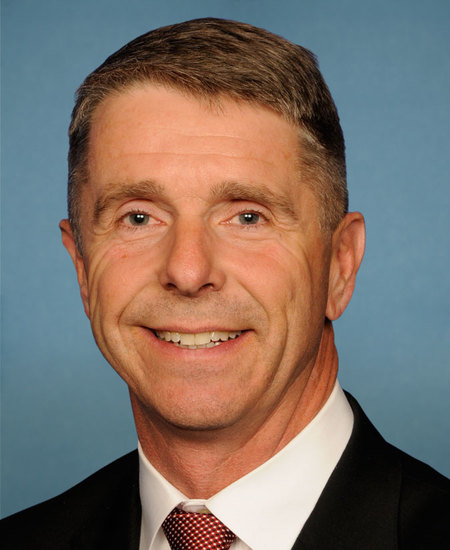
Rep. Robert J. Wittman
Sponsored bills
Maddy summaryThis bill creates a tax credit for businesses selling products made with U.S.-grown cotton. The credit equals 24% of the cotton's market value if processed only in the U.S. or in countries with U.S. trade deals, or 18% for other processing locations. To qualify, cotton must be digitally traced from U.S. farms to finished products and certified by the USDA as meeting origin requirements. It directly affects clothing and textile manufacturers selling qualifying products in the U.S. market.
Maddy summaryHR 4105, the VET Act of 2025, establishes a federal grant program to help veterans, active-duty service members transitioning out of the military, and their spouses secure jobs in the energy industry. The program provides grants to energy companies (including manufacturers of solar, wind, or nuclear equipment) to cover costs like job training, recruitment, and relocation for eligible individuals - prioritizing those with military energy experience, in opportunity zones, or facing barriers like homelessness. Grants are capped at $10,000 per hire, with a maximum $500,000 annual limit per company, funded at $60 million yearly from 2026-2031. Companies must report on job retention, employee satisfaction, and program outcomes to the Department of Labor, with a final evaluation due to Congress by 2030.
Maddy summaryThe PORCUPINE Act amends the Arms Export Control Act to include Taiwan alongside New Zealand and Israel in specific certification and reporting requirements related to U.S. arms exports. This legislative change ensures Taiwan is treated similarly to these allied nations in certain foreign policy contexts involving defense article transfers. The bill also directs the Secretary of State to assess the feasibility of creating an expedited licensing process for military equipment transfers from designated allies to Taiwan within 90 days. Additionally, the act requires biennial reports on the implementation of these amendments and includes a provision stating that the legislation does not alter existing U.S. policy toward Taiwan under the Taiwan Relations Act. The entire measure is set to expire seven years after its enactment.
Maddy summaryHR 7137, the Shutdown Fairness Act, requires federal agencies to pay covered employees (including most federal workers and military personnel) and covered contractors their regular pay during government shutdowns. It appropriates funds from the Treasury to cover standard employee compensation and contractor payments for work performed during a lapse in regular appropriations, ensuring pay continues without delay (within 7 days if a shutdown is ongoing at enactment) and aligns with regular pay schedules. The bill applies only to individuals employed or with accepted offers before the shutdown began and mandates that these payments be charged to future appropriations. It does not change agency obligations under existing contracts or authorize new spending beyond the specified shutdown period.
Maddy summaryThis symbolic House resolution expresses U.S. congressional support for Iranian protesters demanding democracy and human rights. It condemns the Iranian regime's violent suppression of protests, including killings, mass arrests, and internet restrictions, while urging the regime to release political prisoners and restore communication access. The resolution reaffirms the Iranian people's right to self-determination through free elections and echoes a 2023 resolution (HCR 7) that similarly praised protesters. As a non-binding expression of support, it does not impose new policies or alter U.S. government actions.
Maddy summaryHR 5164 renews federal funding for U.S. aquaculture research programs, providing $15 million annually from fiscal years 2026 through 2030. It directly affects research institutions and organizations receiving federal grants under the Food and Agriculture Act of 1977. The bill removes a previous cap on indirect costs (like administrative expenses) for these grants, allowing full reimbursement under new rules, while maintaining other cost limitations. This change aims to streamline funding for aquaculture innovation without altering the program's core purpose.
Maddy summaryHR 909, the Crime Victims Fund Stabilization Act of 2025, modifies how funds from the False Claims Act are deposited into the Crime Victims Fund. It specifies that from 2025 through 2029, certain False Claims Act proceeds (specifically those for qui tam plaintiff payments and government damage reimbursements) cannot be deposited into the fund. This change directly affects the composition of the Crime Victims Fund by excluding these specific revenue streams during the specified period. The bill does not create new benefits or alter victim services; it only adjusts fund allocation rules for existing False Claims Act revenues.
Maddy summaryThis bill eliminates waiting periods for Social Security disability benefits and Medicare coverage for individuals diagnosed with young-onset Alzheimer's disease. It amends the Social Security Act to add "young-onset Alzheimer's" (as defined by the Social Security Commissioner) to the list of conditions qualifying for immediate disability benefits, removing a 5-month waiting period for applications filed after its enactment date. It also waives the standard 24-month waiting period for Medicare coverage when young-onset Alzheimer's is diagnosed, effective for benefits starting after the bill's enactment. These changes directly affect people with young-onset Alzheimer's seeking timely access to critical financial and health coverage.
Essential Caregivers Act of 2025 This bill prohibits certain health care facilities from limiting the access of essential caregivers to residents of those facilities, including during designated emergency periods. Specifically, the bill generally prohibits Medicare skilled nursing facilities, Medicaid nursing facilities, Medicaid intermediate care facilities, and associated inpatient rehabilitation facilities from restricting the access of essential caregivers to residents of the facilities, including during emergency periods in which visitation rights are otherwise restricted. During emergency periods, facilities may restrict access for an initial period of up to seven days and for one additional maximum seven-day period (if the additional period is approved by the state health department). Facilities may restrict access for a total of 7 days (or 14 days with the approval of the state health department) during an emergency period. Essential caregivers must agree to comply with any safety protocols set by the facility, which may be no more stringent for caregivers compared to those for staff. Caregivers who fail to comply with these requirements may be denied access, subject to an appeals process.