

Maddy summaryThis bill would allow Indian tribes to access the Defense Community Infrastructure Program, which currently provides funding for infrastructure improvements near military installations. By amending Title 10 of the U.S. Code, the legislation adds "Indian tribes" as eligible recipients alongside local governments and other entities. The bill defines "Indian tribe" using the existing legal definition from the Indian Self-Determination and Education Assistance Act. This change expands the pool of organizations that can apply for infrastructure support related to defense facilities.
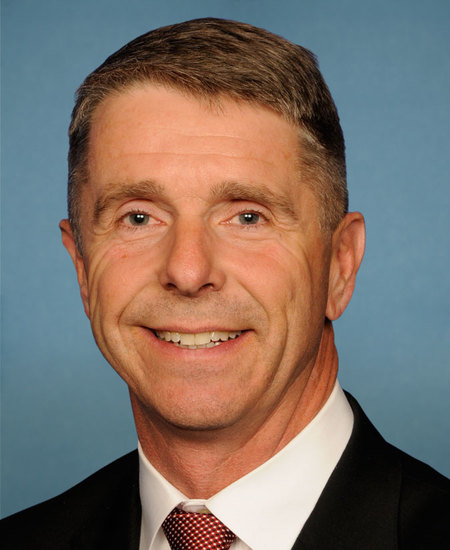
Rep. Robert J. Wittman
Sponsored bills
Maddy summaryThe SECURE Minerals Act of 2026 establishes a Strategic Resilience Reserve Corporation to secure U.S. supply chains for critical minerals and materials essential to defense, energy, technology, and renewable energy sectors. The Reserve will provide financing and acquisition support for domestic and partner country projects focused on producing, recycling, reusing, and repurposing critical minerals, with the goal of reducing U.S. dependence on foreign sources to no more than 75% for each mineral. It authorizes $2.5 billion in funding and establishes a Board of Governors with specific expertise requirements to oversee operations, while requiring regular risk assessments and annual reporting. This legislation directly affects mineral production and processing companies, federal agencies managing mineral resources, and partner countries working with the U.S. on supply chain security.
Maddy summaryHR 2969, the Finding ORE Act, authorizes the U.S. Secretary of the Interior to enter into memorandums of understanding (MOUs) with partner countries that supply critical minerals and rare earth elements. The bill requires these MOUs to include cooperative mapping of mineral reserves, give U.S. or allied foreign country companies the "right of first refusal" for development, and facilitate U.S. private-sector investment through financial institutions like the Development Finance Corporation. It also mandates data protection for mapping information against unauthorized access by non-partner or non-allied countries. This legislation directly affects partner foreign countries (mineral sources), U.S. companies, and the U.S. Geological Survey, focusing on securing supply chains through international scientific collaboration.
Law-Enforcement Innovate to De-Escalate Act This bill removes less-than-lethal projectile devices (e.g., certain TASERs) from regulation under the Gun Control Act. The term less-than-lethal projectile device means a device that (1) is not designed or intended to expel (and may not be readily converted to discharge) commonly used ammunition or projectiles exceeding a velocity of 500 feet per second; (2) is designed and intended to be used in a manner not likely to cause death or serious bodily injury; and (3) does not accept (and cannot be readily modified to accept) an ammunition feeding device. The bill also requires the Bureau of Alcohol, Tobacco, Firearms and Explosives to determine whether a device satisfies the definition of a less-than-lethal projectile device within 90 days of a request.
Maddy summaryHR 7498, the After Hours Child Care Act, creates a new Child Care and Development Innovation Fund to expand child care access for parents working nontraditional hours (like evenings, nights, or weekends). The bill directly affects working parents with young children who struggle to find care outside standard 9-to-5 hours, aiming to help them stay employed and advance in their careers. It authorizes $25,000-$500,000 grants for up to 5 years to eligible entities (such as child care providers or partnerships with businesses) to expand existing programs, establish new onsite workplace child care, or improve facilities and staff training. Grantees must cover 25% of costs, and the Secretary of Health and Human Services must report every two years on the program’s impact, including children served and changes in child care availability.
Maddy summaryThis bill mandates a study on how driver-controlled technology (like touch screen infotainment systems) affects traffic safety, particularly for pedestrians and bicyclists. The U.S. Department of Transportation will commission the National Academies to examine touch screen systems versus tactile controls (e.g., knobs/switches), smartphone use while driving, and factors like weather or traffic conditions. The study must analyze how these technologies impact driver distraction, severe injuries, and fatalities, and will lead to a public report and recommendations for potential data collection improvements. The bill itself does not create new laws but sets the stage for future safety decisions based on the findings.
Maddy summaryThis bill prevents state or local governments from banning or restricting energy connections (like installation, modification, or access) based on the type or source of energy, such as electricity, natural gas, or renewable fuels. It directly affects consumers choosing energy providers and energy companies seeking to offer services. The key provision prohibits local laws, regulations, or policies that limit energy services sold in interstate commerce, covering all energy types listed in the bill’s definitions. It does not create new programs but limits regulatory authority at the state or local level. The law aims to ensure open access to diverse energy sources without source-based restrictions.
Maddy summaryThis bill amends federal energy conservation law to require federal agencies to consider mechanical insulation as a standard energy-saving measure during building evaluations. It defines "mechanical insulation property" as materials that reduce energy loss in mechanical systems while meeting ASHRAE 90.1 standards, including insulation placed in service with those systems. The law adds mechanical insulation to the list of measures agencies must evaluate for potential installation in federal buildings as part of their required energy and water assessments. This directly affects federal agencies managing buildings, ensuring they formally assess this specific efficiency measure during routine evaluations.
Maddy summaryHR 1458, the VETS Opportunity Act of 2025, amends VA education benefits rules to ensure veterans using these benefits for independent study courses receive meaningful instruction. It requires that such courses include regular, substantive interaction between students and instructors, and limits eligibility to programs at institutions approved for federal student aid under the Higher Education Act. This directly affects veterans pursuing online or self-paced courses using VA education benefits. The changes apply to courses starting August 1, 2025, and aim to standardize benefit access for qualifying educational programs.
Maddy summaryThis bill exempts certain less-than-lethal projectile devices from federal sales taxes and National Firearms Act restrictions. It directly affects manufacturers, importers, and producers of these devices, which are defined as non-lethal tools (like rubber bullets or beanbag rounds) designed not to cause serious injury and unable to be easily converted to use standard firearm ammunition. Key mechanisms include a 90-day classification process for manufacturers seeking exemption, an annual public list of approved devices, and annual congressional reports on devices excluded from the exemption. The policy change applies to devices meeting specific safety criteria, such as projectile velocity limits and design features preventing misuse as conventional weapons.