

Maddy summaryHR 3638, the Electric Supply Chain Act, requires the U.S. Energy Secretary to conduct regular assessments of vulnerabilities in the electricity generation and transmission supply chain. These assessments must cover risks like foreign material dependencies, manufacturing barriers in the U.S., national security concerns, and workforce challenges, with input from utilities, manufacturers, and other stakeholders. The Secretary must submit annual reports to Congress detailing findings and recommendations to strengthen domestic supply chains. This law does not change electricity production or transmission but establishes a framework for monitoring and addressing supply chain risks.
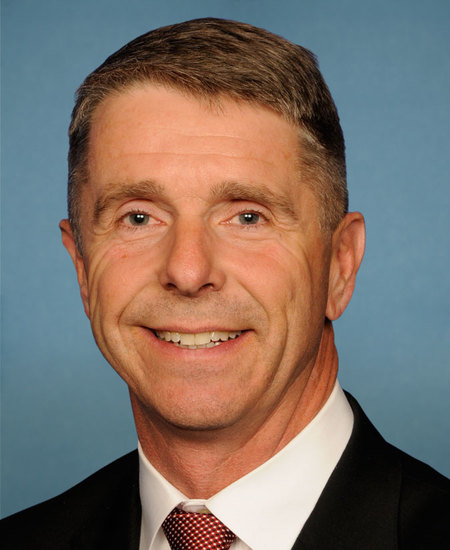
Rep. Robert J. Wittman
Sponsored bills
Miracle on Ice Congressional Gold Medal Act This act provides for the award of Congressional Gold Medals to the members of the 1980 U.S. Olympic men's ice hockey team in recognition of the team's achievement at the 1980 Winter Olympic Games.
Maddy summaryHR 6629 requires each military department (like the Army, Navy, and Air Force) to create detailed master plans for their service academies (West Point, Annapolis, etc.) by September 30, 2027. These plans must assess current infrastructure conditions, identify historic properties needing preservation, and evaluate risks like energy disruptions, extreme weather, and cybersecurity threats. The bill mandates specific actions: listing deteriorating infrastructure with a 5-year replacement/renovation plan, and including historic sites on the National Register or eligible for it. Military secretaries must brief Congress within 180 days of enactment and submit completed plans within 30 days of completion or by December 1, 2027, whichever comes first. This is a procedural requirement focused on infrastructure planning, not new funding or policy changes.
Maddy summarySammy's Law requires large social media platforms (those with over 100 million monthly users or $1 billion in annual revenue) to create real-time tools allowing parents or third-party safety software providers to help protect children under 17 from online harms. Platforms must provide secure access to children's account data for safety software providers that register with the Federal Trade Commission and meet strict security and privacy requirements. Third-party providers can only use the data to address specific risks like cyberbullying, trafficking, or abuse, and must delete data after 14 days unless needed for a safety concern. The law creates a federal standard that prevents states from making their own rules about this type of platform access.
Maddy summaryHR 6490 establishes a pilot program (the "Push-Text Initiative") for members of the Marine Corps stationed at installations in Okinawa, Japan, and their adult dependents. The program automatically enrolls eligible participants using their provided contact information (with an opt-out option) to send text messages containing specific, timely information. Key topics covered include military spouse employment resources, childcare services, TRICARE benefits, and updates on DOD policies affecting service members and dependents. The Secretary of Defense must report on the program's implementation, participation, costs, and potential for Department-wide expansion by October 2027.
Maddy summaryThis concurrent resolution authorizes the use of Emancipation Hall in the Capitol Visitor Center for a specific event: the unveiling of a statue honoring Barbara Rose Johns on December 16, 2025. It directs the Architect of the Capitol to permit the event and oversee physical preparations, but does not create new policy or affect any constituents beyond the event planning. The resolution is purely procedural, focusing solely on granting access to a Capitol space for this commemorative occasion.
Maddy summaryHRES 930 is a symbolic resolution designating December 8, 2025, as "Jimmy Lai Day" to honor Jimmy Lai's advocacy for free press, religious freedom, and democracy in Hong Kong. It calls on the People's Republic of China and Hong Kong authorities to release Jimmy Lai and other Hong Kong prodemocracy advocates detained under Hong Kong's National Security Law. The resolution does not create new laws or policies but expresses congressional support for Lai's work and condemns the imprisonment of those advocating for Hong Kong's freedoms. It directly affects U.S. diplomatic messaging toward China, not Hong Kong's legal system or residents.
Maddy summaryThis bill (HR 6469) requires the U.S. State Department, in coordination with the FCC and Treasury, to submit a report within 120 days of enactment assessing internet access options in Iran. The report must evaluate the feasibility of using direct-to-cell wireless technology to expand internet access there, including technical, security, and regulatory considerations. It also analyzes how drone-based systems and signal jamming could affect such technology, surveys Iranian telecom providers (including state ownership and foreign investment), and examines broader implications for communications freedom. The bill does not enact new policy but mandates a government review of potential technological solutions.
Maddy summaryThis bill establishes a new interagency Task Force to dismantle foreign scam operations targeting Americans, particularly through "pig butchering" scams in Southeast Asia. The Task Force, chaired by the Secretary of State, will coordinate efforts across multiple agencies to shut down scam centers, impose sanctions on perpetrators, and support victims of trafficking. It requires a detailed strategy within 180 days and annual reports to Congress on progress, including sanctions imposed and funds recovered. The bill authorizes $30 million for these efforts in fiscal years 2026-2027, focusing on countries like Cambodia, Laos, and Burma where scam centers operate with forced labor.
Give Kids a Chance Act of 2025 This bill expands the Food and Drug Administration’s (FDA’s) authority with respect to research on rare pediatric diseases, including by permitting the FDA to take enforcement action against drug sponsors that fail to satisfy pediatric study requirements and by reauthorizing programs that support pediatric research. Specifically, the bill modifies requirements relating to molecularly targeted pediatric cancer investigations to permit research on new drugs in combination with active ingredients that have already been approved, provided certain conditions are met; permits the FDA to take enforcement action against drug sponsors that fail to comply with pediatric study requirements, if such sponsors demonstrated a lack of due diligence in satisfying the requirement; renews the FDA’s authority to award priority review vouchers to sponsors of new products intended to treat rare pediatric diseases through September 30, 2029; and reauthorizes through FY2027 certain funding for the National Institutes of Health to support priority pediatric research. The bill also provides statutory authority for the FDA’s interpretation of the orphan drug exclusivity period. The bill specifies, consistent with FDA regulations, that the seven-year market exclusivity period for drugs for rare diseases or conditions (i.e., orphan drugs) prohibits the approval of the same drug for the same approved use or indication with respect to the disease or condition. (In Catalyst Pharmaceuticals, Inc. v. Becerra , a court rejected the FDA’s interpretation and held that orphan drug exclusivity extends to all uses or indications for the disease or condition.)