

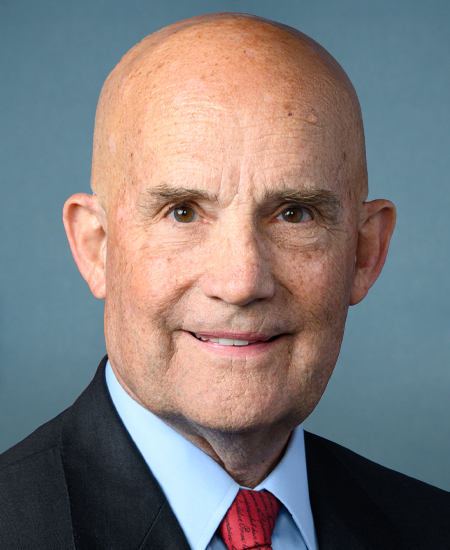
Photo of Keith Self
R United States House · District 3 · Texas On the 2026 ballot

Rep. Keith Self

Compare
Total votes
1,879
all sessions
Attendance
99%
23 missed
Near the chamber average
With party
85%
of cast votes
Lower than 98% of chamber peers
Bipartisan score
8%
crosses aisle rarely
Higher than 97% of chamber peers
Sponsored
704
bills & resolutions
Near the chamber average
Committees
8
assignments
704 bills and resolutions

Sponsored bills

Total
704
Primary
82
Co-sponsor
622
This page
704
matching current filters
Co-sponsor HR 7199
In committee · Delaware House · Co-sponsor
Gerald’s Law Act

Maddy summaryHR 7199, the Gerald’s Law Act, expands burial benefits for veterans who die at home while receiving VA hospice care. It adds a new eligibility category allowing burial allowances for veterans who were in VA hospice care at home *only if* they previously received VA hospital or nursing home care. The bill amends existing law to include this scenario under the veterans' burial allowance program. This change directly affects veterans receiving VA hospice care at home after prior VA facility-based care, ensuring they qualify for burial benefits similar to those who die in VA facilities. The policy change takes effect as if included in the 2020 Veterans Health Care Act.

In committee Jan 22, 2026 1 co-sponsor
Co-sponsor HR 6875
In committee · Delaware House · Co-sponsor
AI OVERWATCH Act

Maddy summaryThe AI OVERWATCH Act requires U.S. exporters to obtain a license for sending certain high-performance integrated circuits (defined by specific technical specifications like processing power or bandwidth) to countries designated as "concerns," including China, Russia, Iran, and North Korea. Before approving such licenses, the Commerce Department must submit detailed certifications to Congress, including assurances the export won’t support military/intelligence capabilities of the recipient country and won’t harm U.S. semiconductor availability or AI leadership. The bill also creates an exemption for U.S. companies meeting strict security and ownership standards ("trusted United States persons") to export these chips to non-target countries without a license. Additionally, it mandates a national security strategy assessing how such exports affect U.S. AI competitiveness, particularly regarding China’s semiconductor production and capabilities.

In committee Jan 21, 2026 1 co-sponsor
Primary HR 6411
In committee · Delaware House · Lead sponsor
Preshevo Valley Discrimination Assessment Act

Maddy summaryHR 6411, the Preshevo Valley Discrimination Assessment Act, requires the U.S. Secretary of State to submit a report within 180 days of enactment assessing potential discrimination against ethnic Albanians in Serbia's Preshevo Valley. The report must examine specific issues including whether Serbian authorities deactivate ethnic Albanians' registered homes (passivation), restrict Albanian language use in public documents and schools, limit access to identity documents, and provide unequal funding to majority-Albanian municipalities. It also covers whether Serbia disregards proportional integration of ethnic Albanians in public institutions, restricts cultural symbols, or uses law enforcement to intimidate residents. The bill mandates a detailed, unclassified report covering these 13 specific areas of concern. This is a procedural reporting requirement, not a policy change affecting U.S. law or funding.

In committee Jan 21, 2026 0 co-sponsors
Co-sponsor HR 7156
In committee · Delaware House · Co-sponsor
SCAM Act

Maddy summaryHR 7156, the SCAM Act, would expand grounds for revoking U.S. citizenship (denaturalization) for naturalized citizens who commit specific offenses within 10 years of becoming citizens. It targets individuals convicted of defrauding federal, state, or local governments (e.g., $10,000+ in public benefit fraud), affiliating with foreign terrorist organizations, or committing aggravated felonies or espionage. If convicted in these categories, the government could automatically revoke citizenship retroactively (as if it never existed) based on evidence that the person lacked good moral character or loyalty to the U.S. at the time of naturalization. This bill directly affects naturalized citizens who commit these offenses within a decade of gaining citizenship, with revocation triggering immediate deportability.

In committee Jan 20, 2026 1 co-sponsor
Co-sponsor HR 2683
Passed · Delaware House · Co-sponsor
Remote Access Security Act

Maddy summaryHR 2683, the Remote Access Security Act, amends the Export Control Reform Act of 2018 to regulate how foreign entities remotely access U.S.-controlled technology. It defines "remote access" as foreign persons accessing U.S. items (like sensitive technology) via internet or cloud services from outside the item's physical location. The bill updates existing export control rules to include remote access as a regulated activity, requiring oversight similar to physical exports or in-country transfers. This primarily affects foreign companies, cloud providers, and technology firms handling U.S.-jurisdiction items.

Passed Jan 13, 2026 1 co-sponsor
Co-sponsor HR 909
Passed · Delaware House · Co-sponsor
Crime Victims Fund Stabilization Act of 2025

Maddy summaryHR 909, the Crime Victims Fund Stabilization Act of 2025, modifies how funds from the False Claims Act are deposited into the Crime Victims Fund. It specifies that from 2025 through 2029, certain False Claims Act proceeds (specifically those for qui tam plaintiff payments and government damage reimbursements) cannot be deposited into the fund. This change directly affects the composition of the Crime Victims Fund by excluding these specific revenue streams during the specified period. The bill does not create new benefits or alter victim services; it only adjusts fund allocation rules for existing False Claims Act revenues.

Passed Jan 13, 2026 1 co-sponsor
Co-sponsor HR 4837
In committee · Delaware House · Co-sponsor
Written Informed Consent Act

Maddy summaryHR 4837, the Written Informed Consent Act, requires the Veterans Health Administration (VHA) to update its existing directive on informed consent to include additional medication classes. Specifically, it mandates that written informed consent must be obtained before prescribing antipsychotics, stimulants, antidepressants, anti-anxiety medications (anxiolytics), and narcotics (opioids) to veterans. This expansion directly affects veterans receiving these medications through the VA system, ensuring they are informed about specific treatment risks and alternatives. The key mechanism is amending VHA Directive 1005 to broaden its application beyond long-term opioid therapy to cover the newly listed medication types.

In committee Dec 19, 2025 1 co-sponsor
Co-sponsor HR 472
In committee · Delaware House · Co-sponsor
Restore VA Accountability Act of 2025

Maddy summaryHR 472, the Restore VA Accountability Act of 2025, creates new disciplinary procedures for VA supervisors and management officials. It requires the VA Secretary to consider specific factors like the seriousness of misconduct and the employee's role when deciding on removal, demotion, or suspension, and limits the entire disciplinary process to 15 business days. The bill prevents courts from reviewing penalty amounts but allows review of whether procedures were followed correctly. It also strengthens whistleblower protections by requiring Special Counsel approval before disciplining employees who report misconduct, affecting VA supervisors and management officials but excluding senior executives and political appointees.

In committee Dec 19, 2025 1 co-sponsor
Co-sponsor HRES 967
In committee · Delaware House · Co-sponsor
Expressing the sense of the House of Representatives that European laws and regulations unfairly and unreasonably burden American speech and innovation.

Maddy summaryHRES 967 is a non-binding resolution expressing the House's disapproval of European digital regulations like the EU's Digital Services Act and Digital Markets Act. It claims these laws unfairly burden American speech, innovation, and tech companies (citing examples like Meta and Alphabet), while harming U.S. workers and consumers. The resolution calls on the Trump administration to use diplomatic and economic tools to protect U.S. free speech rights and prevent foreign laws from undermining First Amendment principles. It also urges the Department of Justice and FTC to reject European antitrust principles and avoid cooperating with foreign enforcement of such regulations. This resolution directly affects American tech companies and free expression interests by framing European policies as a threat to U.S. digital freedoms.

In committee Dec 18, 2025 1 co-sponsor
Co-sponsor HR 6734
In committee · Delaware House · Co-sponsor
Auto Data Privacy and Autonomy Act

Maddy summaryHR 6734, the Auto Data Privacy and Autonomy Act, gives car, truck, and farm/construction vehicle owners direct control over data generated by their vehicles. It prohibits manufacturers from accessing or sharing vehicle data (including location and personal information) without the owner’s explicit, written consent, and bans selling such data to specific foreign governments like China, Russia, or North Korea. Owners gain free, real-time access to all vehicle data through standard interfaces (like the car’s port or wireless), with no fees for decryption or third-party access, and can delete data or adjust settings via an open application interface. The law requires manufacturers to provide this access without restricting how owners use the data or forcing them to pay for it.

In committee Dec 16, 2025 1 co-sponsor
Showing 111 to 120 of 704 bills
Previous 1 11 12 13 71 Next