Respect State Housing Laws Act This bill eliminates a provision that requires a 30-day notice period before a landlord may begin eviction proceedings against a tenant in federally assisted or federally backed housing.
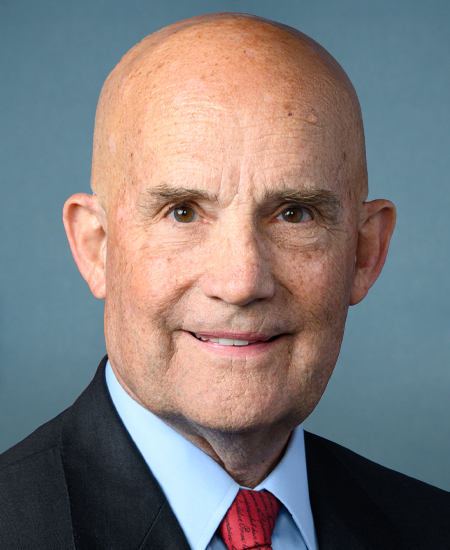
Rep. Keith Self
Sponsored bills
Maddy summaryThis bill is not a real legislative proposal but a widely circulated hoax. It falsely claims to prohibit federal funding for states that "prohibit dog ownership" while misrepresenting Sharia law as a threat to pet ownership - a claim with no basis in reality, as Sharia law does not regulate pet ownership and no U.S. jurisdiction prohibits dog ownership. The bill contains factual inaccuracies (e.g., falsely equating Sharia law with being "against the pursuit of happiness") and would be unconstitutional due to religious discrimination. It was never introduced in Congress and appears to be a satirical or misleading online post.
Protection of Women in Olympic and Amateur Sports Act This bill requires certified national governing bodies (NGBs) of amateur sports (e.g., USA Gymnastics) to prohibit a person whose sex is male from participating in an amateur athletic competition that is designated for females, women, or girls. Under the bill, male means an individual who has, had, will have—or would have, but for a developmental or genetic anomaly or historical accident—the reproductive system that at some point produces, transports, and utilizes sperm for fertilization.
Maddy summaryHR 7442 establishes a new National Bridge Program under federal highway law to allocate funding for bridge replacement, rehabilitation, and construction. It changes how funds are distributed: 75% based on the total deck area of bridges on federal-aid highways in each state, and 25% based on the deck area of bridges in poor condition. This directly affects state transportation departments managing federal-aid highway bridges, requiring them to prioritize projects using this updated formula starting after December 31, 2024. The bill eliminates prior programs (Carbon Reduction and PROTECT) and revises related funding mechanisms.
Maddy summaryThe No Tax Dollars for Terrorists Act requires the U.S. State Department to identify foreign countries and organizations receiving U.S. foreign aid that have provided financial or material support to the Taliban, including the amounts of aid they receive and the support they give to the Taliban. It mandates a strategy to use U.S. aid to discourage such support, with initial and follow-up reports to Congress on the strategy and its implementation. The bill also demands detailed reports on U.S. cash assistance programs in Afghanistan and the Afghan Fund, explaining how funds are transferred (including traditional money transfer systems) and how safeguards prevent Taliban access.
Maddy summaryThis bill prohibits most Somali citizens and nationals from obtaining U.S. visas or immigration status for 25 years after enactment. It amends immigration laws to block new admissions while allowing exceptions for those already lawfully admitted, lawful permanent residents, and individuals with specific diplomatic visas (A-1, G-1, etc.). The law directly affects Somali nationals seeking to immigrate to the U.S. and takes effect immediately upon passage. It creates a permanent policy change to restrict immigration from Somalia, with limited exceptions for existing residents and certain travelers.
Maddy summaryThis bill modifies federal budget rules for unspent agency funds. It requires federal agencies to allocate 49% of unused funds to the next fiscal year, 49% toward paying the national debt, and 2% for retention bonuses (capped at 10% of an employee's base pay). Agencies must also limit future budget requests to the previous year's amount adjusted for inflation. The bill directly affects all executive branch agencies (excluding the Red Cross), altering how they manage leftover budget authority. It does not create new savings programs for individuals but changes government fiscal management procedures.
Maddy summaryHR 6675, the DISPOSAL Act, requires the General Services Administration (GSA) to sell or lease six specific federal buildings in Washington, D.C. (including the Frances Perkins, Forrestal, and Humphrey buildings) at fair market value or for up to 99 years. The bill mandates relocating federal agencies currently occupying these buildings to other locations, prohibits foreign ownership of the properties, and exempts the disposal from certain environmental and historic preservation requirements. Proceeds from sales must first cover relocation costs and GSA implementation expenses before any remaining funds go to deficit reduction. The law expires on December 31, 2028, and does not allow judicial review of GSA actions under this bill.
Safeguard American Voter Eligibility Act or the SAVE America Act This bill requires individuals to provide documentary proof of U.S. citizenship when registering to vote, and requires photo identification to vote, in federal elections. Specifically, the bill prohibits states from accepting and processing an application to register to vote in a federal election unless the applicant presents documentary proof of U.S. citizenship. The bill specifies what documents are considered acceptable proof of U.S. citizenship, such as identification that complies with the REAL ID Act of 2005 that indicates U.S. citizenship. Further, the bill (1) prohibits states from registering an individual to vote in a federal election unless, at the time the individual applies to register to vote, the individual provides documentary proof of U.S. citizenship; and (2) requires states to establish an alternative process to demonstrate U.S. citizenship. Each state must take affirmative steps on an ongoing basis to ensure that only U.S. citizens are registered to vote, which shall include establishing a program to identify individuals who are not U.S. citizens using information supplied by certain sources. Additionally, states must remove noncitizens from their official lists of eligible voters. The bill (1) provides for a private right of action for certain violations, and (2) establishes criminal penalties for certain offenses. Individuals voting in federal elections must present an eligible photo identification document. An individual who votes by absentee ballot must submit a copy of their identification document with both the request for, and the submission of, the absentee ballot.

Maddy summaryThe Trafficking Survivors Relief Act (HR 4323) allows victims of human trafficking to petition courts to vacate convictions for non-violent federal crimes (level A offenses) or expunge arrest records if those offenses were directly related to their trafficking victimization. The bill establishes clear procedures for filing these motions, requires courts to consider testimony from anti-trafficking service providers, and ensures confidentiality for petitioners. It also adds a new "human trafficking defense" that permits defendants to claim duress due to trafficking victimization in criminal cases. The law mandates reports to Congress on implementation, including the number of petitions filed and outcomes, to assess its impact on trafficking survivors.