

Maddy summaryThis bill would amend federal law to strengthen penalties for organized retail crime by expanding definitions of theft to include digital goods, gift cards, and setting a $5,000 aggregate value threshold for charges over a 12-month period. It would establish a new "Organized Retail and Supply Chain Crime Coordination Center" under Homeland Security to coordinate Federal, State, local, and Tribal law enforcement efforts against cross-jurisdictional theft groups. The Center would share information with retailers, transportation companies, and law enforcement agencies, track crime trends, and produce annual reports on organized retail crime. This legislation directly affects retailers, supply chain businesses, and law enforcement agencies, while targeting organized crime groups responsible for a 93% increase in larceny incidents and rising safety concerns for retail employees. The bill aims to address significant financial losses and supply chain disruptions noted in the National Retail Federation's 2023 data.
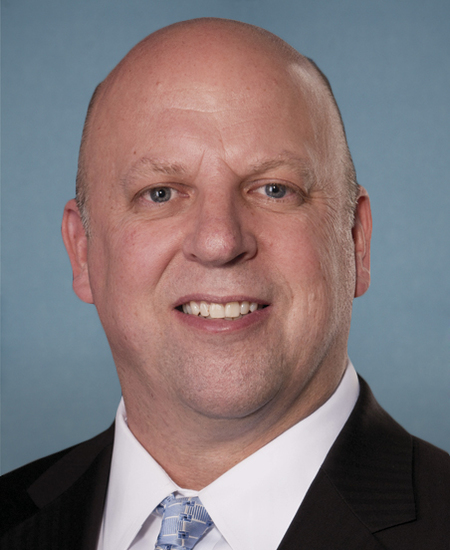
Rep. Scott DesJarlais
Sponsored bills
Maddy summaryThis bill, titled the "Special Operations Forces Concealed Carry Act," amends federal law to allow current and honorably discharged military special operations personnel to carry concealed firearms nationwide. It directly affects those who served in specific special operations roles across the Army, Navy, Marine Corps, and Air Force. The bill expands the existing Law Enforcement Officers Safety Act (LEOSA) to include these "qualified special operators," granting them similar concealed carry privileges. Unlike law enforcement officers under LEOSA, these individuals would not be subject to annual firearms qualification requirements, and their authority would be permanent, contingent on maintaining honorable discharge status and federal firearm eligibility. To exercise this authority, they must carry proof of identity and qualification, which can include a new Department of Defense or Veterans Affairs photo identification or official service documentation.
Maddy summaryThe ALERT Act (HR 7613) requires the Federal Aviation Administration to improve aviation safety through several key measures. It mandates the evaluation and potential implementation of enhanced collision avoidance systems (ACAS-Xa) for commercial aircraft and ACAS-Xr for rotorcraft, with specific deadlines for rulemaking and installation. The bill establishes committees to develop recommendations for safety technology requirements, requires safety risk assessments for air traffic controllers, and addresses operational procedures at high-traffic airports like Ronald Reagan Washington National. These provisions affect air carriers, air traffic controllers, rotorcraft operators, and Department of Defense aircraft operations. The act aims to enhance situational awareness and reduce midair collision risks through technology upgrades and improved safety protocols.
Maddy summaryThe Save Struggling Hospitals Act adjusts Medicare reimbursement rates for hospitals in low-wage areas to help them remain financially viable. It directly affects hospitals located in regions where the average hospital wages fall below the 25th percentile nationally. The bill increases the area wage index for these struggling hospitals by half the difference between their current index and the 25th percentile threshold, starting with discharges on or after October 1, 2019. These adjustments are designed to be budget neutral, meaning the increased payments to low-wage hospitals are offset by reductions elsewhere without decreasing payments to hospitals in the top 75th percentile or reducing any hospital's payment by more than 5 percent from the previous year.
Maddy summaryThis resolution formally recognizes the 100th anniversary of the Sporting Arms and Ammunition Manufacturers' Institute (SAAMI), a trade organization founded in 1926. The bill commends SAAMI for developing industry standards that ensure firearms and ammunition are safe, reliable, and interchangeable. It acknowledges the organization's work in coordinating with government bodies, international standards groups, and industry stakeholders to maintain consistent safety practices. This measure is a ceremonial resolution that does not change any laws or regulations but serves to honor SAAMI's century of leadership in the firearms industry.
Maddy summaryThe CLEAR Act amends federal law to establish new criminal penalties for obstructing Federal law enforcement officers operating in or on their vehicles. This legislation directly affects individuals who forcibly assault, resist, or interfere with officers from the Department of Homeland Security or Department of Justice while they are performing official duties in a law enforcement vehicle. The bill introduces enhanced penalties of up to 20 years in prison or a fine for such obstruction, expanding existing protections for officers engaged in vehicle operations. These provisions apply specifically to interactions involving Federal law enforcement vehicles and do not alter penalties for other types of obstruction.
Maddy summaryHR 556, the Protecting Access for Hunters and Anglers Act, prevents federal agencies from banning lead ammunition or tackle on public lands and waters managed for hunting or fishing. It directly affects hunters and anglers using federal lands (like national wildlife refuges, public forests, and BLM lands) by blocking nationwide restrictions on lead products. The bill allows limited exceptions only for specific locations where wildlife decline is directly linked to lead use, and the restriction must align with state law or get approval from the state wildlife agency. This changes how federal land managers can regulate lead, requiring state coordination for any local restrictions.
Maddy summaryHR 5688, the Non-Domiciled CDL Integrity Act, changes rules for issuing commercial driver's licenses (CDLs) to people who don't live in the state where the license is issued. It allows states to issue CDLs to foreign nationals with lawful U.S. immigration status and work-related visas (valid for up to one year or until their stay ends), requiring states to verify status before issuing and keep records for two years. For residents of U.S. territories like Puerto Rico, it requires proof of U.S. citizenship or permanent residency before issuing CDLs, with similar verification and record-keeping rules. The bill directly affects commercial drivers from foreign countries and U.S. territories seeking CDLs in states where they are not residents.
Enhanced Iran Sanctions Act of 2025 This bill imposes sanctions on certain foreign persons (individuals and entities) that are involved in Iran's petroleum sector as well as certain associated persons. The bill also requires or authorizes actions to facilitate the enforcement of sanctions on Iran. Specifically, the bill requires the President to impose visa- and property-blocking sanctions on any foreign person that, after the bill's enactment, knowingly engages in any transaction related to the processing, export, or sale of oil, condensates, gas, liquefied natural gas, or other petrochemical products in whole or in part from Iran. The President must also impose sanctions on certain foreign persons associated with a sanctioned individual or entity. For example, the President must sanction the subsidiaries and corporate officers of a sanctioned business. The bill provides certain exceptions to these sanctions, including specifying that sanctions do not apply to the importation of goods or to conducting or facilitating transactions for humanitarian assistance. The Department of State must establish an interagency working group that shall seek to establish a multilateral contact group to coordinate international efforts to enforce sanctions on Iran. The bill expands the State Department rewards program to authorize a reward payment to any individual who furnishes information leading to the identification of a person (1) subject to sanctions under this bill, or (2) that has attempted or is attempting to evade sanctions under this bill.
Maddy summaryThis bill, titled the National Guard Protective Zone Act, creates a new federal crime for knowingly entering or staying within a designated area around National Guard members during authorized deployments. The law defines a protective zone as a 15-foot perimeter marked by signs, tape, or verbal warnings, making it illegal to enter with the intent to impede, intimidate, or interfere with the Guard member's duties. Penalties include fines and up to one year in prison, increasing to five years if the offender makes physical contact, throws an object, or spits on the service member. The legislation explicitly states that it does not prohibit First Amendment activities conducted outside the established protective zone.