

Maddy summaryHR 758 aims to improve financial access in communities affected by bank branch closures, primarily targeting rural and underserved urban areas. It establishes a 3-year phase-in period for new financial institutions to meet federal capital requirements and reduces the leverage ratio for qualifying rural community banks (under $10 billion in assets) to 8% during this period. The bill also allows banks to request temporary deviations from approved business plans and expands agricultural loan authority for savings associations. Additionally, it mandates a federal study on barriers to new bank formation in underserved areas, with a report due to Congress within one year. The law directly affects community banks, their regulators, and residents in counties identified as "deeply affected" by branch closures.
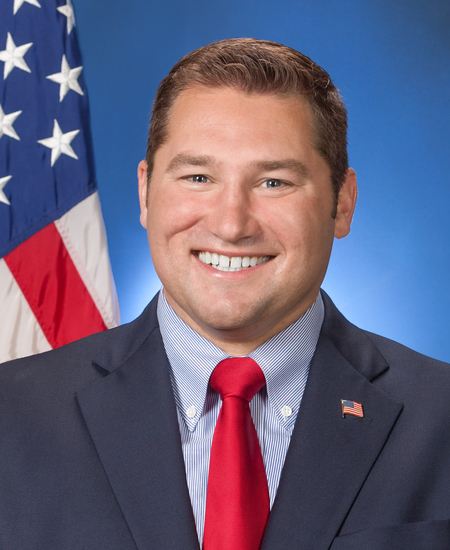
Rep. Guy Reschenthaler
Sponsored bills
Maddy summaryHR 1505, the "No Stolen Trademarks Honored in America Act of 2023," modifies a law to prevent U.S. courts from recognizing trademark, trade name, or commercial name rights tied to business assets that were confiscated. It specifically affects individuals or entities claiming such rights who knew or should have known the mark was connected to confiscated assets, unless the original owner or successor gave consent. The bill requires courts to deny recognition of these claims unless the claimant had no knowledge of the confiscation at the time of acquisition. This change applies to all U.S. courts and executive branch entities handling such cases.
Maddy summaryHR 6073 designates the United States Postal Service facility at 9925 Bustleton Avenue in Philadelphia, Pennsylvania, as the "Sergeant Christopher David Fitzgerald Post Office Building." The bill updates all federal references - such as in laws, maps, regulations, and documents - to use this new name for the building. This is a procedural change that honors Sergeant Christopher David Fitzgerald, with no substantive policy impact beyond renaming the facility. The bill was enacted on November 25, 2024, as Public Law 118-122.
Maddy summaryThis bill (HR 5476) is a ceremonial naming resolution that designates the U.S. Postal Service facility at 1077 River Road, Suite 1, in Washington Crossing, Pennsylvania, as the "Susan C. Barnhart Post Office." It directly affects the physical post office location and all official U.S. government references to it. The bill requires all federal documents, maps, and records to use the new name instead of the previous designation. This is a procedural change with no policy or funding impact, solely honoring Susan C. Barnhart through the facility's name.
Maddy summaryThe Working Dog Commemorative Coin Act (HR 807) directs the U.S. Treasury to mint three types of commemorative coins honoring working dogs' service: $5 gold coins, $1 silver coins, and half-dollar coins with specific weight and composition requirements. Each coin will carry a surcharge ($35 for $5 coins, $10 for $1 coins, $5 for half-dollars) that will be paid directly to America's VetDogs to support their programs providing service dogs for veterans, the disabled, and others. The coins will be issued in 2027 with designs reflecting working dogs' roles in military, detection, therapy, and assistance work. The legislation specifies that all surcharge revenue must fund America's VetDogs' operations without creating new government programs. This is a commemorative measure focused on honoring working dogs' contributions through coin sales, with all surcharge funds going to a specific nonprofit organization.
Maddy summaryThis bill enhances the existing American Battlefield Protection Program by expanding eligibility for grants to include Tribes, nonprofit organizations, and educational institutions, alongside States and local governments. It clarifies that eligible sites must be identified in the 1993 Civil War battlefield report or 2007 Revolutionary War/War of 1812 report, excluding sites already within National Park boundaries. The bill also requires the Secretary to submit updated battlefield condition reports to Congress every 10 years, starting two years after enactment, tracking preservation efforts and battlefield changes. These changes streamline program administration and ensure ongoing assessment of historic battlefield sites.
Maddy summary# Summary of Veterans' Affairs Bill This comprehensive legislation (likely the 2024 version of the "Senator Elizabeth Dole 21st Century Veterans Healthcare and Benefits Improvement Act") addresses multiple aspects of veterans' benefits and services across several key areas: ## Key Provisions 1. **Healthcare Modernization** - Requires machine-readable format for disability benefit questionnaires - Mandates modernization of electronic health record systems - Improves telehealth access for homeless veterans - Establishes new standards for health information technology 2. **Disability Benefits** - Modernizes disability benefit questionnaires - Implements automatic processing for certain temporary disability ratings - Prohibits non-licensed health care professionals from performing medical disability examinations - Requires provision of agent/attorney contact information to health care professionals 3. **Homelessness Support** - Increases per diem payments for homeless veterans' services - Authorizes use of funds for food, shelter, transportation, and communication technology - Creates a strategic plan for homeless veteran services - Expands access to telehealth services for homeless veterans 4. **Native American Veteran Housing** - Expands direct housing loans for Native American veterans - Creates a Native community development financial institution relending program - Requires adequate personnel dedicated to Native American veteran housing - Expands outreach programs for Native American veterans 5. **Burial and Memorial Affairs** - Expands burial allowances for veterans who die at home while receiving hospice care - Updates definitions of surviving spouse 6. **Employment and Training** - Improves reemployment rights for veterans - Creates Warrior Training Advancement Course - Establishes pilot program for veterans in conservation and resource management positions 7. **Transparency and Accountability** - Requires 90-day notice before implementing policy changes - Improves transparency of educational institutions serving veterans - Establishes new reporting requirements for various programs The bill contains numerous technical corrections, updates to existing statutes, and new provisions designed to improve veterans' access to benefits, healthcare, housing, and employment opportunities, with particular attention to underserved veteran populations including Native American veterans, homeless veterans, and veterans with disabilities.
Maddy summaryHR 825, the BOLIVAR Act, prohibits U.S. federal agencies from entering into contracts for goods or services with entities knowingly conducting significant business dealings with Venezuela's government under Nicolás Maduro, which the U.S. does not recognize as legitimate. The law directly affects U.S. government contractors and businesses operating in Venezuela, banning contracts with those engaging in commerce with the Maduro regime. Key exceptions include contracts for humanitarian aid, disaster relief, national security needs, U.S. diplomatic operations in Venezuela, and contracts with international organizations. The prohibition applies to contracts entered into within three years of the bill's enactment, with the Secretary of State required to notify Congress about exceptions used.
Maddy summary# Summary of Proposed Higher Education Act Amendments This document outlines significant proposed amendments to the Higher Education Act of 1965, primarily as part of the "College Cost Reduction Act." The key elements include: ## Accreditation Reform - Major overhaul of accreditation standards, requiring accrediting agencies to demonstrate independence from trade associations - New requirements for accrediting agencies to assess student achievement outcomes, including median value-added earnings relative to median total price charged - Introduction of an "Alternative Quality Assurance Experimental Site Initiative" to test non-accredited institutions - Protections for religious institutions, including a new process for appealing accreditation decisions related to religious mission - Removal of "litmus tests" that would require institutions to support specific political viewpoints ## Student Success Initiatives - Establishment of "Postsecondary Student Success Grants" to increase participation, retention, and completion rates for high-need students - Focus on evidence-based practices, with tiered requirements (tier 1, 2, and 3 reforms) - Mandatory inclusion of high-need student populations (low-income, first-generation, military-connected, etc.) - Requirements for institutions to report on completion rates, retention rates, and student demographics ## Regulatory Changes - Repeal of numerous existing regulations including: * Closed school discharges * Borrower defense to repayment * Pre-dispute arbitration * False certification requirements * Ability-to-benefit rules * Financial responsibility regulations - New restrictions on incentive compensation for recruiters - Changes to third-party servicer definitions and regulations ## Transfer and Credit Policies - New requirement that institutions cannot deny transfer credit based solely on the source of accreditation - Requirements for transparent transfer policies - Changes to reverse transfer policies ## Other Key Provisions - Modifications to the National Advisory Committee on Institutional Quality and Integrity (NACIQI) - New definitions for "total price" and "value-added earnings" - Changes to the process for institutions to change accrediting agencies - New requirements for institutions to report on student outcomes The overall focus of these proposed amendments is to reduce regulatory burden on institutions, promote transparency, improve student outcomes (particularly for high-need students), modernize accreditation processes, and protect religious institutions' rights in accreditation decisions.
Maddy summaryThe Parity for Tribal Law Enforcement Act would allow tribal law enforcement officers working under federal contracts or compacts (via the Indian Self-Determination Act) to enforce federal law on tribal lands, provided they complete equivalent training, pass background checks, and receive Bureau of Indian Affairs certification. It designates these officers as federal law enforcement officers for legal protections under specific federal laws, such as the Federal Tort Claims Act. The bill requires the Secretary of the Interior to establish a credentialing process within 24 months and directs the Attorney General to coordinate federal public safety efforts in Indian communities through improved data collection and training. This policy change directly affects tribal officers and communities by expanding their enforcement authority and legal recognition.