

Born-Alive Abortion Survivors Protection Act This bill establishes requirements for the degree of care a health care practitioner must provide in the case of a child born alive following an abortion or attempted abortion. Specifically, a health care practitioner who is present must (1) exercise the same degree of care as would reasonably be provided to any other child born alive at the same gestational age, and (2) ensure the child is immediately admitted to a hospital. Additionally, a health care practitioner or other employee who has knowledge of a failure to comply with the degree-of-care requirements must immediately report such failure to law enforcement. A health care practitioner who fails to provide the required degree of care, or a health care practitioner or other employee who fails to report such failure, is subject to criminal penalties—a fine, up to five years in prison, or both. An individual who intentionally kills or attempts to kill a child born alive is subject to prosecution for murder. The bill bars the criminal prosecution of a mother of a child born alive under this bill and allows her to bring a civil action against a health care practitioner or other employee for violations.
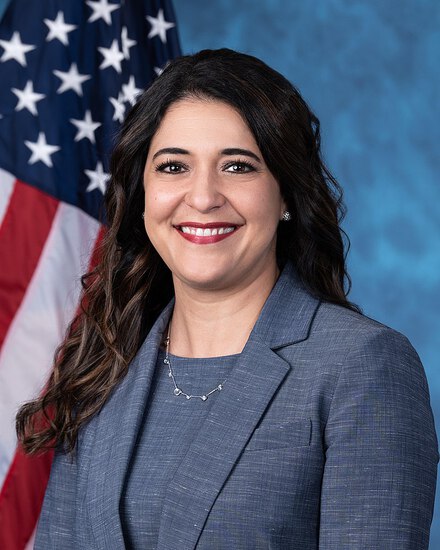
Rep. Stephanie I. Bice
Sponsored bills
Finding Federal Savings Committee Resolution This resolution establishes the House Committee on the Elimination of Nonessential Federal Programs to analyze underperforming or nonessential federal programs and recommend actions to modify or eliminate those programs. The resolution also establishes expedited procedures for legislation reported by the committee to eliminate programs or rescind funding. The committee shall cease to exist at the end of the 119th Congress.
This resolution condemns the military coup that took place in Burma (Myanmar) on February 1, 2021. It also calls on the Burmese military to (1) release all those detained arbitrarily in the coup, (2) restore all forms of communications, and (3) return to power all members of the civilian government.
No Surprise Bills for New Moms Act This bill requires health insurers to provide coverage for newborns of enrollees for the first 30-day period after the newborn's date of birth and to provide a special enrollment period for the newborn that extends at least 60 days after the initial coverage period. It also requires insurers to notify an enrollee if they receive a claim for the enrollee's newborn who is not enrolled in a health insurance plan.
This resolution removes Representative Eric Swalwell from the House Permanent Select Committee on Intelligence.
Unauthorized Spending Accountability Act of 2021 This bill establishes a three-year budgetary level reduction schedule for unauthorized programs funded through the annual appropriations process. Under the bill, a budgetary level is an allocation provided to the congressional appropriations committees under Section 302(a) of the Congressional Budget Act of 1974 by a congressional budget resolution or a deeming resolution. The schedule applies to programs included in the Congressional Budget Office's annual report listing programs that are funded through the appropriations process and have an authorization of appropriations that has either expired or will expire during the year. For the first year after a program's authorization has expired, the bill requires the budgetary level to be reduced by 10% of the funds appropriated for the program in the expiring fiscal year. The bill then requires reductions of 15% in the second and third years before terminating the program at the end of the third unauthorized year. Programs that are reauthorized during the three-year period are exempt from the budgetary level reductions if the reauthorization contains a sunset provision limiting the authorization of appropriations period to no more than three years. The bill establishes the Spending and Accountability Commission to review all mandatory spending programs and submit to Congress a legislative proposal to establish an authorization cycle for discretionary spending programs. The commission may recommend legislation to replace the budgetary level reductions required by this bill with reductions in mandatory spending. The commission's reauthorization schedule must limit reauthorizations to three years, include the budgetary level reductions established by this bill, and establish a mechanism for replacing the budgetary level reductions with reductions to mandatory spending programs. The House of Representatives must consider the commission's proposal using specified expedited legislative procedures.
Protect Seniors and Cut Waste Act This bill prohibits the budgetary effects of the American Rescue Plan Act of 2021 from being counted for the purposes of determining whether a specified sequester occurs under the Statutory Pay-As-You-Go Act of 2010. (The American Rescue Plan Act of 2021 provided funding to address the impact of COVID-19. Sequestration is a process of automatic, usually across-the-board spending reductions under which budgetary resources are permanently cancelled to enforce specific budget policy goals.) The bill also modifies several other provisions related to COVID-19 spending. Among other modifications, the bill provides supplemental appropriations for the Public Health and Social Services Emergency Fund to reimburse certain health care providers for health care related expenses or lost revenues that are attributable to the coronavirus; rescinds certain funds that were provided for payments to states, territories, and tribal governments to mitigate the fiscal effects stemming from the COVID-19 public health emergency; prohibits individuals who are incarcerated or unlawfully present in the United States from receiving 2021 recovery rebates; and rescinds funds that were provided by the American Rescue Plan Act of 2021 for the National Endowment for the Arts, the National Endowment for the Humanities, and the Emergency Federal Employee Leave Fund.
Women's Military History Day Act This bill establishes Women's Military History Day and requires the President to annually issue a proclamation to celebrate the women who have served in the military and their achievements.
Medicare Multi-Cancer Early Detection Screening Coverage Act of 2021 This bill provides for Medicare coverage and payment for multi-cancer early detection screening tests that are approved by the Food and Drug Administration and that are used to screen for cancer across many cancer types.
This bill directs the Speaker of the House and the President pro tempore of the Senate to arrange for the award of three Congressional Gold Medals to the U.S. Capitol Police (USCP) and other law enforcement agencies that protected the U.S. Capitol on January 6, 2021. Following the award of these medals, one medal shall be given to the USCP, one medal shall be given to the Metropolitan Police Department of the District of Columbia, and one medal shall be given to the Smithsonian Institution and displayed with a plaque listing all law enforcement agencies that participated in protecting the Capitol on January 6, 2021.