

Maddy summaryThe IGNITE HBCU Excellence Act authorizes federal grants to Historically Black Colleges and Universities (HBCUs) to fund long-term improvements to their campus facilities and infrastructure. These grants are awarded competitively to eligible HBCUs based on criteria such as the age of their facilities, deferred maintenance needs, financial capacity, and student enrollment levels. Recipients may use the funds to construct or renovate buildings, upgrade technology and broadband systems, improve safety measures, and develop workforce training hubs, while being prohibited from using the money for routine maintenance or athletic facilities. The legislation also includes provisions for reporting on project outcomes and requires institutions to create comprehensive master plans that involve consultation with diverse campus and community stakeholders.
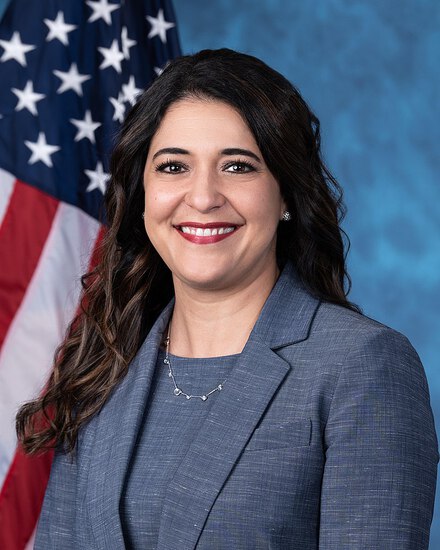
Rep. Stephanie I. Bice
Sponsored bills
This resolution expresses support for police officers and other law enforcement personnel. The resolution further recognizes law enforcement officers across the United States in the pursuit of preserving safe and secure communities; the need to ensure that such officers have the equipment, training, and resources necessary to protect their health and safety while they are protecting the public; and the law enforcement community for acts of sacrifice and heroism. The resolution expresses condolences and appreciation to the loved ones of each law enforcement officer who has made the ultimate sacrifice in the line of duty.
Maddy summaryThis bill would amend federal law to strengthen penalties for organized retail crime by expanding definitions of theft to include digital goods, gift cards, and setting a $5,000 aggregate value threshold for charges over a 12-month period. It would establish a new "Organized Retail and Supply Chain Crime Coordination Center" under Homeland Security to coordinate Federal, State, local, and Tribal law enforcement efforts against cross-jurisdictional theft groups. The Center would share information with retailers, transportation companies, and law enforcement agencies, track crime trends, and produce annual reports on organized retail crime. This legislation directly affects retailers, supply chain businesses, and law enforcement agencies, while targeting organized crime groups responsible for a 93% increase in larceny incidents and rising safety concerns for retail employees. The bill aims to address significant financial losses and supply chain disruptions noted in the National Retail Federation's 2023 data.
Maddy summaryThis resolution formally recognizes the importance of motherhood and honors mothers on Mother's Day. It explicitly supports policies that define mothers as women and opposes recent legislative efforts to remove the term "mother" from official House rules. The text also acknowledges various types of mothers, including stepmothers, adopted mothers, and single mothers, while rejecting alternative terms like "birthing person" or "gestational parent." Ultimately, the bill encourages the public to celebrate the sacrifices and contributions of mothers to the nation.
Maddy summaryThe Training Rural Law Enforcement Officers Act of 2026 allows nonprofit organizations to receive federal grants to provide free training to small rural police departments and sheriff's offices with fewer than 50 officers. This change aims to help smaller agencies access funding that they often cannot navigate due to complex application processes and reporting requirements. The bill authorizes these grants only if the training aligns with Department of Justice priorities and is delivered at no cost to the recipient agencies. Eligible nonprofits must have recognized expertise in law enforcement training as determined by the Attorney General.
Maddy summaryThis resolution expresses support for designating May 5, 2026, as the National Day of Awareness for Missing and Murdered Indigenous Women and Girls. It calls on the public and organizations to honor the victims and show solidarity with their families. The bill also recommends that the Department of Justice commission a new study to gather updated statistics on the crisis, noting that previous data is nearly a decade old.
Maddy summaryThis resolution formally condemns the attempted assassination of President Donald J. Trump on April 25, 2026, as well as previous attempts in 2024, and recognizes the critical role of the Department of Homeland Security. The bill expresses gratitude to law enforcement officers who responded to the attack and affirms the Secret Service's responsibility for protecting the President. Additionally, it calls on Americans to unite against political violence and condemns those who incite attacks against public officials.
Maddy summaryThe Access to Donor Milk Act of 2026 expands federal support for nonprofit organizations that collect, test, and distribute pasteurized donor human milk. It amends existing child nutrition laws to allow state agencies to use funds for storing unprocessed milk donations and transferring them to these nonprofit banks. Additionally, the bill authorizes competitive grants to help these banks increase their capacity during declared disasters or public health emergencies. The legislation also requires the Department of Health and Human Services to launch a public awareness campaign educating parents and medical professionals about the benefits and safety of donor milk. Finally, it mandates that the Secretary of Health and Human Services convene a public meeting and issue draft safety standards for the collection and processing of donor human milk within 18 months of enactment.
Maddy summaryThis bill modernizes housing assistance programs for Native American tribes and Native Hawaiians by streamlining environmental reviews, extending funding authorization through 2032, and expanding loan guarantee options. Key provisions include consolidating environmental review requirements to reduce paperwork for tribes, allowing 99-year leasehold interests on trust lands for housing, and creating new rental assistance specifically for homeless or at-risk Native American veterans. The legislation also clarifies rent rules, waives certain housing counseling certifications for tribal entities, exempts tribal housing projects from some federal civil rights and Buy America requirements, and establishes a direct loan guarantee process for tribal housing projects.
Maddy summaryHR 6624, the Biological Intellectual Property Protection Act of 2025, requires export licenses for digital files representing human- or AI-designed synthetic DNA or RNA sequences when sent to foreign entities linked to countries designated as national security concerns (like China). It directly affects biotechnology companies and researchers exporting such digital sequence data, mandating licenses for these specific exports within one year of the law's enactment. The key mechanism is a new license requirement under export controls, targeting digital files that could reveal sensitive biotechnology research. This policy change aims to prevent foreign adversaries from accessing U.S. biotech intellectual property through synthetic biology data exports.