

Maddy summaryThe Patient Debt Relief Act (HR 7478) requires Medicare-participating hospitals to implement new financial assistance and debt collection standards starting January 1, 2028. It prohibits hospitals from garnishing wages, placing home liens, or selling medical debt to collectors without offering income-based repayment plans (capping payments at 4% of monthly income) and providing clear eligibility information with bills. Hospitals failing to comply face civil penalties up to $1 million per violation, with annual audits and a public portal for patients to report noncompliance. The bill also creates a $100 million grant program to discharge medical debt for individuals meeting income thresholds (5% of income or household income ≤400% of poverty line). These changes directly affect hospitals and patients burdened by medical debt, aiming to standardize fair collection practices.
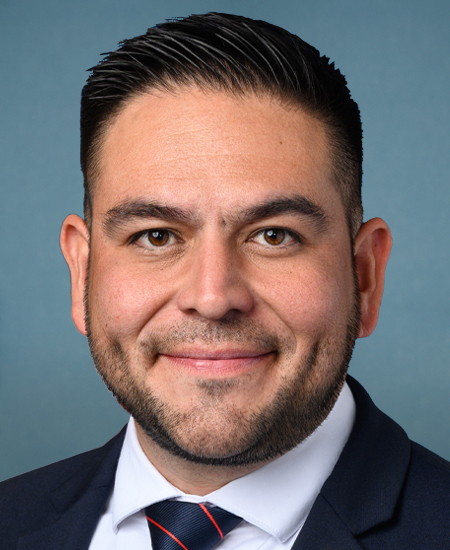
Rep. Gabe Vasquez
Sponsored bills
Maddy summaryHR 6688, the ADAS Functionality and Integrity Act, requires the National Highway Traffic Safety Administration (NHTSA) to develop guidelines within 24 months to ensure Advanced Driver Assistance Systems (ADAS) in passenger vehicles (model year 2028+) maintain safety after modifications like tire changes or suspension adjustments. The guidelines will specify allowable modification ranges (e.g., ride height, sensor alignment), calibration procedures, and verification tests for repair shops and owners. This directly affects vehicle manufacturers, independent repair facilities, and car owners who customize or modify vehicles. The bill mandates that guidelines be based on empirical data and reference existing safety assessment methods, with penalties for non-compliance.
Maddy summaryThe PART Act requires new vehicles to have catalytic converters marked with a unique identification number that links directly to the vehicle's identification number, stored in a law enforcement-accessible database. It establishes a $7 million grant program to help repair shops, dealers, law enforcement, and fleet owners purchase equipment for marking converters with visible, durable identifiers (using die or pin stamping and high-visibility paint). The bill also mandates that businesses buying catalytic converters keep detailed seller records (including vehicle information) for two years and use traceable payments, banning cash or cryptocurrency transactions. Additionally, it creates new federal criminal penalties for stealing or trafficking in catalytic converters, with potential sentences of up to five years in prison.
Maddy summaryThis bill, known as the BASICS Act, creates a new $5.5 billion federal funding program over five years to repair and replace bridges in poor condition across the United States. The program prioritizes projects based on the cost of bridge rehabilitation in each state and guarantees a minimum funding allocation of $45 million per state annually. It also expands funding for regional transportation planning in rural areas and increases flexibility for local governments to select and manage transportation projects through enhanced consultation requirements. Additionally, the legislation removes local matching fund requirements for metropolitan planning activities and allows 100 percent federal funding for off-system bridge projects owned by local governments or tribes.
Maddy summaryHR 7391, the Community Health Center Drug Pricing Protection Act, requires that Federally Qualified Health Centers (FQHCs) pay the discounted 340B ceiling price for covered drugs **at the time of purchase**, not later through rebates or adjustments. This directly affects FQHCs, which rely on 340B discounts to provide affordable care to low-income patients. The bill amends the Public Health Service Act to prohibit manufacturers from entering agreements where FQHCs initially pay more than the ceiling price, with later reimbursement. It takes effect immediately upon enactment for all new drug purchases and applies to existing agreements starting then.
Maddy summaryThis bill requires the National Highway Traffic Safety Administration to establish new safety standards for side underride guards on trucks and trailers within 18 months, with full compliance required within two years. The standards mandate that these guards prevent passenger vehicles from sliding under trucks during collisions, improve safety for vulnerable road users like motorcyclists, and include aerodynamic features to aid fuel efficiency. The bill also creates an advisory committee to monitor underride safety and mandates studies to better understand and prevent these crashes. It aims to reduce the thousands of deaths and injuries from underride crashes that have occurred over the past 50 years, as documented by the National Transportation Safety Board.
Maddy summaryThis bill establishes a Truth and Healing Commission to investigate the history and impacts of U.S. Indian Boarding School policies on Native American communities, including their cultural, emotional, and physical effects. The Commission will document these policies' history through research, public meetings across all 12 Bureau of Indian Affairs regions and Hawai'i, and consultation with survivors, tribes, and relevant Federal agencies. It will develop recommendations for federal action on memorialization, education, and addressing ongoing impacts, with a final report due six years after enactment. The Commission will include a Survivors Truth and Healing Subcommittee with 15 members representing boarding school survivors, their descendants, and tribal communities. The bill requires trauma-informed care at public meetings and mandates consultation with Native American communities throughout the process.
Maddy summaryThe Family Violence Prevention and Services Improvement Act of 2026 amends federal law to enhance support for victims of family violence, domestic violence, and dating violence. The bill authorizes $270 million annually for fiscal years 2027-2031 to fund state, tribal, and community programs, with specific funding reserved for tribal programs (12.5%), national hotlines ($20.5 million for general hotline, $4 million for Indian hotline), and services for underserved populations. It requires grantees to provide trauma-informed, culturally appropriate services while prohibiting discrimination and protecting victim confidentiality, and mandates accessibility for people with disabilities and limited English proficiency. The bill also establishes new technical assistance centers, Tribal resource centers, and community-based prevention programs to address the needs of underserved populations including Native Hawaiians, Alaska Natives, and racial and ethnic minorities.
Maddy summaryThis bill extends dependency and indemnity compensation to surviving spouses of veterans who die from amyotrophic lateral sclerosis (ALS), treating ALS-related deaths as qualifying for benefits regardless of how long the veteran had the disease before death. It requires surviving spouses to have been married to the veteran for at least eight continuous years prior to death to qualify for compensation. The changes apply to veterans dying from ALS on or after October 1, 2025. Additionally, the bill requires the Veterans Affairs Secretary to submit a report within 180 days of enactment identifying other service-connected disabilities with high mortality rates that might warrant similar treatment.
Maddy summaryHR 1458, the VETS Opportunity Act of 2025, amends VA education benefits rules to ensure veterans using these benefits for independent study courses receive meaningful instruction. It requires that such courses include regular, substantive interaction between students and instructors, and limits eligibility to programs at institutions approved for federal student aid under the Higher Education Act. This directly affects veterans pursuing online or self-paced courses using VA education benefits. The changes apply to courses starting August 1, 2025, and aim to standardize benefit access for qualifying educational programs.