

Maddy summaryThis bill helps new car dealers affected by pandemic-era supply chain disruptions by changing tax rules for inventory sales. It allows dealers using LIFO accounting to treat certain sales of unsold vehicles (liquidations) between March 2020 and December 2021 as "qualified" for tax purposes. Dealers can defer recognizing income from these sales and have until 2026 to replace the sold vehicles before potential tax adjustments apply. The provision specifically targets dealers who couldn't replenish inventory during the supply chain crisis.
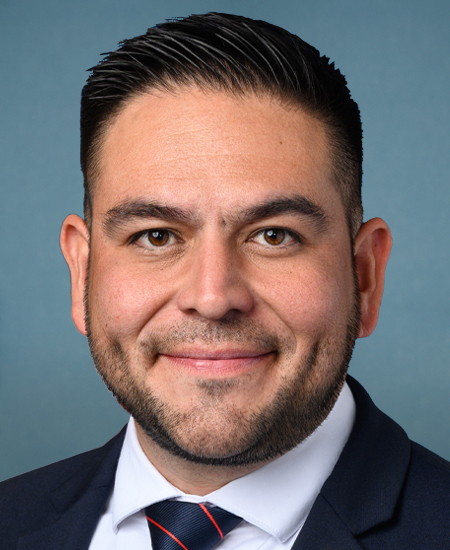
Rep. Gabe Vasquez
Sponsored bills
Maddy summaryThe SHIP IT Act (HR 471) aims to improve commercial trucking safety and efficiency through several key provisions. It allows states to temporarily permit overweight trucks during emergencies, provides tax credits for truck drivers (up to $10,000), and allocates $175-$200 million annually for grants to build commercial truck parking facilities. The bill also simplifies driver licensing processes, removes seasonal restrictions on agricultural transportation, and creates a pilot program for 6-axle vehicles with safety data collection requirements. These changes directly affect truck drivers, trucking companies, and state transportation agencies, with the goal of enhancing highway safety, reducing congestion, and supporting the trucking workforce.
Maddy summaryHR 660, "Ethan's Law," requires gun owners in homes where minors (under 18) or individuals prohibited from owning firearms under federal/state law reside to store firearms securely. It makes unsecured storage unlawful if a minor or prohibited person could access the firearm, with fines of $500 per violation and enhanced penalties (up to 5 years in prison) if injury or death occurs. The bill also establishes a federal grant program to help states implement similar secure storage laws and provides funding incentives for states that already have such laws in place.
Maddy summaryThis bill requires the U.S. Postal Service to provide written proposals to supervisors' organizations 60 days before pay/benefit decisions expire or after new collective bargaining agreements are reached. It directly affects postal supervisors and managers covered by collective bargaining agreements regarding their pay policies, schedules, and fringe benefits. The key mechanism establishes clear timelines for negotiations and mandates that any dispute resolution panel must issue a binding final decision within 15 days of receiving input from both parties. This aims to streamline the process for resolving pay and benefits disputes between the Postal Service and supervisory staff organizations.
Maddy summaryThe HEAL Act (HR 603) requires the U.S. Holocaust Memorial Museum Director to study how public elementary and secondary schools teach about the Holocaust and related antisemitism. The study will examine curriculum requirements, teaching methods (like project-based learning), instructional materials, and assessment approaches across states and school districts. It specifically analyzes whether Holocaust education is mandatory, optional, or integrated across subjects, and how schools address antisemitism and genocide prevention. The resulting report, due within 180 days of the study or three years after enactment, will inform Congress but does not change current school policies. This is a data-gathering measure, not a policy mandate.
Maddy summaryHR 352, the McCARTHY Act, would reduce the pay of every House of Representatives member if a Speaker isn't elected by the end of the first day of a new Congress. Specifically, each member's annual salary would be cut by one day's pay for every 24-hour period without a Speaker elected, calculated using the standard pay rate under existing law. This provision applies to the 119th Congress and all future Congresses. The bill directly affects all current and future House members by tying their compensation to the timely election of a Speaker.
Maddy summaryHR 345, the TRUST in Congress Act, requires Members of Congress, their spouses, and dependent children to place certain investments into a "blind trust" within 90 days of taking office or after the bill's enactment. It directly affects current and future lawmakers and their immediate family members by mandating that covered investments - such as stocks, commodities, or derivatives (excluding Treasury bonds and some mutual funds) - be placed in a trust they cannot manage. Members must certify the trust setup to House or Senate officials within 15 days, and trusts cannot be dissolved until 180 days after leaving office. The law excludes investments providing primary income (e.g., from a spouse's job) but requires transparency through public website disclosures of certifications.