

Maddy summaryThe Data Center Water and Energy Transparency Act of 2026 requires large data centers to report their annual energy and water consumption to state agencies or federal officials if the state lacks its own reporting program. This mandate applies specifically to facilities with a peak demand of at least 25 megawatts, which must submit details on their usage, efficiency metrics, and five-year projections for reducing resource consumption. The bill also requires operators planning to build new or expand existing facilities to submit similar reports before construction begins. Additionally, the law authorizes states to charge fees for data collection and establishes a federal penalty of $20,000 per day for negligent violations of reporting requirements.
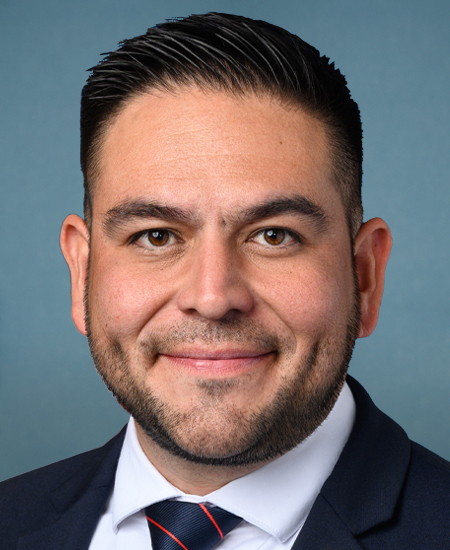
Rep. Gabe Vasquez
Sponsored bills
Maddy summaryThe CDC Tribal Public Health Security and Preparedness Act amends the Public Health Service Act to formally include Indian Tribes, Tribal organizations, and urban Indian organizations in state and local public health emergency planning. It establishes a new funding stream that provides at least 10 cooperative agreements annually to these entities, with a minimum award amount determined through consultation and no requirement for matching funds. The bill also grants the CDC Secretary the authority to waive certain program regulations, except those related to labor standards and the environment, after consulting with Tribes to ensure effective program delivery. Additionally, the legislation requires the Secretary to conduct a review and submit a detailed report to Congress on the implementation and success of these tribal health initiatives within two years of enactment.
Maddy summaryThe AADAPT Act reauthorizes and expands Project ECHO grants to improve Alzheimer’s and dementia care through technology-enabled training. It specifically funds grants for healthcare providers in rural, frontier, or medically underserved areas to enhance early diagnosis, quality care, and provider retention for dementia patients. The bill authorizes $1 million annually (2027-2032) for these dementia-focused training programs, requiring funds to supplement - not replace - existing resources. This directly supports primary care providers licensed to serve underserved communities, using collaborative online learning to address care gaps.
Maddy summaryHR 2004, titled "Tyler’s Law," requires the Secretary of Health and Human Services to study how often hospital emergency departments test for fentanyl during overdose cases (beyond standard drug tests), including associated costs, patient benefits/risks, and impacts on privacy and patient-physician relationships. The study must be completed within one year of the bill's enactment. Based on the study results, the Secretary must issue guidance within six months on whether emergency departments should routinely test for fentanyl, how to inform clinicians about test contents, and how such testing may affect future overdose risks and health outcomes. This bill directly affects hospital emergency departments and patients experiencing overdoses by shaping future testing protocols.
Maddy summaryHR 1266, the Combating Illicit Xylazine Act, adds xylazine - a veterinary sedative increasingly found in illicit drug mixtures - to Schedule III of the Controlled Substances Act, regulating its use and trafficking. It directly affects veterinarians, animal owners, and manufacturers by allowing xylazine to be legally dispensed for animal use under specific veterinary prescriptions, while prohibiting non-veterinary human use. The bill includes transition periods (60 days for practitioners, 1 year for labeling) to ease compliance for manufacturers and practitioners, and requires the DEA and FDA to expedite necessary applications. It also mandates two congressional reports on xylazine's illicit use and trafficking patterns, and directs the Sentencing Commission to review penalties for offenses involving xylazine.
Maddy summaryThe Protecting Home-Based Care for Rural Veterans Act of 2026 aims to safeguard funding for home health services provided to veterans living in rural areas. It requires the Department of Veterans Affairs to restore any reimbursement rates for homemaker and home health aide services that were lowered after December 31, 2025, and prevents future rate cuts without notifying Congress at least 90 days in advance. Additionally, the bill mandates annual reports to Congress detailing the availability of service providers in different regions and the methods used to calculate payment rates. A one-time report must also be submitted within 90 days of the law's enactment to explain how these rates were determined and whether input was gathered from service providers.
Maddy summaryThe Essential Caregivers Act of 2026 requires nursing homes, long-term care hospitals, rehabilitation facilities, and intermediate care facilities to allow two chosen family members or friends to visit residents during times when regular visitation is suspended. These essential caregivers must agree to follow the facility's existing safety and infection control rules, which are no more restrictive than those applied to staff. While facilities can limit access for the first seven days of a suspension or deny entry if a caregiver shows symptoms of a serious infectious disease, they cannot block visits for end-of-life care. Additionally, the bill mandates that complaints about denied access to essential caregivers be investigated and resolved within three days.
Maddy summaryThis bill requires Medicare Advantage plans to implement electronic pre-approval systems for medical services by 2028 and meet transparency reporting standards starting in 2027. Plans must publicly report data on approval/denial rates, appeal outcomes, response times, and technology use for pre-approval requests, including details on how denials relate to clinical criteria. It establishes a 24-hour response timeframe for certain requests and mandates annual reviews of pre-approval requirements based on data and input from seniors and providers. The law directly affects Medicare Advantage plans, seniors enrolled in these plans, and healthcare providers who submit pre-approval requests. These changes aim to make the pre-approval process faster, more transparent, and more accountable for seniors seeking covered medical services.
Maddy summaryThis resolution expresses support for designating July 10th as Journeyman Lineworkers Recognition Day to honor the workers who maintain the nation's electrical grid. The bill specifically recognizes the dangerous conditions these employees face, such as working at heights near live power lines and responding to disasters like hurricanes and wildfires. It also commemorates Henry Miller, the first president of the International Brotherhood of Electrical Workers, who died on July 10, 1896, while performing his duties. Ultimately, the measure encourages the public to observe this day with reflection on the contributions of lineworkers.
Maddy summaryThe FAIR Data Act prevents investor-owned electric utilities from passing the costs of large data centers onto residential and small business customers through higher rates. This rule applies specifically to data centers with a peak power demand exceeding 75 megawatts, excluding upgrades to the power grid made to support these facilities. State regulators are required to review and implement this cost-recovery restriction within a year, while the Department of Energy must verify that states comply before receiving federal administrative funds. Additionally, the Federal Energy Regulatory Commission will submit an annual report to Congress detailing how these data centers impact electricity rates and grid reliability.