

Maddy summaryThis bill, titled the No Federal Tax Dollars for Illegal Aliens Health Insurance Act of 2026, amends the Affordable Care Act to restrict the use of federal taxpayer funds for health insurance coverage. It directly affects states that receive funding under the ACA and individuals seeking health insurance coverage through federal programs. The key provision prohibits states from using pass-through funding to pay for health insurance or related benefits for individuals who are not U.S. citizens, nationals, or lawfully present aliens. Additionally, the bill requires the Secretary of Health and Human Services to rescind any existing waivers that would have allowed such funding for unauthorized individuals had the new restrictions been in place at the time of approval.
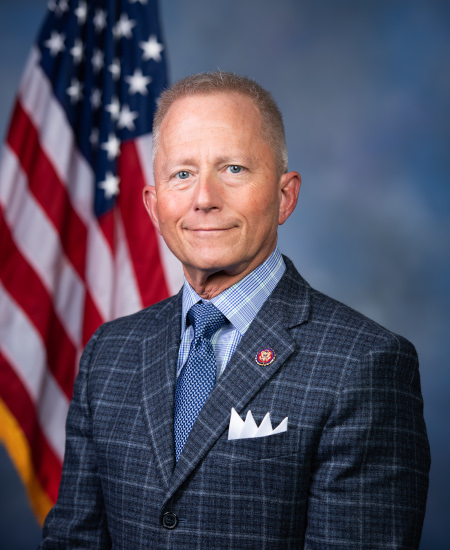
Rep. Jefferson Van Drew
Sponsored bills
Maddy summaryThis bill, known as the AI Fraud Accountability Act, makes it a federal crime to use artificial intelligence or other technology to create realistic digital impersonations of real or fictional people for the purpose of defrauding others of money, documents, or other valuable items. The law applies to communications across state lines and foreign borders, and it allows for criminal penalties including fines and up to three years in prison, along with the forfeiture of assets used to commit the fraud. In addition to criminal provisions, the bill gives the Federal Trade Commission authority to enforce these rules as unfair or deceptive business practices and requires the creation of a working group to develop technical best practices for detecting and preventing digital impersonation fraud. The legislation also establishes mechanisms for international cooperation with foreign law enforcement agencies to combat cross-border fraud and includes a safeguard protecting parody, satire, and journalism from being classified as illegal impersonation.
Maddy summaryHR 7678, the Gun Owner Registration Information Protection Act, prohibits federal funding for state or local databases that track lawfully owned firearms or their owners. The bill allows federal funding for databases recording lost or stolen firearms but bans it for databases listing legal gun ownership. This means states cannot use federal money to create or maintain systems that compile information about legally owned guns. The bill directly affects state and local governments that rely on federal funds for firearm ownership databases.
Maddy summaryThis bill amends U.S. Code sections to expand TRICARE eligibility for National Guard and Reserve retirees. It removes an age barrier preventing members under 60 from accessing TRICARE benefits if they qualify for non-regular retirement under Chapter 1223 but aren't yet receiving retired pay (due to specific provisions in Title 38). The key change defines "TRICARE Retired Reserve" to include these members who meet three criteria: qualifying for non-regular retirement at 60, being under 60, and not receiving retired pay due to Title 38 rules. The amendments take effect 18 months after the bill's enactment.
Law-Enforcement Innovate to De-Escalate Act This bill removes less-than-lethal projectile devices (e.g., certain TASERs) from regulation under the Gun Control Act. The term less-than-lethal projectile device means a device that (1) is not designed or intended to expel (and may not be readily converted to discharge) commonly used ammunition or projectiles exceeding a velocity of 500 feet per second; (2) is designed and intended to be used in a manner not likely to cause death or serious bodily injury; and (3) does not accept (and cannot be readily modified to accept) an ammunition feeding device. The bill also requires the Bureau of Alcohol, Tobacco, Firearms and Explosives to determine whether a device satisfies the definition of a less-than-lethal projectile device within 90 days of a request.
Maddy summaryThis bill increases the annual stipend for books, supplies, and educational materials under the Post-9/11 GI Bill from $1,000 to $1,400, effective immediately. It also establishes a new automatic annual adjustment starting in fiscal year 2026, tying stipend increases to inflation using the Consumer Price Index (CPI). Specifically, the stipend will rise each year by the percentage difference between the current CPI and the previous year’s CPI. This directly affects veterans using the Post-9/11 Educational Assistance Program for their education expenses.
Maddy summaryThis bill directs U.S. agencies to support Iranian people's access to uncensored information and hold Iranian officials accountable for human rights abuses. It requires the State Department and FCC to report on technologies (like satellite networks and mesh systems) that could bypass internet restrictions in Iran, and authorizes $2 million annually to develop such tools. The bill also establishes a new "Iran Kleptocracy Initiative" at FinCEN to track corruption, freeze assets of Iranian regime officials and state-owned businesses, and coordinate with international partners. These measures apply to U.S. policy toward Iran but do not alter Iran's domestic laws; they focus on U.S. sanctions, technology development, and anti-corruption efforts targeting the Iranian regime.
Maddy summaryHR 7602, the State of Men’s Health Act, requires the Government Accountability Office (GAO) to study U.S. men’s health disparities and submit a report to Congress within one year of enactment. It also mandates the Department of Health and Human Services (HHS) to establish an Office of Men’s Health within 18 months to coordinate existing federal programs focused on preventive care for men, including screenings for prostate cancer, mental health, and cardiovascular issues. The bill does not authorize new funding; all activities must use existing appropriations. This legislation directly affects all men in the United States by aiming to improve health outcomes through better coordination of current federal health initiatives.
Protection of Women in Olympic and Amateur Sports Act This bill requires certified national governing bodies (NGBs) of amateur sports (e.g., USA Gymnastics) to prohibit a person whose sex is male from participating in an amateur athletic competition that is designated for females, women, or girls. Under the bill, male means an individual who has, had, will have—or would have, but for a developmental or genetic anomaly or historical accident—the reproductive system that at some point produces, transports, and utilizes sperm for fertilization.
Maddy summaryHR 7539, the SAFE Act, requires the Comptroller General to study "chameleon carriers" (motor carriers evading safety rules by changing names or ownership) and develop an automated tool for the Federal Motor Carrier Safety Administration (FMCSA) to detect such applicants during Department of Transportation (DOT) number registration. The bill mandates the tool to identify patterns like shared ownership, similar addresses, insurance lapses, or continuity of operations to flag suspicious applications. It directly affects motor carriers applying for DOT numbers and FMCSA staff, who must use the tool to review applications while preserving final decision-making authority. The law also requires an appeals process for denied applications, data privacy safeguards, and a two-year effectiveness report on the tool.