

Maddy summaryThis bill amends the Fair Labor Standards Act to create child labor exemptions for specific logging work. It allows 16- and 17-year-olds to work in mechanized timber harvesting operations (like felling, processing, and transporting timber using machinery) that the Secretary of Labor deems particularly hazardous, provided the employer is not owned or operated by a parent or guardian. The exemption applies to jobs involving equipment such as feller-bunchers, forwarders, and whole tree processors, but excludes children working for non-family-owned logging businesses. It does not create new career programs but modifies existing child labor restrictions for certain logging occupations.
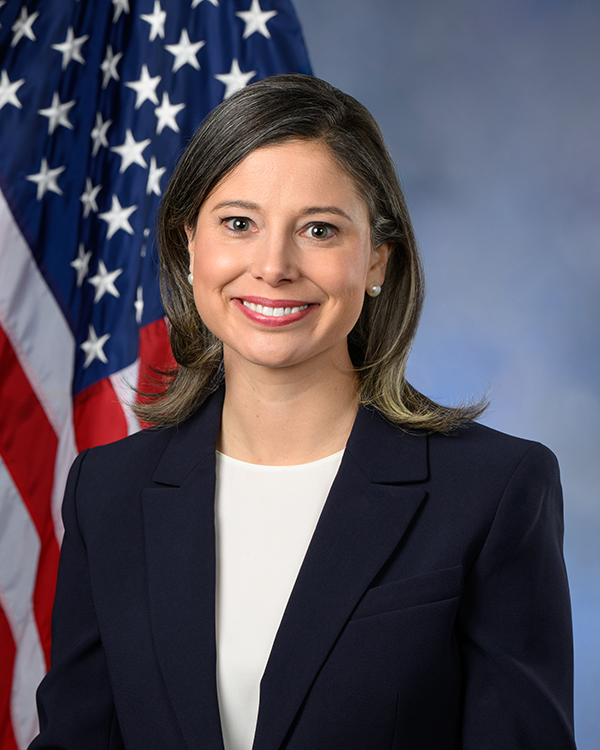
Rep. Maggie Goodlander
Sponsored bills
Maddy summaryThis bill restricts access to Treasury payment systems (including the Bureau of the Fiscal Service) to only Treasury employees with a "fully successful" performance rating and at least one year of civil service, or contractors/outsiders with security clearances, required privacy/cybersecurity training, ethics agreements, and no conflicts of interest. It treats non-government users accessing these systems as government employees for ethics rules and defines specific actions (like stopping payments) as "personal and substantial participation" in government matters. The Treasury Inspector General must investigate any unauthorized access within 30 days and report to Congress, detailing the breach, security risks, and any halted payments. The bill directly affects Treasury staff, contractors, and any external entities accessing federal payment systems.
Blind Americans Return to Work Act of 2025 This bill requires the Social Security Administration to carry out a demonstration project during which blind Social Security Disability Insurance (SSDI) beneficiaries receive reduced benefits commensurate with income above certain thresholds. Under current law, only individuals who earn under a specified monthly income, known as the substantial gainful activity (SGA) threshold, are considered disabled and thereby eligible for SSDI benefits. For blind workers, this limit is $2,700 per month in 2025. SSDI beneficiaries may earn beyond the SGA threshold for a limited period of time, known as the trial work period , before their benefits are suspended and ultimately terminate. The bill establishes a 20-year demonstration project during which individuals who are entitled to SSDI benefits by reason of blindness and who earn above the SGA threshold continue to receive benefits at an amount gradually reduced commensurate with their earnings beyond a specified amount. During this period, blind workers’ SSDI benefits must be reduced by $1 for every $2 that a worker earns above the sum of (1) the SGA threshold, and (2) the worker’s expenses reasonably attributable to their work. The SGA threshold may not be used to determine whether an individual is disabled during this period, and blind workers’ SSDI benefits may not be terminated due to work-related earnings. The trial work period also must not apply. After 10 years, affected beneficiaries may opt out of the modified benefits structure.
Maddy summaryHR 1076, the WARN Act, requires the Comptroller General to study how well local, state, and federal emergency alert systems share timely weather emergency information during events like storms or power outages. The study will examine alert methods (including social media), the clarity of public messages, and outdoor siren systems, using feedback from emergency managers and community groups. It mandates a report to Congress within 18 months of enactment, focusing on identifying improvements to alert systems for public safety. The bill itself does not change existing policies but directs a review to inform future emergency communication strategies.
Protect Our Letter Carriers Act of 2025 This bill requires or authorizes certain actions related to the U.S. Postal Service (USPS). The bill requires the Department of Justice to appoint an assistant U.S. attorney in each judicial district to coordinate and supervise the investigation and prosecution of various crimes related to postal services (for example, assault on a postal service employee, breaking into a post office, or obstruction of mails). The bill also requires the U.S. Sentencing Commission to amend sentencing guidelines to provide that the assault or robbery of a postal employee shall be treated the same as the assault of a law enforcement officer. Additionally, the bill authorizes appropriations for the USPS to install high security collection boxes and replace older versions of the universal mailbox key with electronic versions.
Maddy summaryHR 1054, the Educators Expense Deduction Modernization Act of 2025, increases the annual tax deduction available to eligible K-12 teachers for out-of-pocket classroom expenses. The bill raises the deduction limit from $250 to $1,000 per year for qualifying educators, applying to taxable years beginning December 31, 2025. It amends Internal Revenue Code sections 62(a)(2)(D) and 62(d)(3) to update the deduction amount and relevant tax year references. This change directly affects elementary and secondary school teachers who itemize deductions and incur eligible classroom costs. The bill makes no other policy changes beyond modernizing the deduction amount and effective date.
Maddy summaryThis bill permanently extends the New Markets Tax Credit (NMTC), a federal tax incentive that encourages private investment in low-income communities. It directly affects community development entities (CDEs) that channel capital into underserved neighborhoods for projects like housing, healthcare, and businesses. Key provisions include permanently extending the credit beyond 2025, adding annual inflation adjustments to the credit amount starting in 2026, and ensuring the credit isn't reduced by the alternative minimum tax for investments made after December 2024. The changes apply to taxable years beginning after December 2024, providing long-term stability for community development financing.
Ski Hill Resources for Economic Development Act This bill allows National Forest System (NFS) units to keep the majority of ski area permit rental fees that were generated within their boundaries and outlines how revenues from those fees may be used. Such fees are collected by the Department of Agriculture (USDA) from ski area operators on NFS land. Within the NFS unit where the fees were generated, USDA must expend (1) 60%-48% of the collected fees for activities such as administration of the ski area permit program, visitor information, or reducing the likelihood of wildfire in or adjacent to a recreation site; and (2) 20% of the collected fees for activities such as repair of a Forest Service-owned facility, habitat restoration, or search and rescue activities. The remainder of the collected fees must be expended by USDA at any NFS unit for any of the activities specified in this bill.
Maddy summaryHRES 116 is a non-binding House resolution condemning pardons granted to individuals convicted of assaulting Capitol Police officers. It expresses the House's disapproval of such pardons but does not alter any laws or affect legal proceedings. The resolution has no legal force and serves only as a formal statement of disapproval by the sponsoring lawmakers. It directly addresses the pardons of specific individuals found guilty in criminal cases related to the January 6, 2021, Capitol breach.
Maddy summaryHR 1007, the Antisemitism Awareness Act of 2025, clarifies how the Department of Education enforces Title VI of the Civil Rights Act of 1964 to address discrimination against Jewish individuals. It requires the Department to consider the International Holocaust Remembrance Alliance (IHRA) definition of antisemitism when investigating complaints involving discrimination based on actual or perceived Jewish ancestry or ethnic characteristics. This affects Jewish students and communities in K-12 schools and colleges receiving federal funding, as it ensures antisemitism is assessed under existing civil rights protections. The bill does not create new laws but specifies that the IHRA definition - already used by the Department since 2018 - must be applied in Title VI enforcement cases.