

Promoting Responsible and Effective Virtual Experiences through Novel Technology to Deliver Improved Access and Better Engagement with Tested and Evidence-based Strategies Act or the PREVENT DIABETES Act This bill allows health care entities to provide virtual services under the Medicare Diabetes Prevention Program for an additional three years. The Medicare Diabetes Prevention Program offers Medicare beneficiaries who are at risk of developing Type 2 diabetes specialized training and education regarding diet, exercise, and other behavioral changes. The Centers for Medicare & Medicaid Services issued temporary authorization for entities participating in the program to provide these services virtually until December 31, 2027. The bill extends the authorization for virtual services until December 31, 2030.
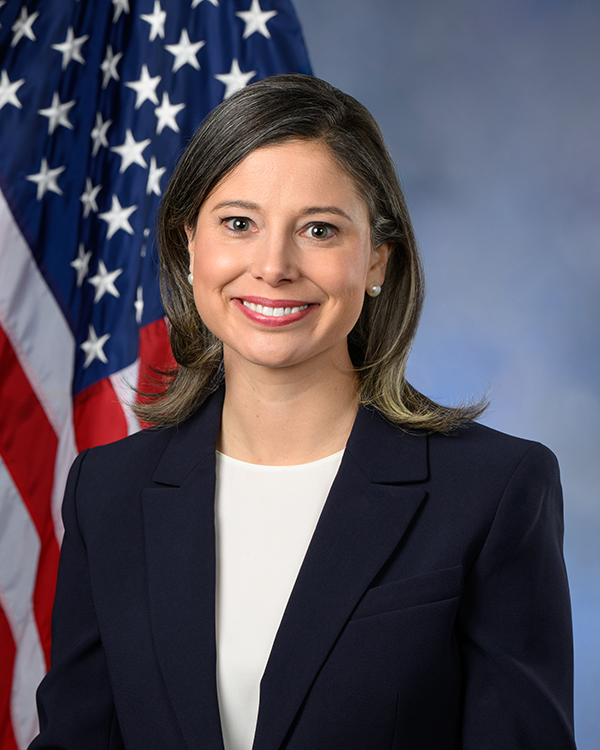
Rep. Maggie Goodlander
Sponsored bills
Maddy summaryThe Access Technology Affordability Act of 2025 creates a new tax credit for individuals who purchase technology designed to assist blind people, such as screen readers or braille displays. This credit covers up to $2,000 in expenses per three-year period for qualified access technology used by the taxpayer, their spouse, or a blind dependent. The credit adjusts for inflation after 2026 but does not apply to costs already covered by other tax benefits. The credit expires after 2030, with adjustments for cost-of-living changes starting in 2027.
Maddy summaryHRES 147 is a symbolic resolution designating the third Friday of every March as "National FIRST Robotics Day." It does not create new laws or funding but expresses congressional support for recognizing this day to promote robotics education. The resolution encourages schools and educators to use existing funds under the Every Student Succeeds Act (ESSA) for afterschool robotics programs and to engage students in STEM activities. It aims to highlight robotics' role in developing future STEM skills and workforce readiness, without imposing new requirements or changing current policies.
Maddy summaryHR 1438, the *Protecting America’s Agricultural Land from Foreign Harm Act of 2025*, prohibits foreign governments of Iran, North Korea, China, and Russia (and entities they control) from purchasing or leasing U.S. agricultural land, including both public land managed by federal agencies and private land. It also bans such entities from participating in most U.S. Department of Agriculture (USDA) programs if they own or lease agricultural land, with limited exceptions for food safety and health programs. The bill expands disclosure requirements under the Agricultural Foreign Investment Disclosure Act to include leases and security interests, and mandates public data sets showing foreign ownership details and land values. These changes aim to increase transparency around foreign ownership of U.S. farmland while targeting specific foreign governments deemed national security concerns.
Goldie's Act This bill expands enforcement provisions under the Animal Welfare Act (AWA). Specifically, the bill directs the Department of Agriculture (USDA) to document and record detailed descriptions of violations of the act observed during inspections and investigations. USDA must provide a copy of all records documenting violations to state, local, and municipal animal control or law enforcement officials within 24 hours of such inspections or investigations. Inspections must be held at least once a year of each research facility, the premises of each animal dealer, and each exhibitor of animals. If violations are found during inspections, then USDA must conduct any necessary follow-up inspections until all the violations are corrected. Inspectors must confiscate or destroy in a humane manner animals found to be suffering physical or psychological harm as a result of failure to comply with the AWA. Violators are subject to civil penalties as outlined in the bill.
This concurrent resolution declares that Congress should not impose any new performance fee, tax, royalty, or other charge relating to the public performance of sound recordings on a local radio station for broadcasting sound recordings over the air, or on any business for such public performance of sound recordings.
Improving Care and Access to Nurses Act or the I CAN Act This bill allows other health care providers besides physicians (e.g., nurses) to provide certain services under Medicare and Medicaid. Among other changes, the bill (1) allows a nurse practitioner or physician assistant to fulfill documentation requirements for Medicare coverage of special shoes for diabetic individuals; (2) expedites the ability of physician assistants, nurse practitioners, and clinical nurse specialists to supervise Medicare cardiac, intensive cardiac, and pulmonary rehabilitation programs; and (3) allows nurse practitioners to certify the need for inpatient hospital services under Medicare and Medicaid.
Maddy summaryThis bill proposes a constitutional amendment stating that only "natural persons" (living humans) have rights protected by the U.S. Constitution, explicitly denying constitutional rights to corporations, LLCs, and other artificial entities. It would require governments to regulate campaign contributions and spending to prevent money from influencing elections, banning the view that spending to influence elections constitutes protected speech under the First Amendment. The amendment would not affect the constitutional right to a free press. This change would directly impact how corporations and other non-human entities can legally challenge laws or regulations in court.
United States-Israel Defense Partnership Act of 2025 This bill requires or authorizes certain actions to increase defense-related cooperation between the United States and Israel. Specifically, the bill requires the Department of Defense (DOD) to establish a cooperative program, with the concurrence of Israel's Ministry of Defense (MOD), to develop and deploy advanced technologies for countering unmanned systems that threaten the United States and Israel; establish in Israel an office of the Defense Innovation Unit (an organization that focuses on rapidly fielding and scaling commercial technology across the U.S. military); and seek to engage Israel's MOD on the ascension of Israel into the national technology and industrial base (currently defined in law as the persons and organizations engaged in research, development, production, integration, services, or information technology activities conducted within the United States, the United Kingdom, Australia, New Zealand, and Canada). The bill authorizes DOD, upon request of Israel's MOD, to jointly conduct research, development, test, and evaluation (RDT&E) of emerging technologies such as artificial intelligence and robotics to meet defense challenges. Additionally, the bill extends the authority for DOD to (1) carry out RDT&E on a joint basis with Israel to establish anti-tunnel and counter unmanned aerial systems capabilities through 2028, and (2) transfer defense articles intended for use as reserve stocks for Israel through January 1, 2029.
Maddy summaryHR 1269, the Honoring Our Fallen Heroes Act of 2025, expands benefits for public safety officers (like police and firefighters) who develop certain cancers linked to their work. It adds 22 specific cancers - including lung, mesothelioma, and breast cancer - to the list of conditions presumed to be "exposure-related" and sustained in the line of duty. This presumption applies if the officer served at least 5 years, was diagnosed with the cancer within 15 years after last active duty, and the cancer directly caused death or permanent disability. The bill also establishes a process for adding new cancers every 3 years based on medical evidence from agencies like NIOSH, and allows claims to be filed within 3 years of the law's enactment.