

Maddy summaryThis bill authorizes the President to provide International Military Education and Training assistance to Greece to strengthen defense cooperation between the two nations. The program will fund training for future military leaders, improve understanding between the U.S. and Greek armed forces, and enhance their ability to work together in joint operations. It allocates $1.8 million annually for each of the fiscal years 2027 through 2031 to support these educational and partnership initiatives. The legislation also emphasizes professional military education, civilian oversight of the military, and human rights protections within Greece's armed forces.
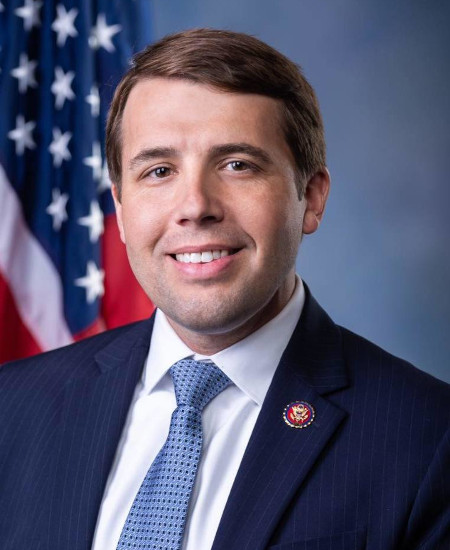
Rep. Chris Pappas
Sponsored bills
Maddy summaryThis bill would amend federal law to strengthen penalties for organized retail crime by expanding definitions of theft to include digital goods, gift cards, and setting a $5,000 aggregate value threshold for charges over a 12-month period. It would establish a new "Organized Retail and Supply Chain Crime Coordination Center" under Homeland Security to coordinate Federal, State, local, and Tribal law enforcement efforts against cross-jurisdictional theft groups. The Center would share information with retailers, transportation companies, and law enforcement agencies, track crime trends, and produce annual reports on organized retail crime. This legislation directly affects retailers, supply chain businesses, and law enforcement agencies, while targeting organized crime groups responsible for a 93% increase in larceny incidents and rising safety concerns for retail employees. The bill aims to address significant financial losses and supply chain disruptions noted in the National Retail Federation's 2023 data.
Maddy summaryThis resolution expresses support for designating July 15, 2026, as Glioblastoma Awareness Day to raise public awareness about this aggressive and deadly form of brain cancer. The bill honors patients and caregivers while encouraging greater understanding of the urgent medical needs associated with the disease, which currently has a low survival rate and limited treatment options. It also calls for increased collaboration among government, private, and nonprofit organizations to advance research and develop better therapies for those affected.
Maddy summaryThis bill prohibits the U.S. government from spending money on military actions against Iran between its enactment and December 31, 2026, unless Congress explicitly approves the use of force. It allows for military action only if Congress declares war, passes a specific authorization, or if the action is necessary to defend the United States or its allies from an imminent attack while following reporting requirements. The law directly restricts the President's ability to deploy troops without legislative approval during the specified timeframe.
Maddy summaryThe Vote by Mail Protection Act of 2026 directly affects the federal government by nullifying Executive Order 14399, which previously required citizenship verification in federal elections. This legislation prohibits any federal agency from enforcing the order or using taxpayer funds to carry out its activities. By repealing the executive order, the bill removes the mandate for agencies to verify citizenship as a condition for voting in federal elections.
Maddy summaryThis bill is a non-binding resolution that expresses the House of Representatives' sentiment to honor public servants for their dedication to the United States. It specifically acknowledges the work of federal, state, and local government employees, as well as uniformed service members, who deliver essential services and support the economy. The resolution calls on the American public to observe Public Service Recognition Week with ceremonies and activities that recognize these contributions. Because it is a symbolic expression of the House's feelings rather than a law with enforceable rules, it does not create new policies or mandate specific actions.
Maddy summaryHR 2424, the Modern, Clean, and Safe Trucks Act of 2025, repeals a 12% federal excise tax on new heavy trucks, tractors, and trailers. This tax currently adds significant costs - $7,000+ for trailers, $20,000+ for clean diesel trucks, and up to $50,000 for advanced technology trucks - discouraging replacement of older, less efficient vehicles. The bill directly affects truck manufacturers, dealers, and fleet operators by removing this cost barrier, making newer, cleaner models more affordable. It aims to accelerate the adoption of modern trucks with improved safety and environmental features, particularly benefiting electric and alternative-fuel vehicles that face higher upfront costs.
Maddy summaryThis bill, titled the Protecting Human Rights and Public Health in Foreign Assistance Act, aims to cancel specific regulations issued by the Department of State. It directly affects the federal government by prohibiting any department or agency from enforcing, implementing, or proposing rules related to protecting life, combating discriminatory equity ideology, and combating gender ideology in foreign aid programs. The legislation treats these cancelled rules as if they never existed, effectively nullifying their impact on future foreign assistance policies.
Maddy summaryThis bill, known as the ATIIP Reauthorization and Improvement Act, extends funding for the Active Transportation Infrastructure Investment Program through fiscal year 2031. It authorizes $250 million annually from the Highway Trust Fund to support projects that improve walking and biking infrastructure. The funds must be used within the same administrative framework as previous years but will remain available until spent and cannot be transferred to other purposes.
Maddy summaryThe Protecting American Railroad Workers' Jobs Act of 2026 requires freight trains crossing the southern border into the United States to stop for crew changes and safety inspections. Under this bill, only railroad workers who are U.S. nationals or lawfully authorized aliens with a primary reporting point in the U.S. may operate these trains after the stop. The legislation also prohibits crew members from performing any duties while physically outside the United States. These provisions directly affect railroad carriers operating freight trains across the Mexico border and the workers employed on those trains.