

Maddy summaryHR 4591, the Habitat Enhancement Now Act, creates two federal grant programs to boost waterfowl populations. It provides $3.5 million annually (2026-2030) for grants to states, tribes, nonprofits, or individuals to install nesting structures (like hen houses) in the Prairie Pothole Region to improve duck nest success, and to establish nesting cover, brood ponds, and incentivize private landowners in California to enhance breeding habitat for mallards and gadwalls. The bill directly affects landowners who participate in the California program and conservation entities implementing both programs. Key mechanisms include competitive grants for specific habitat actions proven to increase nest success, based on scientific findings about declining duck populations. The funding is explicitly allocated for these targeted habitat management activities.
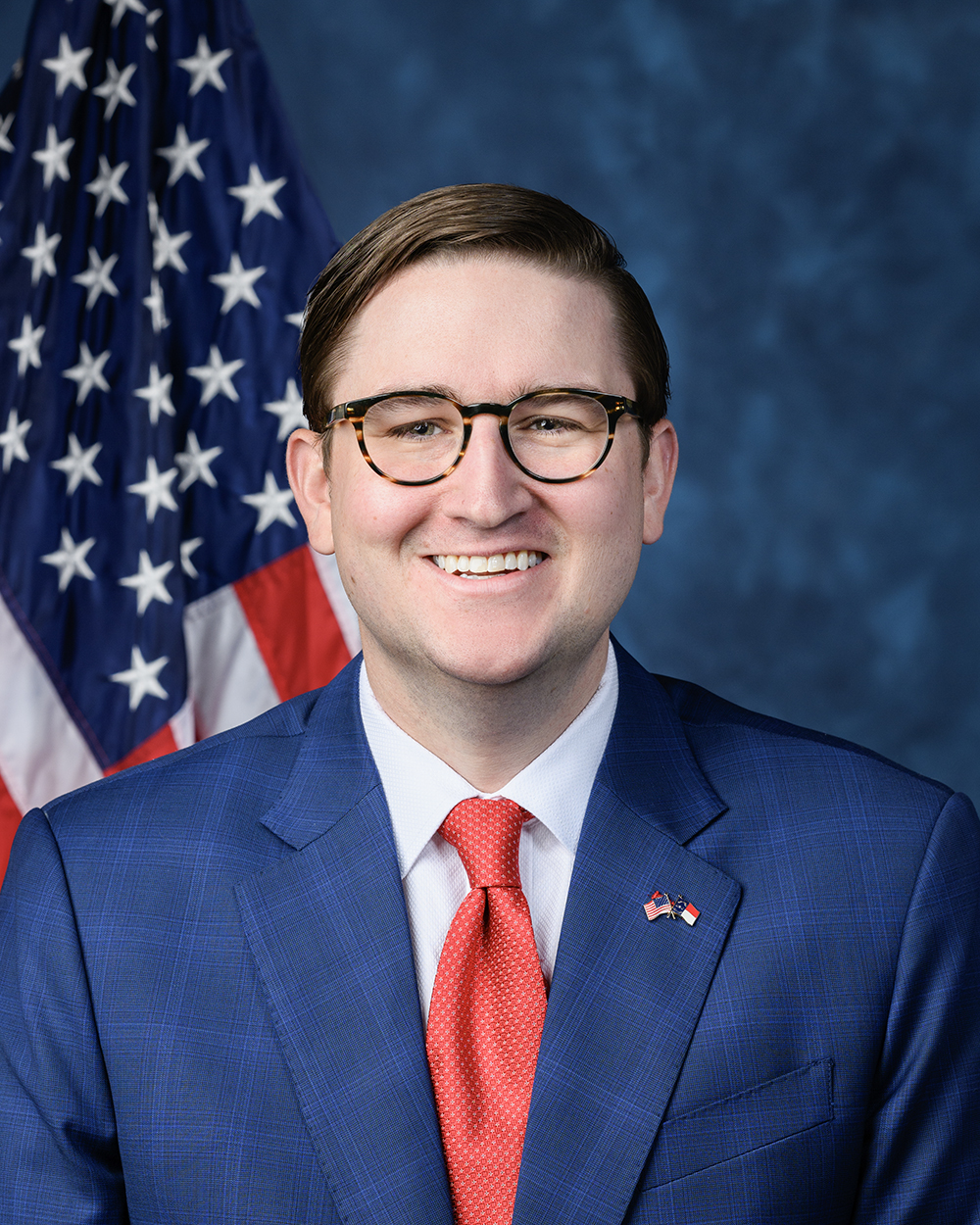
Rep. Addison P. McDowell
Sponsored bills
Maddy summaryHR 4620 amends federal law to include rioting as a form of racketeering activity under Title 18, United States Code. This change would allow prosecutors to charge individuals who organize or participate in riots as part of a larger criminal enterprise under federal racketeering laws. The bill specifically targets coordinated riot activities linked to organized crime, not isolated or spontaneous protests.
Maddy summaryThe Defending American Property Abroad Act of 2025 protects U.S. property interests in Western Hemisphere countries with U.S. free trade agreements. It requires the Secretary of Homeland Security to identify and list ports, harbors, or marine terminals where a foreign government has nationalized, expropriated, or seized U.S.-owned land (since January 2024) through actions like contract repudiation or forced control. Once listed, the President must prohibit vessels using these sites from importing goods, docking passenger vessels, or conducting maintenance in the United States. This directly affects U.S. persons (citizens or businesses) with property in designated locations.
Maddy summaryThis bill prohibits the Department of Transportation from providing any federal grants or funds to local governments (including cities, counties, or other state subdivisions) that are classified as "sanctuary cities." A sanctuary city is defined as any local government that restricts sharing immigration status information with federal authorities or refuses to comply with certain immigration detainer requests from Homeland Security. The Secretary of Transportation may grant a limited waiver for specific projects if they certify it serves national interest and notify Congress 15 days in advance. The law directly affects jurisdictions with policies limiting cooperation on immigration enforcement, withholding all DOT funding for transportation projects.
Maddy summaryHR 4554, the Restoring Biological Truth to the Workplace Act, prohibits employers from taking adverse actions (like firing or demoting) against employees who express views about biological sex being binary or use single-sex facilities (such as bathrooms). It directly affects employees who discuss biological sex or request single-sex areas, and employers who might retaliate. Key provisions make it unlawful to punish such expression or requests, explicitly removing the defense that the practice is "job-related" or "necessary for business." The bill aims to protect workplace expression and access related to biological sex under existing civil rights law.
Maddy summaryHRES 594 is a non-binding resolution passed by the U.S. House of Representatives condemning the persecution of Christians in Muslim-majority countries. It cites specific examples like violence against Christians in Nigeria (including attacks on Palm Sunday and Yelewata), restrictions in Egypt (such as limited worship spaces and forced conversions), and blasphemy-related violence in Pakistan. The resolution urges the President to prioritize protecting persecuted Christians in U.S. foreign policy, including through diplomatic engagement and trade negotiations with affected countries. As a symbolic resolution, it does not create new laws or directly affect any individuals, but aims to influence U.S. diplomatic efforts.
Maddy summaryThis bill requires electronic communication service providers (like social media platforms) and remote computing services (like cloud storage) to report certain controlled substances violations to the Attorney General. Providers must submit reports within 60 days of discovering fentanyl, methamphetamine, or counterfeit prescription drug sales, including account information and details about the violation. The bill includes penalties for failure to report ($380,000 for repeat violations) and for submitting false reports ($100,000), while exempting broadband and text messaging providers from these requirements. It also mandates annual reports from the Attorney General on the number of reports received, investigations conducted, and how violations were discovered.
Maddy summaryHR 1919, the "Anti-CBDC Surveillance State Act," prohibits the Federal Reserve from developing, testing, or issuing any central bank digital currency (CBDC) or similar digital assets. It specifically bans the Fed from offering direct financial products to individuals, maintaining individual accounts, or issuing CBDCs directly or indirectly through intermediaries like banks. The bill also blocks the Fed from using any digital asset for monetary policy and clarifies that physical currency's privacy protections remain intact. This policy directly affects the Federal Reserve System's ability to create or manage digital monetary tools.
Maddy summaryHR 4448, the Restoring Equal Opportunity Act, prohibits lawsuits alleging discrimination based on "disparate impact" in employment and housing. It amends the Civil Rights Act of 1964 and Fair Housing Act to ban claims where a neutral policy (like a test or screening rule) unintentionally disadvantages protected groups (such as race or gender), even if there was no discriminatory intent. The bill also nullifies specific federal regulations implementing civil rights laws, removing legal grounds for such claims under current enforcement rules. This directly affects employers, housing providers, and federal agencies that enforce civil rights laws, changing how discrimination claims can be brought in court.
Maddy summaryHR 4474, the Equal Shot Act of 2025, prohibits the Small Business Administration (SBA) from denying financial assistance - such as loans or guarantees - to firearm businesses solely because of their industry. It directly affects firearm manufacturers, distributors, trade associations, and affiliated entities like shooting ranges or training providers. The bill requires the SBA to treat these applicants equally under existing law, removing any policy that would block them based on their connection to firearms. This is a concrete policy change ensuring firearm-related businesses have the same access to SBA programs as other eligible applicants.