

Maddy summaryThe Mental Health in Aviation Act of 2025 requires the Federal Aviation Administration (FAA) to update regulations within two years to encourage pilots and air traffic controllers to seek mental health care and disclose conditions without fear of losing medical clearance. It mandates annual reviews to improve the medical clearance process for mental health conditions - such as approving additional safe medications, enhancing examiner training, and reducing backlogs - and allocates $13.74 million yearly (2026-2029) to hire more aviation medical examiners. The bill also directs the FAA to implement recommendations from a mental health rulemaking committee and fund a public campaign to reduce stigma around mental health care in aviation. These provisions aim to support aviation workers' well-being while streamlining safety-related medical evaluations.
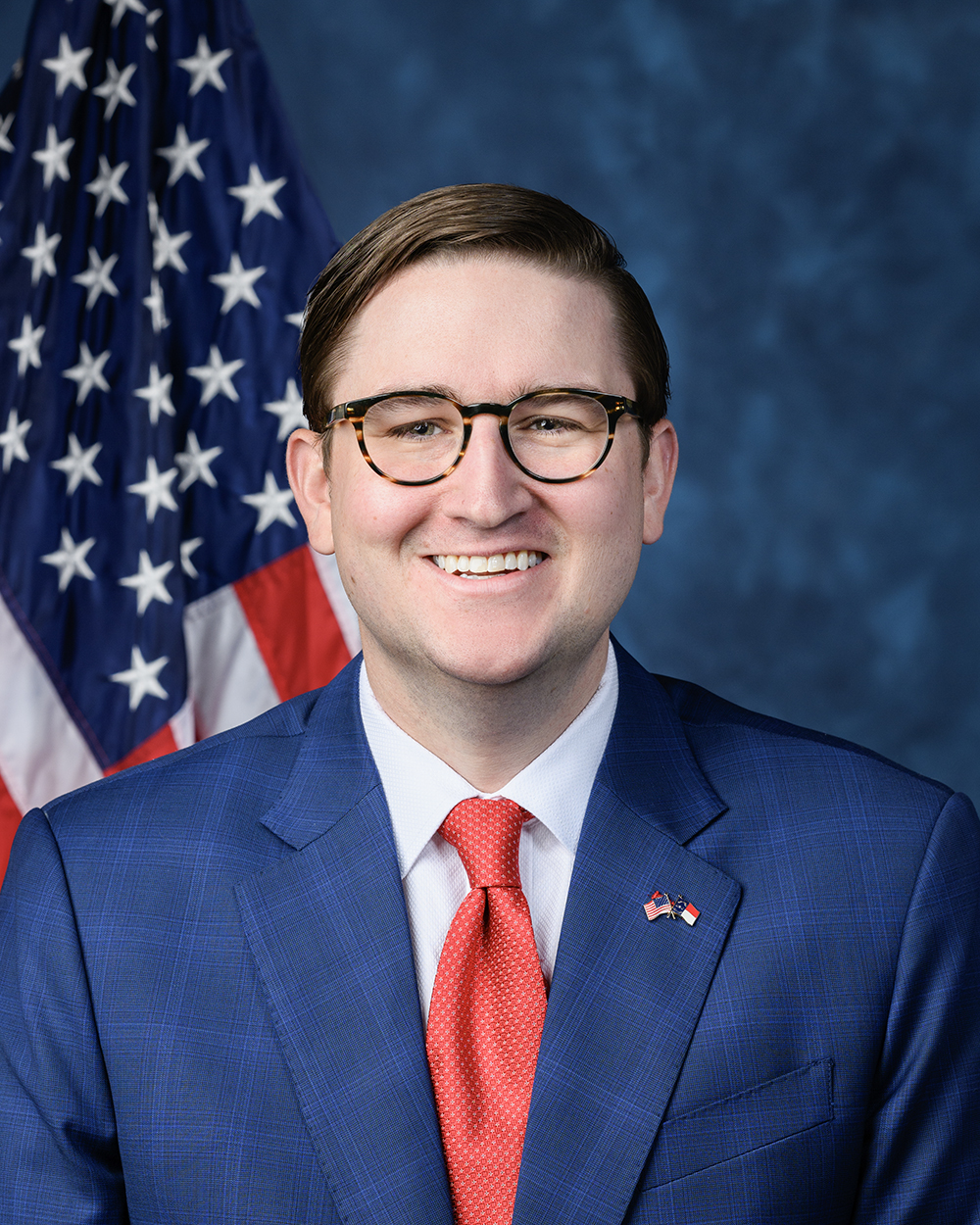
Rep. Addison P. McDowell
Sponsored bills
Maddy summaryHR 5121, the Fairness in Higher Education Accreditation Act, prohibits accrediting agencies from considering race, color, sex, or national origin when evaluating institutions or their leadership composition. It directly affects colleges and universities by requiring accrediting bodies to cease imposing or considering such factors in accreditation decisions. The bill adds new provisions to the Higher Education Act, banning agencies from setting standards related to student/faculty diversity metrics or leadership demographics, and mandates that institutions retain the right to adopt lawful policies on these matters. Institutions harmed by accreditation decisions violating these rules may pursue civil action under the amended law.
Maddy summaryHR 5116, the "Empower Parents to Protect their Kids Act," requires all K-12 schools receiving federal funds to obtain parental consent before accommodating a student's gender identity that differs from their sex assigned at birth. The bill prohibits schools from changing student names/pronouns, facilitating gender transition, hiding such information from parents, or encouraging gender transition without parental involvement. Schools must publicly post policies ensuring compliance and provide written policies to families. Parents or the Attorney General can sue schools for violations, seeking injunctions, fees, or compensation for harm caused by unconsented gender transition efforts.
Maddy summaryHR 5026, the ALCATRAZ Act, establishes a federal grant program to reimburse state and local governments for costs related to detaining migrants at facilities within their jurisdictions, starting January 20, 2025. Eligible states or localities must apply to the DHS Secretary for reimbursement, with funding coming from redirected FEMA shelter funds. The bill requires DHS to submit a 90-day report detailing plans for rapidly building new detention facilities and identifying underused federal or state funds that could support the program. This legislation directly affects state and local governments operating migrant detention facilities by providing financial support for their detention costs.
Maddy summaryHR 1569, the CATCH Fentanyl Act, establishes a 5-year pilot program to test nonintrusive inspection technologies at U.S. border ports of entry. The bill requires U.S. Customs and Border Protection (CBP) to evaluate at least five technology enhancements - including AI, machine learning, and quantum sensing - to improve detection of contraband, drugs, weapons, and threats while reducing inspection wait times. Pilot projects must prioritize cost-effective solutions that integrate with existing systems, adhere to privacy protections, and report findings on performance metrics like detection rates and throughput. The program mandates detailed reports to Congress on effectiveness, implementation plans, and privacy impacts, using existing funding without new appropriations.
Maddy summaryHR 4924, the Rails to Trails Landowner Rights Act, requires states and trail groups to notify landowners and local governments before converting abandoned railroad corridors into trails. It mandates that trail sponsors obtain written landowner approval, pay fair market value compensation for property impacts (including lost development and infrastructure costs), and maintain the right-of-way in perpetuity. The bill also requires a 90-day public comment period, a cost-benefit analysis of safety, economic, and environmental impacts, and creates an online portal for transparency. These changes directly affect landowners adjacent to former rail corridors and trail sponsors seeking interim trail use.
Maddy summaryHR 4788 would amend a 1932 District of Columbia law to allow Members of Congress (Senators and Representatives) to carry concealed firearms in Washington, D.C., if they hold a valid concealed carry license from a state where they are permitted to carry, or are otherwise legally allowed to carry concealed in their home state. The bill requires these members to not be federally prohibited from possessing firearms, to carry a valid state-issued license or proof of residency rights, and to present photo identification. This exception applies only to Members of Congress and does not alter D.C.'s general concealed carry laws for other individuals. The provision would take effect upon the bill's enactment.
Maddy summaryHR 4793, the SOS Act, requires the government to add a specific graph to annual reports about Social Security trust funds. The graph must compare two different funding assumptions: the amount assumed under current law (based on dedicated funding sources) versus the amount assumed under the Balanced Budget Act of 1985. This bill does not change Social Security payments or benefits; it only modifies how the government reports on trust fund finances. The requirement applies to reports prepared by the Congressional Budget Office and Treasury Department, affecting the transparency of federal budget documentation.
Maddy summaryHRES 614 is a non-binding resolution honoring Dr. Edwin J. Feulner, former President of the Heritage Foundation and Executive Director of the Republican Study Committee, following his death on July 18, 2025. The resolution commemorates his founding of the Heritage Foundation in 1973, his 36-year leadership as its president, and his role in establishing the Republican Study Committee. It specifically calls for the House to mourn his passing, honor his legacy, and recommend he receive the Presidential Medal of Freedom posthumously. This resolution does not create new law or affect any policies, as it is purely commemorative.
Veterans' Assuring Critical Care Expansions to Support Servicemembers Act of 2025 or the Veterans' ACCESS Act of 2025 This bill addresses the administration of the Veterans Community Care Program (VCCP) and other Department of Veterans Affairs (VA) health care matters. Among other provisions regarding the VCCP, the bill establishes in statute access standards that determine when a veteran is eligible to receive non-VA care through the VCCP, requires the VA to notify veterans regarding their eligibility for care within two business days after the VA is aware the veteran is seeking care, and extends the deadline for the submittal of claims under the VCCP by health care entities and providers. The VA must address its mental health treatment programs by establishing a standardized screening process to determine whether a veteran satisfies criteria for priority or routine admission to a mental health residential rehabilitation treatment program or a program for residential care for mental health and substance abuse disorders, tracking the performance of medical facilities and Veterans Integrated Service Networks in meeting the requirements for mental health treatment screenings and timely admission to treatment programs under such screenings, and establishing an appeal process for when a veteran is denied admission to a covered treatment program or is accepted into a program but not offered bed placement in a timely manner. Additionally, the VA must establish an online self-service module for veterans to request and manage appointments, track referrals, and appeal and track decisions related to requests for care.