Original Slavery Remembrance Day Resolution This joint resolution designates a Slavery Remembrance Day annually and condemns slavery and its progenies.
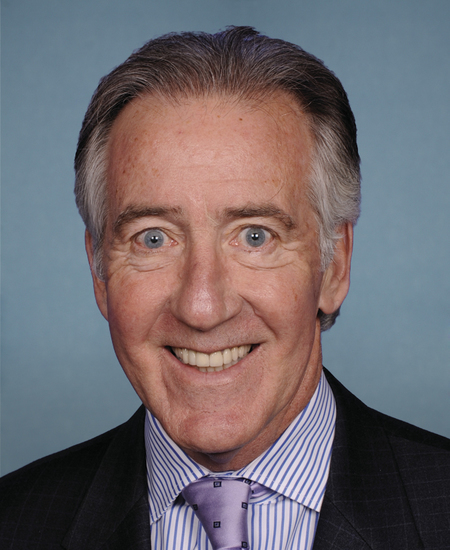
Rep. Richard E. Neal
Sponsored bills
Social Security 2100: A Sacred Trust This bill makes changes to Social Security benefits, taxes, and other aspects of the program, including by raising the primary insurance amount, increasing the maximum taxable earnings that are subject to Social Security payroll taxes, and requiring Social Security account statements to be mailed unless the individual recipient opts for electronic delivery.
United States Cadet Nurse Corps Service Recognition Act of 2021 This bill recognizes service as a member of the U.S. Cadet Nurse Corps between July 1, 1943, and December 31, 1948, as active duty service. The active duty designation entitles qualifying individuals to certain benefits afforded to veterans, such as burial benefits (not including interment or inurnment at Arlington National Cemetery) and honorary veteran status. Under the bill, the Department of Defense (DOD) must issue individuals who served in the corps during the specified period a discharge from their service under honorable conditions if such a discharge is warranted based on the duration and nature of the service. Such individuals are not entitled to Department of Veterans Affairs benefits aside from those related to burials and memorials. The bill also authorizes DOD to produce a service medal or other commendation, memorial plaque, or grave marker to honor the individuals.
Camp Lejeune Justice Act of 2021 This bill allows certain individuals to sue and recover damages for harm from exposure to contaminated water at Camp Lejeune in North Carolina between August 1, 1953, and December 31, 1987. This action is available only to individuals who were exposed to contaminated water for at least 30 days. The bill prohibits the U.S. government from asserting specified immunity from litigation in response to such a lawsuit. The bill also prohibits an individual who brings such an action from bringing a separate tort action against the United States based on the same harm.
Stop shielding Assets from Corporate Known Liability by Eliminating non-debtor Releases Act or the SACKLER Act This bill prohibits a bankruptcy court from releasing claims against non-debtors brought by states, tribes, municipalities, or the federal government. However, the bankruptcy court may issue a stay not exceeding 90 days regarding such a claim. Complex bankruptcies may involve creditor claims against non-debtors associated with the debtor, such as the debtor's officers, directors, or employees. Currently, in carrying out a bankruptcy plan, certain courts may release non-debtors from liability (there is a circuit split regarding this practice).
Revising and Expediting Actions for the Crisis Hotline for Veterans Act or the REACH for Veterans Act This bill requires the Department of Veterans Affairs (VA) to update training and procedures for call responders of the Veterans Crisis Line. Specifically, the VA must enter into an agreement with an outside organization to review the training for crisis line call responders. The VA must update the training if any deficiencies are identified after the review. Among other requirements, the VA must develop guidelines on retraining and quality management for when a call responder has an adverse event or needs improvement, annually perform a common cause analysis for identified callers to the crisis line who died by suicide in situations where the crisis line was the last point of contact, develop enhanced guidance and procedures to respond to calls to the crisis line related to substance use and overdose risk, review the current emergency dispatch standard operating procedure of the crisis line, and solicit feedback from veterans service organizations on how to conduct outreach regarding the move to 988 as the new suicide and mental health crisis hotline. Each call responder must be subject to at least two calls per month that are silently monitored by a supervisor to check for quality of conduct. The Veterans Crisis Line, Office of Mental Health and Suicide Prevention of the VA, and National Center for Patient Safety of the VA must establish quality management processes and expectations for staff of the crisis line.
Israel Relations Normalization Act of 2021 This bill requires the Department of State to take certain actions promoting the normalization of relations between Israel, Arab states, and other relevant countries and regions. Specifically, the State Department must develop a strategy on expanding and strengthening the Abraham Accords (the term used to refer collectively to agreements between Israel and the United Arab Emirates and between Israel and Bahrain marking the public normalization of relations between the two Arab countries and Israel). The strategy must include a description of how the U.S. government will encourage further normalization of relations with Israel. In addition, the State Department must report on options for U.S. international efforts to promote the strengthening of ties between Israel, Arab states, and other relevant countries and regions. The State Department must also report on the status of the normalization of relations with Israel, including information on (1) laws that punish individuals for people-to-people relations with Israelis (i.e., anti-normalization laws), and (2) evidence of steps taken by Arab governments toward permitting or encouraging normalized relations between their citizens or residents and Israeli citizens.
John R. Lewis Voting Rights Advancement Act of 2021 This bill establishes new criteria for determining which states and political subdivisions must obtain preclearance before changes to voting practices may take effect. Preclearance is the process of receiving preapproval from the Department of Justice (DOJ) or the U.S. District Court for the District of Columbia before making legal changes that would affect voting rights. A state and all of its political subdivisions shall be subject to preclearance of voting practice changes for a 10-year period if 15 or more voting rights violations occurred in the state during the previous 25 years; 10 or more violations occurred during the previous 25 years, at least 1 of which was committed by the state itself; or 3 or more violations occurred during the previous 25 years and the state administers the elections. A political subdivision as a separate unit shall also be subject to preclearance for a 10-year period if three or more voting rights violations occurred there during the previous 25 years. States and political subdivisions that meet certain thresholds regarding minority groups must preclear covered practices before implementation, such as changes to methods of election and redistricting. Further, states and political subdivisions must notify the public of changes to voting practices. Next, the bill authorizes DOJ to require states or political subdivisions to provide certain documents or answers to questions for enforcing voting rights. The bill also outlines factors courts must consider when hearing challenges to voting practices, such as the extent of any history of official voting discrimination in the state or political subdivision.
Working Dog Commemorative Coin Act This bill directs the Department of the Treasury to mint and issue 50,000 $5 gold coins, 500,000 $1 silver coins, and 750,000 half-dollar clad coins in commemoration of the service that working dogs provide to society. The designs of the coins minted under this bill shall be emblematic of the contributions of working dogs to society, including in detection, military service, therapy and assistance. Treasury may issue coins only during the one-year period beginning on January 1, 2023. All sales of coins shall include a surcharge, which shall be paid to America's VetDogs for general expenses associated with the fulfillment of its mission.
Nursing Home Improvement and Accountability Act of 2021 This bill establishes reporting, staffing, and other quality control requirements for Medicare skilled nursing facilities and Medicaid nursing facilities. For example, the bill requires facilities to have registered professional nurses available 24-7 and to provide infection control services overseen by infection preventionists at least 40 hours per week. It also establishes civil penalties for facilities that submit inaccurate reports relating to staffing data and prohibits facilities from entering into pre-dispute arbitration agreements. Additionally, the Centers for Medicare & Medicaid Services (CMS) must conduct additional quality control and oversight, including (1) auditing facility cost reports; (2) reviewing the quality and effectiveness of compliance surveys; and (3) establishing on-site educational programming for facilities that fail to meet applicable standards. The CMS must also establish minimum staff-to-resident ratios for nursing staff, as it determines appropriate. The bill also establishes a demonstration program to evaluate the impact of certain changes to facility design, staffing, and care coordination on the health outcomes of residents in skilled nursing facilities. Among other requirements, selected facilities must serve between 5 and 14 residents, offer private rooms, and have resident and family councils.