

Emergency Repatriation Assistance for Returning Americans Act This bill increases the maximum amount of funding available in FY2021 and FY2022 for temporary assistance for U.S. citizens and their dependents who are returning from foreign countries due to a crisis and are without available resources. Under current law, the Department of Health and Human Services may provide assistance such as money payments and medical care to these individuals on a temporary basis. The bill designates the funding as emergency spending that is exempt from pay-as-you-go (PAYGO) rules and other budget enforcement procedures.
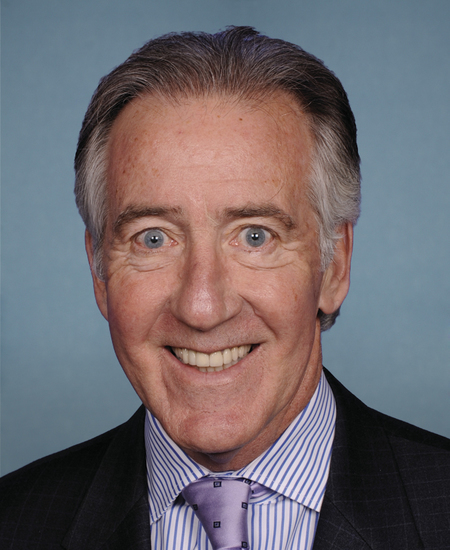
Rep. Richard E. Neal
Sponsored bills
Harlem Hellfighters Congressional Gold Medal Act This bill provides for the award of a Congressional Gold Medal to the 369th Infantry Regiment, commonly known as the Harlem Hellfighters, in recognition of their bravery and outstanding service during World War I.
Elder Justice Reauthorization and Modernization Act of 2021 This bill reauthorizes, provides funding through FY2025 for, and otherwise makes changes to programs for preventing, detecting, and treating abuse, neglect, and exploitation of older adults. Specifically, the bill provides funding for states and localities to enhance adult protective services and long-term care ombudsman programs. Additionally, the bill modifies an existing long-term care workforce grant program, including by requiring that grant recipients use funds to provide employees with wage subsidies, educational assistance, and access to affordable child care and transportation. Furthermore, the bill establishes new grant programs for states to (1) link health care and social services for older adults, including through medical-legal partnerships and legal services hotlines; and (2) prevent and address social isolation among older adults and individuals with disabilities. The bill also provides funding for reporting by the Department of Health and Human Services on the effectiveness of various programs and activities in addressing abuse, neglect, and exploitation of older adults.
Saving America's Pollinators Act of 2021 This bill addresses the use of certain pesticides and the health and status of native bees and other pollinators. First, the bill requires the Environmental Protection Agency (EPA) to establish a Pollinator Protection Board to develop an independent review process for pesticides that pose a threat to pollinators and their habitats. All active ingredients and pesticide products that contain one or more specified neonicotinoid pesticides must be deemed to generally cause unreasonable adverse effects to the environment. Under the bill, the registration of all uses of neonicotinoid pesticides must be immediately and permanently canceled. The EPA must revoke any tolerance or exemption that allows the presence of a neonicotinoid pesticide, or any pesticide chemical residue that results from neonicotinoid pesticide use, in or on food. The continued sale or use of existing stocks of neonicotinoid pesticides is prohibited, and the EPA may not register any such pesticides under the Federal Insecticide, Fungicide and Rodenticide Act. The bill requires the Department of the Interior, the EPA, and the Department of Agriculture to coordinate monitoring activities and report on the health and population status of native bees and other pollinators. Finally, a state or federal agency may be granted an exemption to use neonicotinoid pesticides if the board votes that use of the pesticide is warranted (1) in an emergency situation to avert significant risk to threatened or endangered species, (2) to quarantine invasive species, or (3) to protect public health.
Closing the Meal Gap Act of 202 1 This bill revises the requirements for calculating Supplemental Nutrition Assistance Program (SNAP) benefits. The bill increases the minimum SNAP benefit and requires benefits to be calculated using the value of a low-cost food plan. The Department of Agriculture (USDA) must determine the requirements for the low-cost food plan, which is the diet required to feed a family of four, consisting of a man and a woman 19-50 years of age, a child 6-8 years of age, and a child 9-11 years of age. USDA must (1) reevaluate and publish the market baskets of the plan by January 1, 2027, and every five years thereafter, based on current food prices, food composition data, consumption patterns, and dietary guidance; and (2) make adjustments to the plan to account for household size, changes in the cost of the diet, and the costs of food in specified areas. The bill modifies the requirements for calculating household income to determine SNAP eligibility by (1) authorizing a standard medical expense deduction for households containing an elderly or disabled member, and (2) eliminating the cap on the excess shelter expense deduction. The bill eliminates certain work requirements for SNAP. The requirements apply to able-bodied adults who are ages 18-49 and have no dependent children. The bill allows Puerto Rico, American Samoa, and the Northern Mariana Islands to participate in SNAP. Currently, the three territories receive block grants instead of participating in SNAP.
Pathways to Health Careers Act This bill provides funding for, reauthorizes through FY2026, and makes a variety of changes to certain grants administered by the Department of Health and Human Services that provide education and training to low-income individuals for health care occupations, including by establishing a new competitive grant for projects designed to train low-income individuals in allied health professions.
Safe Schools Improvement Act of 2021 This bill requires states to direct their local educational agencies (LEAs) to establish policies that prevent and prohibit bullying and harassment of elementary and secondary school students. In particular, these policies must prohibit bullying and harassment based on race, color, national origin, sex, sexual orientation, gender identity, disability, or religion. Further, LEAs must provide (1) students, parents, and educational professionals with annual notice of the conduct prohibited in their disciplinary policies; (2) students and parents with grievance procedures that target such conduct; and (3) the public with annual data on the incidence and frequency of that conduct at the school and LEA level. The Department of Education must conduct and report on an independent biennial evaluation of programs and policies to combat bullying and harassment in elementary and secondary schools. The National Center for Education Statistics must collect state data to determine the incidence and frequency of the conduct prohibited by LEA disciplinary policies.
Therapeutic Fraud Prevention Act of 20 21 This bill prohibits commercial conversion therapy, which is a practice or treatment designed to change a person's sexual orientation or gender identity or otherwise change behaviors, thoughts, or expressions related to gender or sexual attraction. This prohibition does not apply to treatment that assists an individual undergoing a gender transition or facilitates identity exploration and development.
Protecting Older Workers Against Discrimination Act of 2021 This bill revises the evidentiary standard for age discrimination by establishing an unlawful employment practice when the complaining party demonstrates that age or participation in an investigation, proceeding, or litigation related to an age discrimination claim was a motivating factor for an adverse practice, even though other factors also motivated the practice (thereby allowing what are commonly known as mixed motive claims). The bill (1) permits the complaining party to rely on any type or form of admissible evidence, which need only be sufficient for a reasonable trier of fact to find that an unlawful practice occurred; and (2) declares that the complaining party shall not be required to demonstrate that age or retaliation was the sole cause of the employment practice (thereby rejecting the Supreme Court's decision in Gross v. FBL Financial Services, Inc. , which requires the complainant to prove that age was the but-for cause for the employer's decision). The bill applies this evidentiary standard to other employment discrimination and retaliation claims, including claims under the Civil Rights Act of 1964, the Americans With Disabilities Act of 1990, and the Rehabilitation Act of 1973. In a claim in which age discrimination is shown, but where the employer demonstrates that it would have taken the same action absent the motivating factor of age, the bill authorizes courts to grant declaratory and injunctive relief, but prohibits the court from awarding damages or issuing an order requiring any admission, reinstatement, hiring, promotion, or payment. This limitation also applies to claims of discrimination based on disability. The bill also includes reporting requirements for the Equal Employment Opportunity Commission and the Department of Labor.
Vanessa Guillén Military Justice Improvement and Increasing Prevention Act This bill modifies the process and policy related to the disposition of charges and convening of courts-martial for certain sexual assault cases and other specified offenses under the Uniform Code of Military Justice (UCMJ). Among other elements, the bill provides that the determinations on the preferral, disposition, and referral of charges for specified offenses under the UCMJ must be made by a commissioned officer of the Armed Forces who is designated as a court-martial convening authority (in grade O-6 or higher) and who is available for detail as trial counsel, has significant trial experience, and is outside the chain of command of the member subject to the charges.