

Maddy summaryThis bill requires the Department of Veterans Affairs (VA) to cover abortion care, counseling, and related medication as part of standard hospital and medical services for eligible veterans and certain dependents. It amends VA healthcare law to explicitly include these services under existing coverage for veterans qualifying under section 1703 and dependents eligible under section 1781(a). The policy directly affects veterans and their dependents enrolled in VA healthcare programs by expanding covered benefits to include abortion-related care. This is a concrete policy change to VA healthcare benefits, not a broader abortion law.
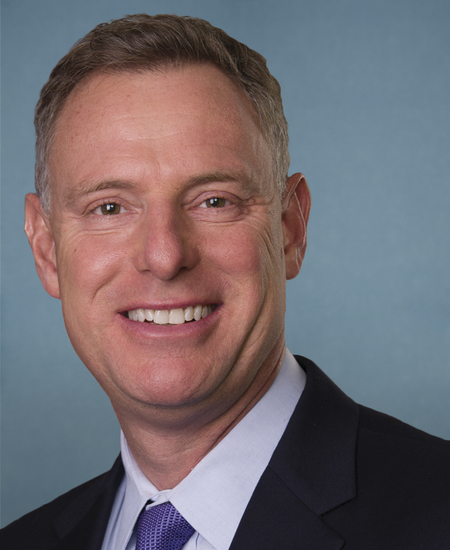
Rep. Scott H. Peters
Sponsored bills
Maddy summaryThe Fiscal Contingency Preparedness Act (HR 4642) requires the Treasury Secretary and OMB Director to annually examine how the federal government would respond to major crises like recessions, pandemics, natural disasters, or cyberattacks, including their short- and long-term fiscal impacts. It mandates these assessments be included in an existing annual report and specifies key crisis types to evaluate. The Government Accountability Office (GAO) must then review the methodology and results of these assessments within one year of the first report. The bill directly affects federal agencies responsible for fiscal planning (Treasury and OMB) but does not create new spending or alter existing programs. It focuses solely on improving preparedness through structured risk analysis.
Governing Unaccredited Representatives Defrauding VA Benefits Act or the GUARD VA Benefits Act This bill imposes fines on individuals for soliciting, contracting for, charging, or receiving any unauthorized fee or compensation with respect to the preparation, presentation, or prosecution of any claim for Department of Veterans Affairs benefits. The attempted commission of such offenses is also punishable by fine.
Maddy summaryThis bill, known as the FAIR Act, would allow the U.S. Food and Drug Administration to approve certain medicines and permit clinical trials for life-threatening diseases more quickly by recognizing approvals from trusted international regulatory authorities. It directly affects drug manufacturers, patients with serious illnesses, and U.S. healthcare providers by creating a new pathway where medicines already approved by agencies like the European Medicines Agency or Health Canada could receive reciprocal marketing approval in the United States. The legislation establishes a 30-day timeline for FDA review of these reciprocal requests and includes provisions for clinical trials authorized abroad, while maintaining safety oversight through withdrawal mechanisms if adverse events occur. The bill specifies that only products intended for immediately life-threatening conditions would qualify under this streamlined process.
Save Our Sequoias Act This bill provides for the conservation of giant sequoia trees ( Sequoiadendron giganteum ) in California. Specifically, it provides statutory authority for the Giant Sequoia Lands Coalition and outlines the coalition's duties. The coalition must submit a Giant Sequoia Health and Resiliency Assessment and annually update it. The information from the assessment must be made available so the information can be integrated into certain other plans. The coalition must also create and maintain a website that contains the assessment, educational materials, searchable information about individual giant sequoia groves, and a searchable database to track the status and costs of reforestation and rehabilitation activities. In addition, the bill declares an emergency on certain public lands and allows officials to carry out protection plans during the emergency to respond to the threat of wildfires, insects, and drought. The emergency expires after seven years. The Department of the Interior must develop and implement a Giant Sequoia Reforestation and Rehabilitation Strategy. Finally, the bill establishes a variety of programs and funds to support the conservation of giant sequoias.
Maddy summaryThis bill, known as the Diabetes Foot Health Access and Modernization Act of 2026, makes two main changes to federal healthcare programs. First, it allows Medicaid to cover foot and ankle care services provided by podiatric physicians, ensuring patients have access to this specialized care. Second, it updates Medicare rules to clarify documentation requirements for diabetic shoes, specifying conditions under which patients can receive extra-depth or custom-molded footwear. The changes take effect on January 1, 2026, for Medicaid services and January 1, 2028, for Medicare shoe coverage.
Maddy summaryHR 7871 (MVP Act) updates Medicaid drug rebate rules to allow manufacturers to report multiple "best price points" for drugs sold under outcome-based payment arrangements, requiring these arrangements to be offered to all states. It clarifies how average manufacturer price is calculated for such drugs and exempts certain outcome-linked payments from anti-kickback laws. The bill also mandates a GAO study to assess whether these arrangements improve patient access, lower costs, and reduce disparities in drug coverage. This affects Medicaid programs nationwide, drug manufacturers, and patients receiving covered outpatient drugs under Medicaid.
Maddy summaryThis bill, known as the DROUGHT Act of 2026, increases the maximum federal funding level for certain water infrastructure projects from the standard cap to 90 percent of project costs. It directly affects states and counties experiencing severe drought conditions, as well as projects serving low-income communities or those designated as regionally or nationally significant. The legislation defines covered projects as those located in areas with severe drought designations or declared drought emergencies, those serving low-income populations, or those that improve water supply, reuse, or reduce water usage. The bill requires federal officials to prioritize financing for these specific projects under the Water Infrastructure Finance and Innovation Act of 2014.
Maddy summaryThis bill grants the Secretary of Homeland Security the authority to move unspent money between different accounts within the department during a government funding shutdown. The provision specifically allows transfers of funds from the One Big Beautiful Bill Act to other DHS accounts, but prohibits moving money to the Office of the Secretary, Immigration and Customs Enforcement, or Customs and Border Protection. Additionally, the bill prevents the use of transferred funds to hire new employees during a lapse in appropriations. This measure aims to provide flexibility in managing existing resources while maintaining restrictions on certain departments and hiring activities.
This concurrent resolution directs the President to terminate the use of U.S. Armed Forces from hostilities against Iran or any part of the Iranian government or military unless a declaration of war or authorization to use military force for such purpose has been enacted. The resolution specifies that it shall not be construed to prevent the United States from defending itself from imminent attack.