

Department of Homeland Security Reform Act of 2021 or the DHS Reform Act of 2021 This bill makes extensive changes to the structure of the Department of Homeland Security (DHS) and to the responsibilities of DHS components. Specifically, the bill, among other things creates a new Associate Secretary responsible for overseeing DHS's law enforcement functions; modifies the responsibilities of the Office for Civil Rights and Civil Liberties, including to require engagement with individuals and communities whose civil rights and liberties may be affected by DHS programs and activities; establishes within DHS's Office of Intelligence and Analysis an analytic unit to serve as a focal point for intelligence and analysis of domestic terrorism threats; directs DHS to establish an employee engagement steering committee to identify factors that have a negative impact on employee engagement, morale, and communications within DHS; establishes within DHS a school security coordinating council; directs DHS to develop and disseminate a strategy with respect to biometric technology and identity management enterprise pilot programs and programs; requires DHS to develop, disseminate, and implement a DHS-wide directive to update or replace the strategic framework relating to countering terrorism and targeted violence; requires that DHS's use-of-force policy be updated to emphasize de-escalation; and requires DHS to issue a DHS-wide strategy to enhance partnerships with historically Black colleges and universities and minority-serving institutes that includes yearly goals.
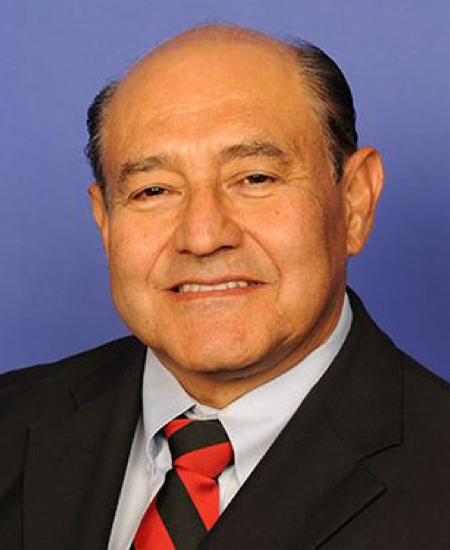
Rep. J. Luis Correa
Sponsored bills
Wildfire Emergency Act of 2021 This bill provides for programs and activities in support of forest restoration, wildfire mitigation, and energy resilience. The Department of Agriculture (USDA) shall select landscape-scale forest restoration projects to implement on National Forest System land and on land adjoining National Forest System land. USDA shall establish a pilot program under which USDA may enter into conservation finance agreements with public or private persons to implement and monitor such projects. The Department of Energy shall establish a program to support critical infrastructure and microgrids, including by improving the energy resilience and power needs of critical facilities (e.g., hospitals) through the use of microgrids, renewable energy, energy efficiency, reduced electricity demand, and on-site storage. USDA and the Department of the Interior shall establish one or more centers in western states to train individuals in methods relevant to the mitigation of wildfire risk. USDA shall establish a competitive grant program to support workforce development in forestry and fire management.
Animal Welfare Enforcement Improvement Act This bill revises the licensing process of the Department of Agriculture (USDA) for animal dealers and exhibitors to expand USDA's oversight and enforcement of animal welfare requirements. The bill also authorizes citizen suits to enforce the Animal Welfare Act. Dealers and exhibitors must apply to USDA for licenses or renewal licenses each year. In order to obtain the licenses or renewals, dealers and exhibitors must meet certain standards for the humane treatment of animals and pass inspections as specified by this bill. USDA may not issue or renew such licenses if the dealers or exhibitors have violated laws relating to animals or if the issuance of the licenses would facilitate the circumvention of state or local laws that prohibit the private ownership of certain animals. Further, USDA must suspend the licenses of dealers or exhibitors whose violations present a risk to animal welfare. USDA must revoke the licenses if the violations persist or if the licensees commit multiple violations. Dealers and exhibitors with suspended or revoked licenses may not be (1) granted another license, (2) granted another license through another person or entity, or (3) employed by another licensee to work with animals during the period of the suspension or revocation.
Better Care Better Jobs Act This bill establishes programs and provides funds for state Medicaid programs to improve home- and community-based services (HCBS), such as home health care, personal care, case management, and rehabilitative services. Specifically, the bill provides funds for the Centers for Medicare & Medicaid Services to award planning grants, develop quality measures, and provide technical assistance to states regarding specified HCBS improvements, particularly with respect to access, utilization, and the associated workforce. The bill also increases the Federal Medical Assistance Percentage (i.e., federal matching rate) for HCBS in states that develop plans and meet specified benchmarks for improvements. The bill also makes permanent (1) the Money Follows the Person Rebalancing Demonstration Program (a grant program to help states increase the use of HCBS for long-term care and decrease the use of institutional care), and (2) certain provisions regarding Medicaid eligibility that protect against spousal impoverishment for recipients of HCBS.
Therapeutic Fraud Prevention Act of 20 21 This bill prohibits commercial conversion therapy, which is a practice or treatment designed to change a person's sexual orientation or gender identity or otherwise change behaviors, thoughts, or expressions related to gender or sexual attraction. This prohibition does not apply to treatment that assists an individual undergoing a gender transition or facilitates identity exploration and development.
This bill provides for the award of a Congressional Gold Medal to Billie Jean King in recognition of her courageous and groundbreaking leadership advancing equal rights for women and the LGBTQ community in athletics, education, and our society.
Vanessa Guillén Military Justice Improvement and Increasing Prevention Act This bill modifies the process and policy related to the disposition of charges and convening of courts-martial for certain sexual assault cases and other specified offenses under the Uniform Code of Military Justice (UCMJ). Among other elements, the bill provides that the determinations on the preferral, disposition, and referral of charges for specified offenses under the UCMJ must be made by a commissioned officer of the Armed Forces who is designated as a court-martial convening authority (in grade O-6 or higher) and who is available for detail as trial counsel, has significant trial experience, and is outside the chain of command of the member subject to the charges.
Ensuring Patient Access to Critical Breakthrough Products Act of 2021 This bill provides for Medicare coverage of medical devices that are approved under the Food and Drug Administration (FDA) Breakthrough Devices Program. (Under the program, manufacturers work with the FDA to expedite the review and approval of certain medical devices that provide for more effective treatment or diagnosis of life-threatening or irreversibly debilitating human diseases or conditions.) The bill allows designated medical breakthrough devices to be temporarily covered under Medicare during a four-year transitional period. The Centers for Medicare & Medicaid Services (CMS) must assign payment codes for such devices within three months of FDA approval. The CMS must also establish a process to allow for continued coverage after the transitional period has expired, taking into account any additional evidence or data the CMS deems necessary. The CMS must also provide for temporary and, where appropriate, permanent Medicare coverage of breakthrough devices for which there is no existing benefit category (i.e., classification).
Puppy Protection Act of 2021 This bill requires the Department of Agriculture to expand standards that govern the humane handling, care, treatment, and transportation of animals to include new requirements for commercial dog dealers. Specifically, the standards must require dog dealers to provide to dogs adequate housing, exercise, and veterinary care; appropriate and nutritious food; continuous access to potable water; and meaningful socialization with humans and compatible dogs for at least 30 minutes each day. The standards must also include requirements for breeders to use safe breeding practices and make all reasonable efforts to find humane placement for retired breeding dogs.
Shark Fin Sales Elimination Act of 20 21 This bill addresses the sale of shark fins and the inclusion of rays and skates in the Seafood Traceability Program. The Seafood Traceability Program has data reporting and recordkeeping requirements at the time of entry for imported fish or fish products entered into U.S. commerce. The bill makes it illegal to possess, buy, or sell shark fins or any product containing shark fins, except for certain dogfish fins. A person may possess a shark fin that was lawfully taken consistent with a license or permit under certain circumstances. Penalties are imposed for violations under the Magnuson-Stevens Fishery Conservation and Management Act. The Department of Commerce must revise its regulations to include rays and skates as species that are subject to the Seafood Traceability Program.