

Maddy summaryThis bill amends the process for the Financial Stability Oversight Council (FSOC) when considering actions against U.S. nonbank financial companies. It requires the FSOC to first determine that alternative solutions - such as new regulatory standards, agency actions, or a company's written plan - are not possible or insufficient to protect financial stability before voting on a formal determination. The change directly affects the FSOC and large nonbank financial companies that could face regulatory scrutiny. The key provision adds a new step to ensure the Council explores other options before taking significant action. (Procedural bill; summary limited to 3 sentences as specified.)
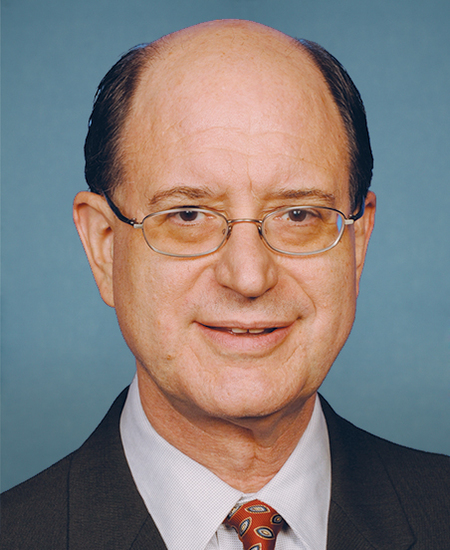
Rep. Brad Sherman
Sponsored bills
Maddy summaryHR 3190, the BRAVE Burma Act, extends sanctions authority for Burma by 10 years and requires annual reports on whether specific Burmese entities - like state-owned enterprises, Myanma Economic Bank, and jet fuel sector operators - meet sanctions criteria. It also limits Burma's potential increase in International Monetary Fund shareholding if the military-led State Administration Council remains in power. The bill creates a U.S. Special Envoy for Burma to coordinate all diplomatic and sanctions policy, develop multilateral sanctions strategies, and work with international partners on issues like arms embargoes and support for Burmese civil society. These provisions directly affect Burmese military entities, Burma's IMF representation, and U.S. diplomatic efforts toward Burma.
Maddy summaryThis bill directs the Postmaster General to issue a commemorative "forever stamp" depicting Bayard Rustin, a key civil rights leader and organizer of the 1963 March on Washington. The stamp must meet standard first-class mail postage requirements and remain valid for that purpose even if postage rates later increase. It is purely symbolic, honoring Rustin's legacy in civil rights and LGBTQ+ advocacy without creating new policies or affecting any laws. The Postal Service is the sole entity responsible for implementing this commemorative measure.
Maddy summaryThe Rebuild America's Schools Act of 2026 authorizes $20 billion annually from 2027 to 2031 to improve public school facilities nationwide. The bill provides grants to states to fund school construction, renovation, and modernization projects that focus on safety, energy efficiency, and accessibility, with priority given to schools serving high percentages of students eligible for free or reduced-price lunch. Funds cannot be used for routine maintenance, athletic facilities, or vehicles, and must meet specific environmental, safety, and energy efficiency standards. The bill also includes specific provisions for repairing school foundations affected by pyrrhotite, a mineral that causes concrete deterioration, and requires use of American-made materials for construction projects.
Maddy summaryHR 7346, the Drain ICE Act of 2026, repeals specific funding provisions (sections 90003 and 100052) from the "One Big Beautiful Bill Act" and cancels all unspent funds allocated under those sections. This bill directly affects ICE’s detention budget by removing existing financial authority for detention operations. It does not change immigration enforcement practices or directly impact individuals; it solely modifies budgetary allocations. The bill focuses on eliminating funding mechanisms, not on policy changes for migrants or enforcement. (Procedural bill; summary limited to 2 sentences as specified.)
Maddy summaryHJRES 144 is a congressional disapproval resolution targeting a specific rule issued by the Department of Veterans Affairs (VA) on December 31, 2025, which addressed "Reproductive Health Services" (90 Fed. Reg. 61310). This resolution directs Congress to disapprove the VA rule under Chapter 8 of Title 5, U.S. Code, meaning the rule would have no legal effect if passed. The bill directly affects the VA's implementation of reproductive health services for veterans, as it seeks to nullify the agency's existing policy. This is a procedural measure, not a substantive policy change, aimed solely at blocking the VA's rule through congressional action.
Maddy summaryHR 7271, the Evan Anzoo Memorial Act, requires the Comptroller General to produce a report investigating deaths linked to USAID service cuts. The bill mandates a one-year report estimating 2025 deaths and five-year future deaths due to USAID stop-work orders, plus an assessment of whether specific individuals (like Evan Anzoo, 5, South Sudan, who died after losing HIV treatment) died because of lost USAID services. It also requires an interim update within 180 days and a list of other verified deaths tied to these service disruptions. The act does not change USAID policy but directs a factual review of impacts from prior USAID service reductions.
Maddy summaryThis resolution designates July 6, 2025, as "A Day of Compassion" to commemorate the 90th birthday of the Dalai Lama. It expresses congressional support for the Tibetan people's human rights, religious freedom, and cultural/linguistic protections. The resolution affirms that decisions about Tibetan Buddhist religious leadership - including the selection of a future Dalai Lama - must be made by Tibetan Buddhist authorities, not the Chinese government. It does not create new laws or policies but serves as a symbolic expression of support through congressional recognition.
Maddy summaryHR 7178, the U.S.-Israel Anti-Killer Drone Act of 2026, requires enhanced U.S.-Israel cooperation to counter Iranian unmanned systems. The bill directs the U.S. and Israel to jointly develop, test, and deploy counter-drone technologies through their existing Operations Technology-Working Group, including sharing threat intelligence and conducting joint training. It increases annual funding for this cooperation from $55 million to $100 million and mandates detailed annual reports to Congress on progress, threat assessments, and the adequacy of current counter-drone capabilities. The bill directly affects U.S. and Israeli military forces by accelerating joint efforts to address threats from Iran-origin drones targeting U.S. allies and military assets in the Middle East.
Maddy summaryThe Hands Off Greenland Act would prevent the U.S. President from deploying American military forces to Greenland without an explicit invitation from Denmark. It would also prohibit using federal funds for such deployments, except when Denmark formally requests U.S. military presence. This law directly restricts the executive branch's authority over military deployments in Greenland and requires coordination with Denmark, the country that governs Greenland as an autonomous territory. The bill applies to all U.S. military personnel and funding related to Greenland, ensuring no unilateral U.S. military actions without Danish consent.