

Maddy summaryHR 909, the Crime Victims Fund Stabilization Act of 2025, modifies how funds from the False Claims Act are deposited into the Crime Victims Fund. It specifies that from 2025 through 2029, certain False Claims Act proceeds (specifically those for qui tam plaintiff payments and government damage reimbursements) cannot be deposited into the fund. This change directly affects the composition of the Crime Victims Fund by excluding these specific revenue streams during the specified period. The bill does not create new benefits or alter victim services; it only adjusts fund allocation rules for existing False Claims Act revenues.
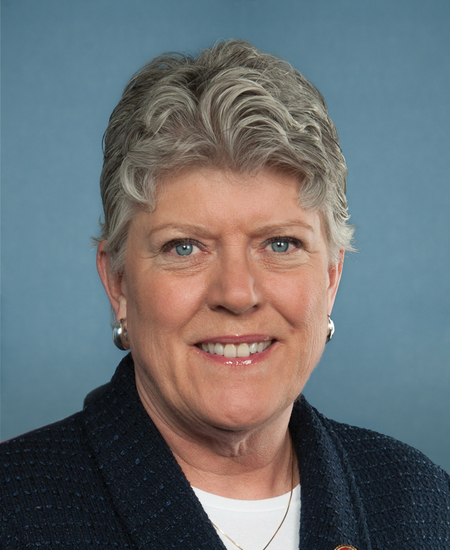
Rep. Julia Brownley
Sponsored bills
Maddy summary# Summary of Reserve Component Duty Consolidation Legislation This legislation is a comprehensive revision of military reserve component terminology and definitions throughout the U.S. Code. The primary purpose is to replace the outdated term "inactive duty training" with the more accurate and consistent term "reserve component duty" across all relevant sections of federal law. ## Key Provisions: 1. **Terminology Change**: - Replaces "inactive duty training" with "reserve component duty" in over 50 sections of the U.S. Code (primarily Titles 10, 32, and 37) - Also replaces related terms like "inactive duty" and "inactive duty for training" with "reserve component duty" 2. **Repeals**: - Repeals Chapter 13 of Title 10 - Repeals Sections 10147, 10148, 12406, 12503, 12552 of Title 10 - Repeals Sections 114, 115, and 328 of Title 32 3. **Definition Updates**: - Creates new definitions for "reserve component duty" and "remote assignment" in Title 10 - Defines "Active Guard and Reserve functions" more precisely - Clarifies that reserve component duty includes: * Training as described in sections 552(a) and 553(a) of Title 32 * Support activities authorized for members of the reserve components * Duty prescribed under sections 543 of Title 32 4. **Transition Provisions**: - Establishes a 10-year transition period from the date of enactment - Allows for earlier implementation if all relevant departments (Defense, Homeland Security, Veterans Affairs) certify readiness - Provides for early TRICARE eligibility for members ordered to active duty or full-time National Guard duty 5. **Conforming Amendments**: - Makes numerous technical changes to ensure consistent terminology throughout the U.S. Code - Updates references to training requirements, pay, and benefits to reflect the new terminology This legislation represents a significant effort to modernize military reserve component terminology, eliminate confusing and outdated references, and create a more consistent framework for understanding and managing reserve component service obligations and benefits.
Maddy summaryThis concurrent resolution (HCONRES 69) commemorates the 15th anniversary of the January 8, 2011, Tucson shooting that killed six people and injured 13, including former Congresswoman Gabby Giffords. It honors the victims, survivors, and Giffords - now a prominent advocate for gun violence prevention - and recognizes her leadership in promoting civility and reducing gun violence. The resolution also commends Tucson residents and first responders for their resilience and reaffirms Congress’s commitment to respectful dialogue and opposing political violence. As a ceremonial resolution, it does not create new laws or policies.
Maddy summaryThis resolution (HRES 980) commemorates the one-year anniversary of the 2025 Southern California wildfires, which impacted communities like Pacific Palisades and Altadena. It honors the 31 people who lost their lives, commends first responders who fought the fires, and affirms the House's ongoing support for affected communities. The resolution is purely ceremonial and does not create new laws, allocate funds, or change existing policies. It directly affects the Southern California communities devastated by the wildfires and their residents.
Maddy summaryThis bill expands VA healthcare access to military family members (including those in utero) who lived or worked at military locations where veterans have a presumption of service-connected illness due to toxic exposure (e.g., Camp Lejeune). It requires the VA to provide hospital care and medical services for covered illnesses if families demonstrate exposure to the same toxins qualifying veterans for benefits. Key limitations include requiring exhausted third-party payment claims (like insurance) before VA coverage, and restricting care to illnesses with VA-established presumptions. The VA must report annually on utilization, denials, and pending applications starting in 2027. This directly affects military families residing at contaminated bases, not veterans themselves.
Maddy summaryThis bill expands educational benefits under three Department of Veterans Affairs programs to include siblings of veterans who died in service or were killed in action. It amends eligibility criteria in the Survivors’ and Dependents’ Educational Assistance Program, the Marine Gunnery Sergeant John David Fry Scholarship, and the Post-9/11 GI Bill to explicitly include "siblings" alongside spouses and children. The bill defines "sibling" broadly to cover blood relatives, adopted siblings, or those in recognized guardianship relationships. It also creates a special provision allowing siblings acting as primary caregivers for injured veterans to pause and resume benefit use, with benefits usable until age 26 or the standard 15-year delimiting date. This change directly affects siblings of fallen service members who previously did not qualify for these educational benefits.
Maddy summaryThis resolution (HRES 969) expresses support for designating the week beginning September 8, 2025, as "National Hispanic-Serving Institutions Week." It recognizes colleges and universities with at least 25% Hispanic undergraduate enrollment (known as Hispanic-Serving Institutions or HSIs) and their role in serving diverse, low-income students. The resolution does not create new policies or funding but encourages public observance through ceremonies and activities to honor HSIs’ contributions to higher education access and economic mobility. It applies symbolically to all 615+ HSIs across the U.S. and Puerto Rico.
Maddy summaryHR 4637, the Veterans’ Surviving Spouse Equity Act of 2025, expands eligibility for certain veterans' benefits to surviving spouses who were married to a veteran for at least one year before the veteran's death, or who lived together as spouses for one year and publicly presented as such, regardless of any subsequent marriages. This bill directly affects surviving spouses of veterans who died while rated totally disabled, removing previous barriers that disqualified them if they remarried during the marriage period. The key change amends Section 1318 of Title 38, U.S. Code, by adding two new qualifying scenarios for benefit eligibility. It focuses on concrete policy adjustments to ensure more surviving spouses qualify for benefits they previously might have been denied. The bill does not change benefit amounts or create new programs, only broadens who meets the existing eligibility criteria.
Maddy summaryHR 4611 (EACH Act of 2025) requires all federally funded health programs - including Medicaid, Medicare, military health plans, and the Indian Health Service - to cover abortion services without restrictions, repealing the Hyde Amendment's long-standing ban on federal funding for most abortions. This directly affects millions of people enrolled in these programs, particularly low-income women, women of color (including 25% of Black women and 22% of Hispanic women on Medicaid), and young people. The bill mandates coverage in all federally administered health plans and prohibits state or private insurers from restricting abortion coverage in health insurance. It aims to eliminate current federal and state barriers that deny abortion access to people who rely on government health programs.
Maddy summaryHR 3578 establishes the Veterans Experience Office within the Department of Veterans Affairs (VA), led by a Chief Veterans Experience Officer appointed by the VA Secretary. The office requires VA offices to report customer experience metrics, collects veteran feedback on benefits and services (disaggregated by demographic and service type), and assesses VA websites and customer service. It mandates annual reports to Congress on veteran satisfaction and barriers to service use, such as lack of awareness or technical access issues. The office operates until September 30, 2028, and the bill also requires a Comptroller General review of VA customer experience efforts within 540 days of enactment. This bill directly affects veterans, beneficiaries, and VA staff responsible for delivering services.