

Maddy summaryHCONRES 68 would require the President to remove U.S. military forces from Venezuela unless Congress has explicitly authorized their use through a declaration of war or a specific law. This applies to any U.S. Armed Forces currently stationed in Venezuela without such authorization. The resolution is based on the War Powers Resolution, which mandates congressional oversight of military deployments. It directs the immediate withdrawal of unapproved forces without adding new time limits or conditions.
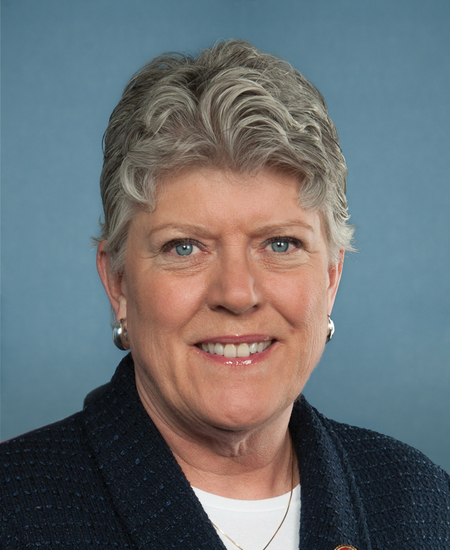
Rep. Julia Brownley
Sponsored bills
Maddy summaryHR 7095 bans the importation of energy products (like refined oil) classified under chapter 27 of the U.S. tariff system if they were produced using crude oil originating from Russia, even if processed outside Russia. This directly affects U.S. importers and companies handling such energy products. The bill amends existing law to prohibit these imports by requiring customs to block shipments tied to Russian crude oil, regardless of where refining occurred. It targets "laundered" Russian oil that might otherwise enter the U.S. market through third-country refineries. The policy change focuses on restricting the flow of Russian energy revenue through import channels.
Maddy summaryHR 7094 prohibits U.S. exports of petroleum equipment and services to Russia, directly affecting U.S. companies and foreign subsidiaries that supply oil/gas industry tools, software, engineering services, or related technologies to Russian entities. The bill mandates asset freezes and visa bans for violators, including foreign persons involved in such transactions, while exempting medical isotopes (like Carbon-13) and humanitarian aid for food, medicine, or agricultural commodities. Key provisions require the President to block transactions involving U.S. persons or entities, extend sanctions to parent companies for subsidiary violations, and implement regulations within 180 days. This targets energy sector support for Russia without disrupting medical, agricultural, or aid-related operations.
Maddy summaryHRES 996 is a resolution introduced by multiple House members to impeach Kristi Lynn Arnold Noem, the Secretary of Homeland Security, for alleged violations of law and the Constitution. It outlines three articles of impeachment: obstructing congressional oversight by denying access to detention facilities and withholding funds, violating public trust through warrantless arrests and excessive force (including tear gas on children), and self-dealing by awarding federal contracts to associates without competitive bidding. If approved by the House, this resolution would formally charge Noem, triggering a Senate trial to determine her removal from office. The resolution itself does not enact new policy but initiates the constitutional impeachment process against a sitting Cabinet official.
Maddy summaryHR 6526, the Clarity on Care Options Act, requires the Department of Veterans Affairs (VA) to annually ask healthcare providers in VA-administered networks whether they accept CHAMPVA (Civilian Health and Medical Program for veterans' dependents) coverage. The VA must then create and maintain a public directory listing providers who accept CHAMPVA, making this information easily accessible to beneficiaries. The bill also mandates an annual report to Congress detailing provider acceptance rates by state and Veterans Integrated Service Network, including areas where beneficiaries lack nearby CHAMPVA-accepting providers. This bill directly affects CHAMPVA beneficiaries (veterans' dependents) by improving transparency about provider availability. The key mechanism is the annual provider query and public directory, with implementation required within 180 days of enactment.
Maddy summaryThis bill establishes a standardized annual program to measure food insecurity across U.S. households. It requires the Census Bureau to include specific, consistent questions about food access and hunger (like skipping meals or relying on limited food due to cost) in the Current Population Survey from 2026 onward. The Secretary of Agriculture must analyze this data, publish annual reports publicly, and submit them to Congress. The policy directly affects all households surveyed through the Census Bureau’s annual survey, with additional questions for households with children under 18. It aims to improve data consistency for tracking hunger and informing future policy, without creating new benefits or altering existing programs.
Maddy summaryHR 6088, the *Restoring Food Security for American Families and Farmers Act of 2025*, repeals specific sections (10101-10108) from a prior reconciliation law. This action revives previous provisions related to food security programs that were modified by those repealed sections. The bill directly affects federal food assistance and agricultural support programs by restoring their prior legal framework. It does not create new policies but reverses recent changes to existing food security measures.
Maddy summaryThe MORE Act (HR 5068) would remove cannabis from the federal list of controlled substances, effectively decriminalizing it at the federal level while establishing a new tax on cannabis products. The bill creates an Opportunity Trust Fund that would distribute tax revenues to support communities disproportionately impacted by cannabis prohibition, including funding for expungement programs, job training, and equitable licensing initiatives for minority business owners. It also includes provisions to prevent discrimination based on cannabis use in federal programs, immigration proceedings, and workplace policies. The bill would require federal courts to expunge non-violent cannabis convictions and establish a process for resentencing individuals currently serving time for such offenses. These provisions aim to address racial disparities in cannabis enforcement and create more equitable opportunities in the legal cannabis industry.
Maddy summaryHR 5059 creates a new grant program to boost sales of U.S.-grown specialty crops (like fruits, vegetables, and nuts) within the domestic market. The U.S. Department of Agriculture will award grants to eligible organizations - such as agricultural trade groups, cooperatives, or nonprofit associations - to fund marketing and promotion activities. Organizations must contribute at least 25% of the grant amount from non-Federal sources and cannot use funds to directly assist large for-profit corporations (except cooperatives or specific associations). The program is authorized to receive $75 million annually starting in fiscal year 2026, with strict reporting and evaluation requirements to track how funds develop domestic markets.
Maddy summaryThis bill establishes a federal grant program to boost domestic sales of U.S.-grown specialty crops (like fruits, vegetables, nuts, and nursery products). It authorizes $75 million annually to fund grants for eligible organizations - such as agricultural trade groups, cooperatives, or state agencies - that develop marketing plans for domestic promotion. Grantees must provide at least 25% non-Federal matching funds (including in-kind support) and cannot use funds to promote foreign products or most for-profit corporations. The program includes strict oversight, requiring annual reviews, spending audits, and evaluations to ensure funds effectively expand domestic markets for specialty crops.