

Maddy summaryThis resolution condemns the use of federal regulatory agencies (like the FCC) or lawsuits to suppress lawful speech critical of political parties or the President, specifically referencing concerns about tactics mirroring authoritarian practices. It does not create new laws but formally warns that such actions undermine First Amendment protections and democratic norms. The resolution directly affects media organizations, journalists, and public discourse by calling on government agencies to avoid using their power for political retaliation. It reaffirms the House’s commitment to protecting free expression and urges officials to refrain from pressuring media to silence criticism.
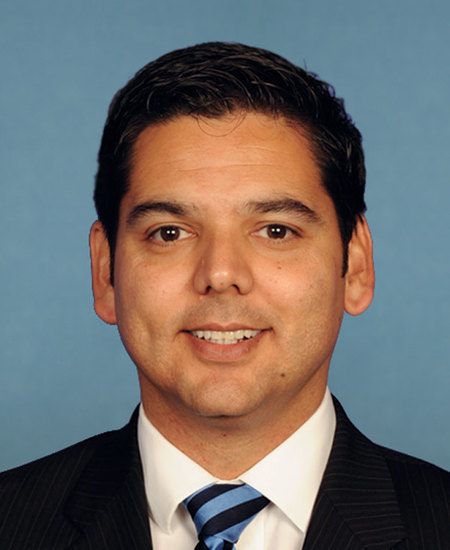
Rep. Raul Ruiz
Sponsored bills
Maddy summaryThe Veteran Service Recognition Act of 2025 requires the Departments of Defense, Homeland Security, and Veterans Affairs to study noncitizen veterans removed from the U.S. between 1990 and 2025, including their service records and reasons they were denied benefits. It creates a system to identify noncitizen veterans before removal proceedings begin and establishes a Military Family Immigration Advisory Committee to review cases and recommend against removal for veterans. The bill also creates a program to streamline citizenship for noncitizen service members, allows adjustment of status for certain removed veterans, and modifies immigration requirements for family members of service members. These provisions directly affect noncitizen veterans, active duty service members, and their family members who are not U.S. citizens. The law aims to ensure veterans' service is properly recognized in immigration proceedings and to facilitate their path to citizenship.
Maddy summaryThis bill requires health plans and insurers to create a clear, timely process for patients or doctors to request exceptions when step therapy protocols (which force patients to try cheaper drugs first) might harm them. It mandates approval for exceptions in six specific cases, such as when prior treatments failed, delaying care risks severe harm, or the required drug causes adverse reactions. Plans must respond within 72 hours (24 hours for emergencies) and cover the requested drug for at least one year if approved. Additionally, health plans must report annual data on exception requests, approvals, denials, and reasons to the government for transparency.
Maddy summaryThe Aviation Funding Stability Act of 2025 ensures continued operation of Federal Aviation Administration (FAA) programs during government funding gaps. It allows the FAA to use unspent funds from the Airport and Airway Trust Fund to maintain critical services - including air traffic control, airport infrastructure, and safety research - at the previous fiscal year's funding level if Congress fails to pass a new budget. This prevents shutdowns for up to 30 days or until a new budget is enacted, with spending limited to prior-year rates and subject to existing program rules. The bill directly affects all FAA operations, keeping airports and air traffic systems running during budget delays.
Maddy summaryHRES 734 is a symbolic resolution designating the third week of September as "Latino Conservation Week." It recognizes the Latino community's longstanding engagement in outdoor recreation and conservation activities, such as hiking, stewardship events, and environmental justice efforts on public lands. The resolution affirms that including Latino voices strengthens public lands protection and climate resilience, highlighting their role as a growing force in the outdoor economy. It does not create new laws or funding but formally supports the annual observance initiated by the Hispanic Access Foundation.
Maddy summaryHRES 746 is a non-binding resolution passed by the U.S. House of Representatives condemning all political violence - including attacks on elected officials, candidates, and public figures - and rejecting rhetoric that dehumanizes opponents. It specifically urges law enforcement to investigate and prosecute such violence, calls on public officials and media to avoid inflammatory language, and references recent incidents like the 2025 assassination of activist Charlie Kirk and targeted shootings of Minnesota legislators. The resolution does not create new laws but formally expresses the House’s commitment to protecting public servants and promoting peaceful political discourse. It directly affects the House’s public stance and serves as a call to action for officials, media, and communities to foster civil engagement.
Maddy summaryThis resolution (HRES 745) is a symbolic gesture expressing the House's support for designating October 1 as "National Latino and Latina Physician Day." It does not create new laws or allocate funding, but rather acknowledges the underrepresentation of Latino and Latina physicians in the U.S. (6.5% of active physicians as of 2023) and highlights the health benefits of physician-patient cultural and linguistic alignment. The resolution aims to raise awareness about increasing diversity in medicine, referencing statistics on the growing Latino/Latina population and associated health disparities. As a non-binding resolution, it has no direct policy impact but formally supports the observance of this day.
Maddy summaryThis bill reauthorizes the Special Diabetes Program for Indians (SDPI) through fiscal year 2030, extending annual funding of $160 million per year. It directly affects American Indian and Alaska Native communities, which face significantly higher rates of diabetes, by ensuring continued federal support for diabetes prevention and treatment programs. The key provision amends the Public Health Service Act to add $160 million in annual funding for fiscal years 2026 through 2030, with funds remaining available until expended. This reauthorization maintains existing program funding levels without altering eligibility or program structure.
Maddy summaryThe Tyler Clementi Higher Education Anti-Harassment Act of 2025 requires U.S. colleges and universities participating in federal financial aid programs to create and distribute clear anti-harassment policies covering harassment based on race, color, national origin, sex (including sexual orientation and gender identity), disability, or religion. These policies must explicitly prohibit harassment in all settings - including online, on campus, off-campus housing, and during school-sponsored activities - and outline reporting procedures and support services for victims. The bill also establishes a $50 million annual grant program to fund schools developing prevention programs, victim support services, or staff/student training on recognizing and addressing harassment. Grants are competitive, require annual reporting on effectiveness, and must be used to improve existing efforts without replacing existing civil rights laws like Title IX.
Maddy summaryThis bill reauthorizes federal funding for diabetes programs targeting Type 1 diabetes. It extends annual funding of $160 million for fiscal years 2026 through 2030, continuing existing support for research, treatment, and prevention initiatives. The funds remain available until expended, directly supporting programs serving people with Type 1 diabetes and the organizations delivering these services. The bill makes no changes to program eligibility or structure, only extending current funding levels.