

Maddy summaryHR 6640, the Build Now Act, sets a strict one-year deadline for completing environmental reviews on federally permitted Central Valley Project (CVP) enhancement projects. This affects project applicants seeking permits for infrastructure like groundwater recharge, aquifer storage, or water source substitution systems. If agencies miss the deadline, they must either grant an extension with the applicant's approval or deny the permit. Applicants denied due to timeline failures can reapply immediately, and agencies must share prior review data to expedite new applications. The bill streamlines the review process under existing laws (NEPA and the Endangered Species Act) without altering water policy.
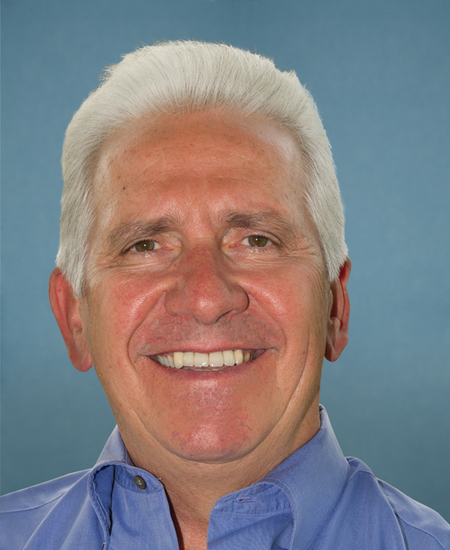
Rep. Jim Costa
Sponsored bills
Maddy summaryThe Central Valley Water Solution Act (HR 6641) authorizes over $830 million in federal funding for water infrastructure projects across California's Central Valley. It directly supports agricultural water districts and communities by financing groundwater banking systems, canal repairs, water treatment plants, and reservoir construction to improve water storage, quality, and conveyance. Key provisions include $830 million for fixing subsidence in the Delta-Mendota Canal, $850 million for the San Luis Canal/Aqueduct, and $300 million for groundwater banking programs across multiple districts. These projects aim to enhance drought resilience, restore water delivery capacity, and support conjunctive use of surface and groundwater resources.
Maddy summaryHR 6639, the Water Agency and Transparency Enhancement Review (WATER) Act, requires the Secretaries of the Interior and Commerce to identify major water-supply and storage projects in California subject to the Endangered Species Act or National Environmental Policy Act. The bill mandates they designate federal officials to identify unnecessary regulatory delays or costs ("unduly burdens") on these projects and develop plans to suspend, revise, or rescind such regulations. It directly affects California water projects (including surface/ground storage and aquifer recharge) and the federal agencies managing their environmental reviews. The key mechanism is a streamlined review process to remove regulatory obstacles without compromising legal protections.
Maddy summaryHR 6575, the CommonGround for Affordable Health Care Act, extends enhanced premium tax credits for health insurance through 2026, directly benefiting millions of lower and middle-income Americans purchasing coverage through the ACA marketplace. The bill modifies income thresholds for premium subsidies, creating new income tiers that maintain or increase financial assistance for households earning up to 1,000% of the poverty level. It includes provisions to prevent fraud in health insurance exchanges by imposing civil penalties on agents and brokers who provide false information, and requires transparency in pharmacy benefit manager contracts to improve drug pricing accountability. The legislation also extends the annual open enrollment period for health insurance exchanges for the 2026 plan year, allowing more time for people to enroll or change coverage.
Maddy summaryThe Bipartisan Health Insurance Affordability Act extends and modifies premium tax credit rules to make health insurance more affordable for people with household incomes up to 700% of the poverty line, with specific provisions for different income tiers. The bill requires pharmacy benefit managers to pass through 100% of rebates to health plans, establishes transparency requirements for drug pricing, and creates mechanisms to prevent fraud in health insurance exchanges. It also extends the annual open enrollment period for 2026 and allows qualified Exchange enrollees to establish health savings accounts, with options to prepay annual premiums or direct part of their premium tax credit into a health savings account.
Maddy summaryHR 6041, the Rural Partnership and Prosperity Act, creates a new grant program to help rural communities coordinate federal, nonprofit, and private investments. It provides multiyear grants (2-5 years) to partnerships - including local governments, nonprofits, tribes, and institutions - that serve rural areas, with priority given to economically distressed regions, areas with high poverty, and communities historically underserved by federal programs. Grants require at least 25% non-Federal matching funds (with waivers available for tribes or high-poverty areas) and fund activities like reducing duplicate federal efforts, leveraging private investment, and developing strategic community plans. The bill also updates the Rural Partners Network to streamline federal coordination and improve access to funding for rural communities.
Maddy summaryThis bill (HR 6469) requires the U.S. State Department, in coordination with the FCC and Treasury, to submit a report within 120 days of enactment assessing internet access options in Iran. The report must evaluate the feasibility of using direct-to-cell wireless technology to expand internet access there, including technical, security, and regulatory considerations. It also analyzes how drone-based systems and signal jamming could affect such technology, surveys Iranian telecom providers (including state ownership and foreign investment), and examines broader implications for communications freedom. The bill does not enact new policy but mandates a government review of potential technological solutions.
Maddy summaryHR 6361, the Ban AI Denials in Medicare Act, prohibits the U.S. Department of Health and Human Services from implementing or testing Medicare models that use artificial intelligence for prior authorization of covered services under traditional Medicare. Specifically, it blocks the existing WISeR model (described in a 2025 federal notice) and prevents future models from using AI to deny coverage for Medicare Part A or Part B services. This bill directly affects Medicare beneficiaries and healthcare providers who would otherwise face AI-driven coverage decisions. The key mechanism is an amendment to the Social Security Act, explicitly banning the use of AI in prior authorization systems within Medicare's innovation models.
Maddy summaryThis bill establishes comprehensive name, image, and likeness (NIL) rights for college athletes, prohibiting institutions from restricting athletes' ability to earn compensation for their personal branding or taking adverse action against them for doing so. It requires transparent NIL agreements for compensation over $600, including specific details about services, compensation amounts, and termination terms. The bill also amends immigration laws to better accommodate international student athletes participating in college sports and updates regulations governing sports agents. Additionally, it establishes a Commission to study college athletics governance, focusing on collective bargaining, revenue sharing, and Title IX compliance, while expanding disclosure requirements for colleges regarding athletics revenue and expenses.
Maddy summaryHR 6093, the Agricultural Cooperative Energy Savings Act of 2025, expands eligibility for certain USDA programs to include agricultural cooperatives with fewer than 2,500 employees. This change directly affects smaller agricultural cooperatives that previously did not qualify under existing rules. The bill amends Section 9007(c)(1)(A)(i) of the Farm Security and Rural Investment Act of 2002 to add these cooperatives to the list of eligible participants. The key mechanism is simply broadening the definition of qualifying entities for existing USDA program access. This is a procedural change to eligibility criteria, not a new program.