

Maddy summaryHR 2955, the Stop Institutional Child Abuse Act, establishes a Federal Work Group to improve data collection and best practices for youth in residential programs (like therapeutic schools, treatment centers, and group homes). The Work Group, composed of federal agency representatives and diverse stakeholders, must develop national data standards, create risk assessment tools, and issue biennial reports with recommendations to enhance safety, reduce restraints, and expand community-based alternatives. It directly affects youth with mental health, substance use, or disability needs placed in these facilities, as well as agencies overseeing them. The bill also mandates a National Academies study to examine funding, oversight, and barriers to community care. These mechanisms aim to standardize data tracking and promote less restrictive, trauma-informed care for youth in residential programs.
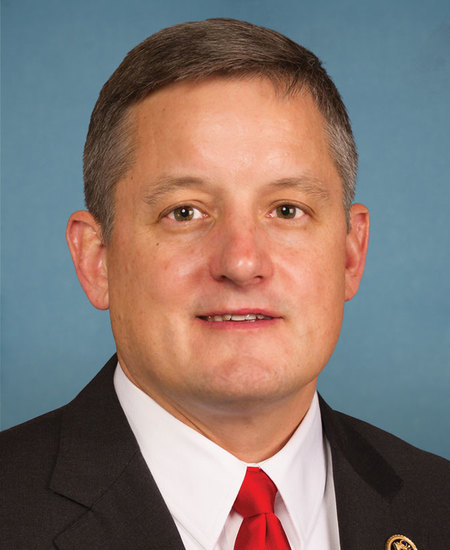
Rep. Bruce Westerman
Sponsored bills
This joint resolution nullifies a Department of Labor final rule entitled Adverse Effect Wage Rate Methodology for the Temporary Employment of H-2A Nonimmigrants in Non-Range Occupations in the United States and published on February 28, 2023. This rule makes changes to the methodology used to set adverse effect wage rates for H-2A workers (temporary agricultural workers), including by using Bureau of Labor Statistics wage surveys in certain instances. (Generally, the minimum wage for an H-2A worker is the highest of the adverse effect wage rate, the applicable minimum wage, the prevailing wage for that occupation in that area, or any agreed-upon collective bargaining wage.)
Maddy summaryHRES 325 is a symbolic resolution supporting Mathematics and Statistics Awareness Month in April. It recognizes the importance of mathematics and statistics in driving innovation across fields like medicine, cybersecurity, and education, while highlighting persistent underrepresentation of women and minorities in these fields (citing 2021 data). The resolution urges the House to support the month's goals, acknowledge math/stats as foundational to STEM, and celebrate their everyday role in American life - from technology to music. As a procedural resolution, it has no binding policy impact but formally endorses awareness efforts.
Maddy summaryHR 734, the Protection of Women and Girls in Sports Act of 2023, amends Title IX to prohibit federally funded schools and athletic programs from allowing individuals assigned male at birth to participate in women's or girls' sports teams. The bill defines "sex" for this purpose as "reproductive biology and genetics at birth," making it a violation of federal law to permit such participation in designated women's or girls' programs. It allows males to train with women's teams only if no female is deprived of a roster spot, competition opportunity, scholarship, or other benefit tied to the team. This law directly affects public and private schools receiving federal financial assistance that operate athletic programs.
Maddy summaryHR 2800, the Master Sergeant Roddie Edmonds Congressional Gold Medal Act, authorizes a posthumous Congressional Gold Medal to honor Master Sergeant Roddie Edmonds for his actions during World War II. The bill directs the Treasury Secretary to strike a gold medal commemorating Edmonds' bravery, specifically his defiance of Nazi orders to separate Jewish-American prisoners at Stalag IX-A, which saved approximately 200 lives. The medal will be presented to Edmonds' son, Pastor Christopher Waring Edmonds, or his next of kin, with bronze duplicates available for sale to cover costs. This is a commemorative measure recognizing Edmonds' service, not a policy change affecting current legislation or programs.
This resolution supports the designation of Second Chance Month to promote awareness of unnecessary legal and social barriers that prevent individuals with criminal records from becoming productive members of society.
Contact Lens Prescription Verification Modernization Act This bill revises the requirements for the verification of prescriptions related to the purchase of contact lenses. Specifically, online sellers of prescription contact lenses must provide consumers with a method to transmit a digital copy of their prescriptions to such sellers. Online sellers also must encrypt protected health information they send by email. Additionally, the bill prohibits any seller of prescription contact lenses from using telephone calls with an artificial or prerecorded voice (i.e., robocalls) to verify a consumer's prescription.
Maddy summaryHJRES 27 is a congressional resolution seeking to block a federal rule that redefined which waterways fall under the Clean Water Act's protections. It targets a rule submitted by the Army Corps of Engineers, Department of Defense, and Environmental Protection Agency (EPA) on January 18, 2023, which aimed to revise the "Waters of the United States" definition. The resolution would formally disapprove this rule under a specific federal procedure (Chapter 8 of Title 5), preventing it from taking effect. This would directly affect how federal agencies regulate pollution and development near water bodies, including wetlands and smaller streams.
Maddy summaryHR 2665 delays Medicaid payment reductions for safety net hospitals by two years, changing the effective date from 2024 to 2026 under Section 1923(f)(7)(A) of the Social Security Act. This bill directly affects hospitals that serve high numbers of low-income and uninsured patients, providing them with additional time before facing reduced federal Medicaid payments. The key mechanism is a technical amendment to existing law, postponing an already scheduled payment adjustment without altering funding levels or eligibility. As a procedural bill, it does not create new programs or change hospital requirements.
Maddy summaryThis bill requires the Government Accountability Office (GAO) to study how quickly the Federal Aviation Administration (FAA) responds to congressional requests for information, including written inquiries and meeting requests. It also mandates that the FAA Administrator provide annual briefings to the House Transportation Committee and Senate Commerce Committee on the agency's activities, objectives, and efforts to engage with Congress and the public. The bill directly affects the FAA's communication practices with Congress, aiming to increase transparency in federal aviation oversight.