

Maddy summaryThis bill terminates the national emergency declared by the President on March 13, 2020, under the National Emergencies Act. It ends the executive branch's authority to use emergency powers related to that specific declaration. The resolution passed both chambers in early 2023 and took effect April 10, 2023, without creating new policies or affecting specific groups.
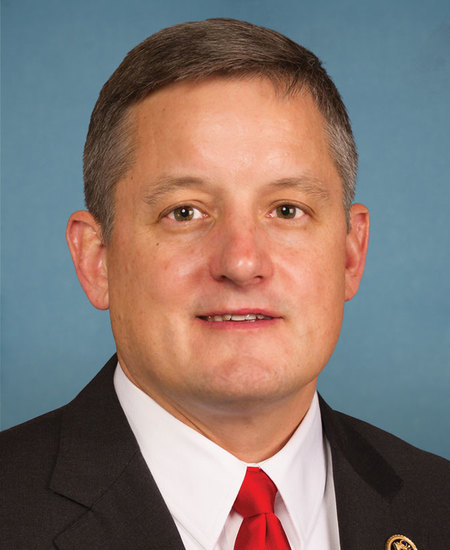
Rep. Bruce Westerman
Sponsored bills
Maddy summaryHR 2380, the Cellphone Jamming Reform Act of 2023, allows state and federal correctional facilities (like prisons and jails) to operate cellphone jamming systems to block wireless signals from contraband devices or communications involving individuals held in the facility. The bill restricts the Federal Communications Commission (FCC) from blocking such jamming systems, but requires facilities to limit jamming only to housing areas, have state facilities cover all costs, and consult with local law enforcement before implementation. It defines "jamming systems" broadly to include all necessary equipment and installation details. This bill directly affects correctional facilities seeking to prevent cell phone use by inmates, particularly for security purposes related to contraband. The law does not create new restrictions on cellphone use but changes how facilities can deploy jamming technology.
Supporting Our First Responders Act This bill establishes a competitive grant program to support medical transport and emergency medical services (EMS). The Department of Health and Human Services (HHS) must award the grants to EMS organizations (including for-profit organizations) or state, tribal, territorial, or local governments. Grant-funded activities include (1) providing salaries and stipends for EMS workers; (2) purchasing vehicles, personal protective equipment, and other resources; and (3) establishing community paramedicine or mobile integrated health care initiatives. HHS must also report to Congress about health insurance reimbursement for medical transport and EMS and the feasibility of establishing a federal EMS office.
Maddy summaryHR 2427, the Hmong Congressional Gold Medal Act, authorizes Congress to award a gold medal to honor Hmong veterans who served with U.S. forces during the Vietnam War. The bill directs the Treasury Secretary to strike the medal and present it to the Smithsonian Institution for display, recognizing their combat service, heavy casualties, and displacement after the war. Duplicate bronze medals may be sold to cover costs. This procedural bill commemorates the Hmong people's military contributions and their refugee resettlement in the U.S., affecting the Hmong community as a whole.
Maddy summary# Summary of the TAPP American Resources Act This comprehensive legislation, titled the "TAPP American Resources Act" (or "Transparency, Accountability, and Permitting Process for American Resources Act"), is a major overhaul of federal energy and natural resource permitting processes. The key provisions include: 1. **Streamlined Permitting Processes**: - Creates a 50-year term limit for pipeline rights-of-way - Allows oil and gas exploration on non-Federal surface estate without Federal permits - Reduces royalty rates for oil and gas leases from 16.67% to 12.5% - Limits judicial review of permits to cases involving "imminent and substantial environmental harm" 2. **NEPA Reforms**: - Expands categorical exclusions for certain energy projects - Allows use of previously completed environmental assessments for similar projects - Limits environmental reviews to areas directly affected by the proposed action - Reduces consideration of downstream effects of oil and gas consumption 3. **Mining and Mineral Development**: - Designates mining as a "covered sector" for permitting improvement - Creates a memorandum of agreement process for mining projects - Requires mineral resource assessments before land withdrawals - Ensures uranium is considered a critical mineral 4. **Revenue Sharing**: - Changes distribution of Gulf of Mexico revenue to states (37.5% to Gulf states, 62.5% to general fund) - Creates parity in offshore wind revenue sharing with offshore oil and gas - Eliminates administrative fees under the Mineral Leasing Act 5. **Water Quality Certification**: - Limits certification requirements to specific provisions of Clean Water Act sections - Requires states to publish certification requirements within 30 days - Sets 90-day timeline for states to identify additional materials needed The legislation represents a significant shift toward expediting domestic energy production while reducing regulatory burdens, with a focus on oil, gas, and mineral development on federal lands. It includes numerous amendments to existing laws including the National Environmental Policy Act, Mineral Leasing Act, Outer Continental Shelf Lands Act, and Clean Water Act.
Maddy summaryHR 1818, the Aviation Workforce Development Act, expands tax-advantaged savings plans (529 plans) to cover costs for specific aviation training programs. It allows funds from these plans to pay for tuition, fees, and required materials at FAA-certified aviation maintenance technician schools (Part 147) or commercial pilot training programs (Part 61 or 141). This directly affects students pursuing careers as aircraft maintenance technicians or commercial pilots by making these training costs more affordable through existing tax-advantaged savings. The bill amends the tax code to include these programs under "qualified higher education expenses" for 529 plan distributions.
Maddy summaryHR 1831 would award Billie Jean King a Congressional Gold Medal to honor her lifelong advocacy for equal rights in sports and society. The bill directs the Secretary of the Treasury to strike the medal and have it presented by congressional leaders, recognizing her pivotal role in advancing women's equality through tennis (including founding the Women’s Tennis Association and securing equal prize money) and her broader impact on society through initiatives like Title IX advocacy.
Maddy summaryThis bill directs the Secretary of Agriculture to restore overnight camping in the Albert Pike Recreation Area within Arkansas's Ouachita National Forest. Within 6 months, the Secretary must identify suitable areas, then establish at least 54 campsites (including 8 with electric/water hookups) by 2 years, all located outside flood zones. Existing non-flood-zone campsites must reopen within 30 days of the bill's enactment. The bill directly affects visitors to this Arkansas recreation area and the U.S. Forest Service as the implementing agency.
Maddy summaryHR 1794 authorizes the minting of commemorative coins to honor the 2028 Los Angeles Olympic and Paralympic Games. It specifies four coin types ($5 gold, $1 silver, half-dollar clad, and proof silver $1) with defined weights, sizes, and mintage limits (e.g., up to 100,000 gold coins). A surcharge is added to each coin sale (e.g., $35 for gold coins), with all surcharge funds directed to the U.S. Olympic and Paralympic Properties to support legacy programs and the Games' operations. The coins must be issued only during 2028 and are legal tender, though the bill focuses solely on commemorative coinage, not policy changes.
Maddy summaryThe TAPP American Resources Act (HR 1335) requires the immediate resumption of quarterly onshore oil and gas lease sales in specific states including Wyoming, New Mexico, Colorado, Utah, Montana, North Dakota, Oklahoma, Nevada, and Alaska, with replacement sales if initial sales are canceled or have low bid coverage. The bill streamlines federal permitting processes by establishing strict deadlines for environmental reviews (1 year for assessments, 2 years for impact statements), reducing oil and gas royalty rates from 16.67% to 12.5%, and requiring agencies to publicly report on pending lease applications and permit processing. It directly affects oil and gas companies seeking federal leases, federal agencies managing energy development (like the Bureau of Land Management), and state governments that may receive revenue from energy production. The legislation also includes provisions for geothermal leasing, coal development, offshore oil and gas leasing, and transparency requirements for all federal energy permitting processes.