

Recognizing the negative impact of criminal justice imposed financial obligations on defendants has led to reforms across the country to reduce the financial burdens that disproportionally impact the poor. This type of debt and the collateral consequences of suspending a driver’s license negatively impacts the rehabilitation of those in the criminal justice system and pushes those without an ability to pay further into the system unnecessarily. This Act does all of the following: (1) Prohibits a court from imposing a fine, fee, cost, or assessment on children without the means to pay them. (2) Provides the courts with the discretion to waive, modify, or suspend any fine, fee, cost, or assessment. (3) Prohibits a court or the Department of Transportation from suspending a driver’s license for nonpayment of a fine, fee cost, assessment, or restitution and from charging a penalty, assessment, or fee to a defendant for the cancellation of a warrant issued due to the defendant’s nonpayment of a fine, fee, cost, assessment, or restitution. (4) Prohibits a court from imposing an additional fee on a defendant for payments that are made at designated periodic intervals or late, or when probation is ordered to supervise a defendant’s payment. Nothing in this Act precludes the court from filing contempt charges against defendants who willfully fail to pay their fines. (5) Requires the Judiciary and the Delaware Criminal Justice Information System to report on the sum collected from fines, fees, costs, assessments, and restitution and make a public report of these totals. (6) Eliminates the Public Defender fee and the Probation Supervision fee. The collections from these fees currently go to the General Fund. (7) Creates the Criminal Legal System Imposed Debt Study Group to review the impact that court imposed financial obligations have on defendants and victims and make recommendations to promote access, fairness, and transparency in the imposition and collection of court imposed financial obligations. (8) Makes technical corrections to conform existing law to the standards of the Delaware Legislative Drafting Manual.
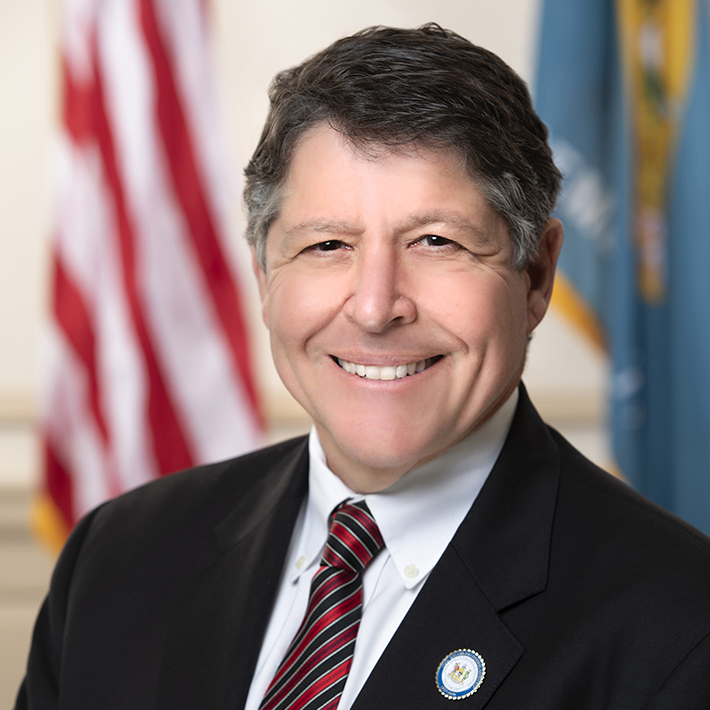
Sponsored bills
This bill allows licensed veterinary technicians, as well as licensed veterinarians, to administer rabies vaccinations to dogs, cats, and ferrets.
The Delaware Fair Chance Licensing Act provides that it is the policy of this State to allow entry to professions and occupations with licensing requirements for individuals with a criminal history to the maximum extent consistent with public safety. To that end, the bill identifies certain kinds of criminal history elements that should not be considered by licensing boards: charges that are not pending and did not lead to a conviction; juvenile records; records that have been expunged, sealed, or pardoned; and convictions that are more than 10 years old. An exception is allowed to the 10 year rule to preserve existing prohibitions involving sex offense convictions. The Act also identifies factors a licensing authorityshould consider in determining whether a criminal history record would prohibit licensure, or whether a waiver should be granted. The bill provides a process whereby an individual may submit an inquiry to the Division of Professional Regulation regarding whether their criminal history would be disqualifying for a particular license. Finally, it provides that the Board or Division must provide a written statement to an individual if their criminal history record would be disqualifying and allow the individual to submit rebuttal materials if they wish to do so. Technical changes are also made to conform the provisions to the requirements of the Delaware Legislative Drafting Manual. Conforming changes are made to all the Chapters of Title 24 that are administered by the Division of Professional Regulation. Technical corrections are made to existing provisions to conform with the Delaware Legislative Drafting Manual.
When a youth who is experiencing foster care and living in an out-of-home placement has a need for inpatient psychiatric treatment, there can be a delay in gaining voluntary admission to a facility due to the Division of Family Services needing to obtain the youth’s parent or legal guardian’s consent for treatment. This can lead to a youth waiting in an emergency department bed or other inappropriate setting while waiting for the proper consent to be signed. In some cases, when a youth’s parent or legal guardian cannot be located, the youth must be involuntarily committed in order to obtain inpatient treatment, even when the youth is going willingly. This bill allows the Department of Services for Children, Youth & Their Families, Division of Family Services Director or Deputy Director to sign the request for voluntary admission to a psychiatric treatment facility for a youth in foster care. In the case of a youth in foster care whose parent or guardian’s legal parental rights have not been terminated, the Division of Family Services works collaboratively with the youth’s parent to get consent on medical treatment and decisions. This bill would enable youth experiencing foster care to access psychiatric treatment voluntarily when their parent or legal guardian is not available to consent to the treatment on their behalf. This bill also allows the Director or Deputy Director of the Division of Family Services to make a written discharge request on behalf of the youth receiving voluntary treatment.
This Act clarifies that the Attorney General’s right of access under Title 29, Section 2508(b) to the books, papers, records, and other documents of the State does not apply for purposes of discovery in any civil litigation brought by or on the relation of the Attorney General, except for the Department of Justice’s own documents. This Act is intended to ensure that state agencies, departments, boards, officers, instrumentalities, and commissions will have the discovery protections afforded to non-parties in such litigation by applicable rules of civil procedure or state or federal law.
This Act adds victims of human trafficking to the Address Confidentiality Act. Under this program, certain crime victims are provided a substitute address by the Department of Justice so as to protect the participant’s actual address from public disclosure. This Act also makes technical corrections to conform existing law to the standards of the Delaware Legislative Drafting Manual.
This Act increases the civil penalty for violating the parking regulations in § 4180 from not less than $10 nor more than $25 to not less than $100 nor more than $500. This Act also increases the minimum fine for violating the requirements of Chapter 41 relating to size or weight of a vehicle or a combination of vehicles or restrictions regarding parking in residence districts from not less than $28.75 nor more than $230 for a first offense to not less than $100 and not more than $500 for a first offense. For a subsequent offense the penalty is increased from to not less than $115 nor more than $575 to not less than $400 and not more than $2,000. This Act allows the Secretary to prohibit or restrict the stopping, standing, or parking of any trailer, semi-trailer, or recreational trailer on roadways or sections of roadways. The Act requires the Department to provide a list of roadways or sections of roadways for which it has prohibited or restricted standing or parking to DSHS and law enforcement agencies across the state. This Act also makes technical corrections to conform existing law to the standards of the Delaware Legislative Drafting Manual.
This Act prohibits employers from requesting or requiring that an applicant for employment disclose the applicant’s age, date of birth, or dates of attendance or graduation from an educational institution in an initial application for employment, unless the employer is requesting the information because of a bona fide occupational qualification or to comply with state or federal law.
This substitute bill makes a technical correction to the bill.
This Act increases opportunities for federally qualified health centers (“FQHC”) and government-operated dental clinics to serve the indigent and other underserved communities with dental care and improves flexibility with updated provisional licensing processes for FQHC and government-operated dental clinic applicants. This Act assists FQHCs and government-operated dental clinics in recruiting dentists to serve those most in need. This Act adds FQHCs to the Delaware Institute for Dental Education and Research Board. This Act creates the Dental Care Access Task Force (“Task Force”) to examine and recommend a course of action to address all of the following: (1) Dental care access, including for underserved populations and communities. (2) Dental licensure practices and requirements. (3) Dental provider type and scope of practice. (4) Dental provider recruitment and retention strategies. (5) Dental insurance networks and coverage, including for the uninsured and underinsured. The Task Force must submit its report no later than February 1, 2023. This Act also makes technical corrections to conform existing law to the standards of the Delaware Legislative Drafting Manual.