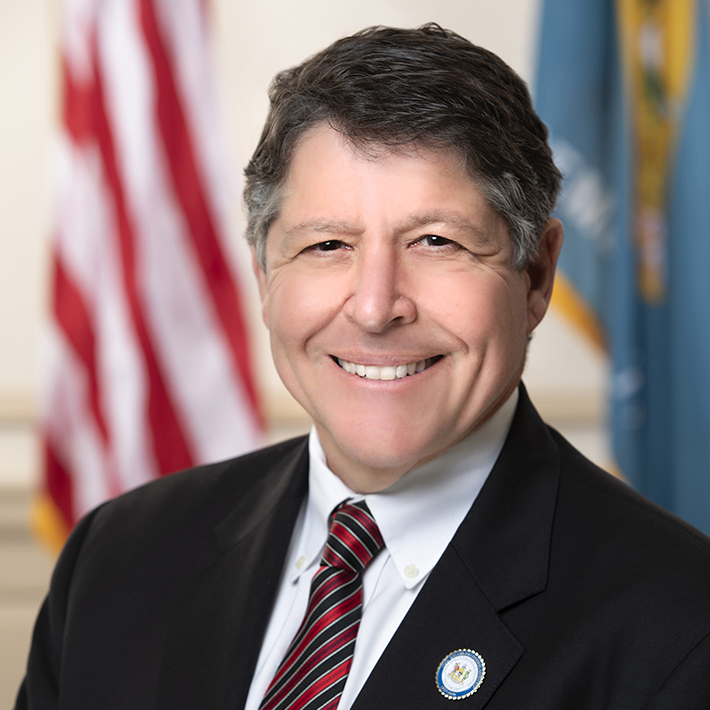
Photo of Paul Baumbach
D Delaware House · District 23

Rep. Paul Baumbach

Contact Email
Compare
Total votes
2,122
all sessions
Attendance
99%
14 missed
Higher than 95% of chamber peers
With party
99%
of cast votes
Near the chamber average
Bipartisan score
0%
crosses aisle rarely
Near the chamber average
Sponsored
1,430
bills & resolutions
Higher than 88% of chamber peers
Committees
0
assignments
1,430 bills and resolutions

Sponsored bills

Total
1,430
Primary
633
Co-sponsor
797
This page
1,430
matching current filters
Co-sponsor HB 462
Signed into law · Delaware House · Co-sponsor
AN ACT TO AMEND TITLE 16 OF THE DELAWARE CODE RELATING TO ABUSE OF CHILDREN.

This Act permits multidisciplinary team members to share information freely amongst themselves to better protect the welfare of abused children in the State of Delaware. This Act also establishes a framework for parties in Family Court civil proceedings to have access to records created and maintained by a child advocacy center related to forensic interviews it conducts such that the Family Court can utilize those records to avoid retraumatizing children by having to interview them again as part of court proceedings.

Signed into law Oct 10, 2022 1 co-sponsor
Co-sponsor SB 286
Signed into law · Delaware Senate · Co-sponsor
AN ACT TO AMEND TITLE 9 AND TITLE 17 OF THE DELAWARE CODE RELATING TO NEW CASTLE COUNTY NEIGHBORHOOD IMPROVEMENT DISTRICTS.

This Act shall be known as the “New Castle County Neighborhood Improvement District Act.” The Act assembles New Castle County resources under “one roof” to focus comprehensively on persistent, and in some cases legacy, neighborhood problems, thereby promoting the possibilities of successfully resolving systemic neighborhood problems. Summary of the Act: • The Act provides for creation of a Neighborhood Improvement District (a “NID”). • Creation of a neighborhood district provides a source of funding for enhanced services in neighborhoods that are especially in need of such services, including, for example, district-wide snow removal, district-wide trash collection, and maintenance of open space. • A primary, but not exclusive, source of funding for the enhanced services is a special assessment on non-exempt properties located within the NID, the primary beneficiaries in the neighborhood. • A NID may be initiated by submission of a voluntary petition by property owners or residents in the district, or by the County, subject to objection by at least 50%, in number, of the non-exempt specially assessed property owners in the district. • A NID will be created and is to exist for only as long as necessary to resolve problems in a neighborhood, and then, after accomplishing its goal of resolving persistent neighborhood problems, it will be subject to dissolution.


Signed into law Oct 10, 2022 1 co-sponsor
Co-sponsor SB 151
Signed into law · Delaware Senate · Co-sponsor
AN ACT TO AMEND TITLE 18, TITLE 21, AND TITLE 29 OF THE DELAWARE CODE RELATING TO PROVIDING FOR DRIVER EDUCATION TRAINING, A DRIVER’S LICENSE, OR MOTOR VEHICLE INSURANCE FOR A CHILD IN THE CUSTODY OF THE DEPARTMENT OF SERVICES FOR CHILDREN, YOUTH, AND THEIR FAMILIES OR AN INDIVIDUAL SUBJECT TO EXTENDED JURISDICTION.

Acquiring a driver’s license is an important part of young adults in foster care achieving normalcy and eventual independence. Yet, youth in long term foster care face numerous unique barriers in this endeavor. Not only are there logistical challenges in the process of obtaining a license for teenagers not in parental care, but the automobile insurance industry’s rules can be unaccommodating and financially prohibitive. And, research shows that youth who leave foster care with a driver’s license are more likely to have a successful outcome, avoiding homelessness and incarceration, as reliable transportation is a crucial step to employment. Like Senate Bill No. 151, this Substitute Act seeks to aid youth in foster care by doing the following: (1) Establishing a pilot program within the Office of the Child Advocate (“Office”) that would pay the cost of driver education, licensure and other costs incidental to licensure, and motor vehicle insurance. (2) Prohibiting automobile insurers from using certain factors in determining a foster child’s automobile insurance rates. (3) Prohibiting the DMV from charging certain fees related to licensure for a foster child participating in the Office’s pilot program. (4) Exempting certain individuals from liability for negligence of a foster child. This Substitute differs from Senate Bill No. 151 as follows: (1) By directing that the Act is to be implemented the earlier of April 1, 2023, or the date of publication in the Register of Regulations of a notice by the Child Advocate that the Act is to be implemented. (2) By setting the date reports from the Office of the Child Advocate are due based on the implementation date of the Act. (3) By directing the Act to expire, or sunset, 2 years from the implementation date of the Act.

Signed into law Oct 10, 2022 1 co-sponsor
Co-sponsor HB 419
Signed into law · Delaware House · Co-sponsor
AN ACT TO AMEND TITLE 11 OF THE DELAWARE CODE RELATING TO CUSTODIAL INTERROGATIONS.

Citing the increasing number of false confessions recorded by the National Registry of Exonerations and recent science around adolescent brain development, several states across the nation have passed legislation to ban the use of deceptive interrogation techniques on juveniles. Deceptive tactics is limited to the knowing use of misleading statements about evidence or communications of false promises of leniency to extract a confession or other incriminating evidence from a youth suspected of breaking the law. To date, Delaware has yet to have a wrongful conviction case involving a false confession but according to groups such as the Innocence Project, wrongful convictions can often take decades to be revealed. Three other states, Illinois, Utah and Oregon, have passed similar legislation. Additional states, including Colorado and California, are currently considering similar legislation. This Act mirrors efforts in other states by prohibiting the knowing use of false statements about evidence, or false or misleading promises of leniency during custodial interrogations of persons under the age of 18. Any statement elicited from a person in violation of this section is inadmissible in any subsequent juvenile delinquency or criminal court proceeding.

Signed into law Oct 10, 2022 1 co-sponsor
Co-sponsor HB 311
Signed into law · Delaware House · Co-sponsor
AN ACT TO AMEND TITLE 6 AND TITLE 29 OF THE DELAWARE CODE RELATING TO EQUAL ACCOMMODATIONS.

This Act clarifies the scope and protections for individuals with disabilities under the Delaware Equal Accommodations Law (DEAL) and further aligns definitions and scope of DEAL with federal law protecting individuals with disabilities from discrimination by places of public accommodation, including the Americans with Disabilities Act. This Act is consistent with the Superior Court's decision in Ray v. State Human Rels. Comm'n, 2021 Del. Super. LEXIS 668, which held that "[a]ny interpretation to suggest the legislature made a choice to narrow DEAL's protection ignores both the express mandates and comprehensive guidance under DEAL. It takes away the right of a protected class member to be heard. As interpreted, Delaware law would need to reject what has been universally accepted." This alignment with federal law includes all of the following: 1. Using the same terms and definitions for those terms. 2. Clarifying that places of public accommodation must make reasonable modifications in policies, practices, and procedures, sometimes referred to as “reasonable accommodations”, unless doing so would fundamentally alter the program, business, or service. 3. Clarifying that a public accommodation must provide auxiliary aids and services, unless doing so would fundamentally alter the program, business, or service or be an undue burden. 4. Clarifying that places of public accommodation must remove physical barriers if doing so is readily achievable. 5. Clarifying that state investigations of complaints must apply the requirements under state law in a manner consistent with equivalent requirements under federal laws. This Act also does all of the following 1. Clarifies that an individual does not have to use the exact terms in DEAL to request a reasonable modification or auxiliary aids and services for the request to be covered by DEAL. 2. Extends the time to file a complaint under DEAL to 1 year. 3. Allows the Commission to waive the cost of transcript, upon application by a party. 4. Makes corresponding changes to the requirement under § 10006A of Title 29 that a public body allow a member with a disability to use electronic means of communication to attend a meeting because "reasonable modification" is the term now used under § 4504 of Title 6. The term "reasonable accommodation" is retained because that is the term used under state and federal law in employment contexts, which might apply to a member of public body. 5. Makes technical corrections to clarify existing law and conform existing law to the standards of the Delaware Legislative Drafting Manual.

Signed into law Oct 10, 2022 1 co-sponsor
Co-sponsor HB 264
Signed into law · Delaware House · Co-sponsor
AN ACT TO AMEND TITLES 10 AND 11 OF THE DELAWARE CODE RELATING TO PROTECTIVE ORDERS FOR VICTIMS OF SEXUAL VIOLENCE.

This Act permits a person who has been the victim of non-consensual sexual conduct or non-consensual sexual penetration to apply for a sexual violence protective order if the person has a reasonable fear, based on specific conduct occurring contemporaneously or subsequent to the non-consensual sexual conduct or penetration, that the perpetrator of the sexual conduct will harm the petitioner in the future. An ex parte temporary order may be issued if a petitioner proves by a preponderance of the evidence that the respondent poses an immediate and present danger of causing physical injury to the petitioner. The protective order is a civil remedy available whether or not the respondent has been charged with a crime and whether or not the petitioner reported the respondent’s conduct to law enforcement officials. The Act provides for an emergency ex parte hearing as well as a non-emergency hearing in Superior Court. Possible remedies in addition to an order restraining the respondent from any kind of contact with the petitioner include restraining the respondent form going to, or remaining in, the places a petitioner might frequent including home, school, or work. Violation of a sexual violence protective order is punishable as criminal contempt, either as a class A misdemeanor, or Class F felony if contempt of the order results in physical injury, or involved threatened use, or use of, a deadly weapon or firearm. Petitions under the Act must be verified. If any party falsely swears in a petition or hearing under the Act, the person may be liable for a misdemeanor or felony. A sexual violence protection order is available only for petitioners who would not qualify for a protection from abuse order because there is no family or dating relationship between the victim and perpetrator. The Act also makes technical corrections to existing law to make it conform to the Legislative Drafting Manual. The Act takes effect 6 months after its enactment.

Signed into law Oct 10, 2022 1 co-sponsor
Co-sponsor SB 280
Signed into law · Delaware Senate · Co-sponsor
AN ACT TO AMEND TITLE 16 OF THE DELAWARE CODE RELATING TO LABOR PEACE AGREEMENTS AND MEDICAL MARIJUANA.

This Act requires medical marijuana compassion centers and safety compliance facilities that have 20 or more employees to have a labor peace agreement with 1 more bona fide labor organizations. This Act defines "labor peace agreement" as an agreement between an employer and a labor organization that, at a minimum, includes all of the following: 1. Prohibits the labor organization and members from engaging in picketing, work stoppages, boycotts, or any other economic interference with the business of the employer. 2. Prohibits the employer from disrupting efforts by the bona fide labor organization to communicate with and attempt to organize and represent employees. 3. Provides the labor organization access at reasonable times to areas in which the employees work, for the purpose of meeting with employees to discuss their right to representation, employment rights under state law, and terms and conditions of employment.

Signed into law Oct 7, 2022 1 co-sponsor
Co-sponsor HB 299
Signed into law · Delaware House · Co-sponsor
AN ACT TO AMEND TITLE 6 OF THE DELAWARE CODE RELATING TO PROHIBITED TRADE PRACTICES FORBIDDING DISCRIMINATION AGAINST CASH PAYMENTS BY CONSUMERS.

This Act prohibits the seller of consumer goods or services from refusing to accept cash payment, except in limited circumstances. Sales covered by this Act are those made at a retail store through an in-person transaction. The Act does not apply to sales of goods or services by electric or gas utilities, telephone, mail or internet sales, or for services provided at parking lots or garages. It creates graduated civil penalties for violations and provides consumers a private right of action to recover double damages, including consequential damages, for a second violation of the law and triple damages for subsequent violations. The Division of Consumer Protection has authority to enforce the law.

Signed into law Oct 7, 2022 1 co-sponsor
Co-sponsor HB 399
Signed into law · Delaware House · Co-sponsor
AN ACT TO AMEND TITLE 24 OF THE DELAWARE CODE RELATING TO PRACTICE OF PHARMACY.

All human laboratory testing is regulated under the Clinical Laboratory Improvement Amendments of 1988 (“CLIA”). CLIA-waived tests are simple laboratory examinations and procedures that have an insignificant risk of an erroneous result. Common CLIA-waived tests include Influenza, HIV, COVID-19, and lipid-panel tests. Amid COVID-19 pandemic, the need for immediate diagnostic services that are close to home became vital. This bill authorizes pharmacists to order and perform tests authorized by the FDA and CLIA-waived and provide treatment for such health conditions.

Signed into law Oct 3, 2022 1 co-sponsor
Co-sponsor SB 270
Signed into law · Delaware Senate · Co-sponsor
AN ACT TO AMEND TITLE 14 OF THE DELAWARE CODE RELATING TO FREE PUBLIC SCHOOLS.

This Act establishes an evaluation and assessment system created by the Department of Education to determine whether a school facility is in good repair to assure that school facilities are clean, safe, and functional for staff and students. This Act also requires the Division of Public Health to create a routine indoor air quality monitoring program that includes temperature and humidity standards that is published on the Department of Health and Social Services website. It further requires the Division of Public Health to create a contractor certification program for indoor air quality services that will allow schools to contract with properly trained and certified contractors when indoor air quality remediation is necessary. The Act also provides procedures for districts to make procedures clear for receiving and reporting indoor air quality complaints in schools. This Substitute bill differs from the original in that it does not provide for implementation of the routine indoor air quality monitoring program nor its enforcement. Once the program is created and there is a better understanding of what it will require, the General Assembly may then establish how, and to what extent, to implement the program with the knowledge of what is necessary to do so.

Signed into law Oct 3, 2022 1 co-sponsor
Showing 481 to 490 of 1,430 bills
Previous 1 … 48 49 50 … 143 Next