Maddy summarySJR 5 designates January 26, 2026, as "Colorado 4-H Day" to recognize the 4-H program's work with Colorado youth. The resolution honors the program's role in developing leadership and life skills through hands-on learning in areas like health, agriculture, and citizenship. It does not create new laws or requirements but formally acknowledges the efforts of 4-H volunteers and staff who serve over 110,000 youth annually in Colorado.
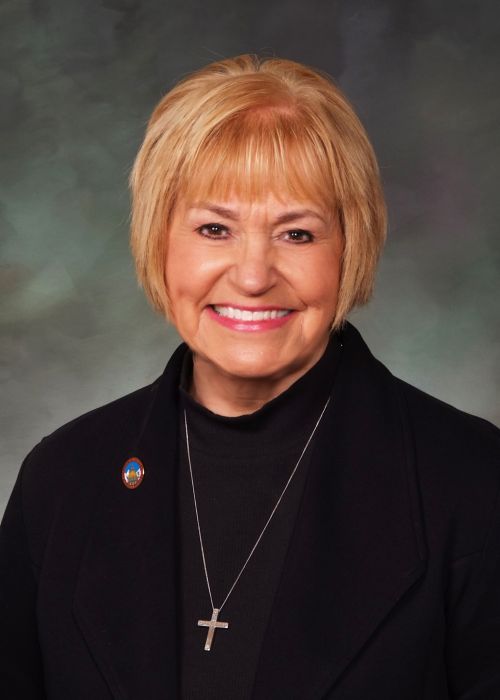
Sen. Janice Rich
Sponsored bills
Maddy summaryHJR 1003 is a ceremonial joint resolution designating January as National Blood Donor Month in Colorado. It formally recognizes voluntary blood donors and urges all eligible Coloradans to donate regularly, while encouraging businesses and organizations to sponsor community blood drives with centers like Vitalant. The resolution has no binding legal effect - it expresses support and promotes awareness but does not create new laws, funding, or requirements. It directly affects Colorado residents (especially eligible donors), blood collection organizations, and local businesses through its non-binding recommendations.
Maddy summaryHJR 1002 is a commemorative resolution honoring Dr. Martin Luther King Jr. It does not create new laws or policies. The resolution recognizes Dr. King's legacy through historical context about his civil rights leadership, his "I Have a Dream" speech, and his role in key legislation like the Civil Rights Act of 1964. It specifically acknowledges Colorado's history of observing MLK Jr. Day, noting that Colorado became the 50th state to recognize the holiday in 2000. The resolution serves only to formally commemorate Dr. King's life and work, with no direct effect on citizens or new government requirements.
The act modifies the state property tax deferral program (program) under which the state makes a secured loan to a qualified taxpayer to pay property taxes owed for the taxpayer's homestead by: Again limiting eligibility for the program to seniors and persons called into active military service, who, until a 2021 program expansion also allowed otherwise nonqualifying taxpayers whose property tax had increased by at least a specified percentage to participate, had been the only eligible individuals; and Shifting portions of the responsibility for the administration of the program that had been shifted from the county treasurers to the state treasurer in 2022 back to the county treasurers. For the 2025-26 state fiscal year, $160,826 is appropriated from the general fund to the department of the treasury for operating expenses related to the implementation of the act. (Note: This summary applies to this bill as enacted.)
The act repeals obsolete references to the teacher residency expansion program (program), which was repealed in 2023. Current law continues to reference the definition for "paraprofessional" as it appeared in the program. The act recreates the definition of "paraprofessional" for the current statutory uses of the term. (Note: This summary applies to this bill as enacted.)
Colorado law allows a local government to establish local minimum wages in excess of the statewide minimum wage established in the state constitution. A local government that enacts a minimum wage must provide a tip offset for tipped employees in an amount equal to the tip offset amount described in the state constitution, which is $3.02. The act states that on and after January 1, 2026, a local government that has enacted a code or an ordinance imposing a minimum wage that exceeds the state minimum wage may increase the amount of the tip offset associated with the local minimum wage; except that a local government shall not impose a tip offset in an amount that allows a tipped employee to earn less than the state minimum wage minus $3.02. (Note: This summary applies to this bill as enacted.)
The act repeals obsolete statutory provisions that: Required the department of labor and employment (department) to analyze various aspects of the administration of a family and medical leave program (program); Created a family and medical leave task force (task force) to make an initial recommendation on how to administer the program based on the department's analysis; Required the department to contract for an actuarial study of the task force's initial recommendation; and Required the task force, after consideration of the actuarial study performed on the task force's initial recommendation, to report on its final recommendation on administration of the program. The task force issued its recommendation, the actuarial study was completed, and the task force issued its final recommendation on administration of the program. (Note: This summary applies to this bill as enacted.)
The act allows regulators of the following professions and occupations to require an applicant for a license, certification, or registration to submit to a fingerprint-based criminal history record check (fingerprint-based record check): Audiologists; Certified midwives; Cremationists; Dental hygienists; Dentists; Embalmers; Funeral directors; Licensed professional counselors; Mortuary science practitioners; Natural reductionists; Occupational therapists; Occupational therapy assistants; Physician assistants; Social workers; and Speech-language pathologists. An applicant submitting to a fingerprint-based record check must pay the costs associated with the fingerprint-based record check. If an applicant's fingerprint-based record check reveals a record of arrest without a disposition, the applicant must submit to a name-based judicial record check. A local government entity is authorized to perform a fingerprint-based record check when an ordinance or resolution requires an individual to submit to a fingerprint-based record check. The act also clarifies who is eligible to submit to, who is eligible to receive records from, and the type of records an entity may receive from a fingerprint-based record check and aligns state law with federal bureau of investigation requirements. (Note: This summary applies to this bill as enacted.)

The act enacts the "Colorado Vending of Digital Assets Act", which requires an owner or operator of a virtual currency kiosk to: Provide certain disclosures to customers of the virtual currency kiosk; Provide each customer with an electronic receipt detailing the customer's virtual currency transaction; and Fully refund a customer's first virtual currency transaction if the virtual currency transaction is to a virtual currency wallet or exchange located outside of the United States and, within 60 days after the virtual currency transaction, the customer contacts the owner or operator of the virtual currency kiosk and a government or law enforcement entity regarding the fraudulent nature of the transaction and submits proof of the fraud. The act establishes a daily transaction limit of $2,000 for a new customer and $10,500 for an existing customer of a virtual currency kiosk. The act defines "virtual currency" as a type of digital unit that is used as a medium of exchange or a form of digitally stored value or that is incorporated into payment system technology. "Virtual currency kiosk" is defined as an electronic terminal acting as a mechanical agent of the owner or operator to enable the owner or operator to facilitate the exchange of virtual currency for other virtual currency or fiat currency. "New customer" is defined as a customer who has been a customer of a virtual currency kiosk for less than 7 days. (Note: This summary applies to this bill as enacted.)

The act repeals an obsolete provision that: Authorized the department of public health and environment to award grants to 3 state institutions of higher education in state fiscal year 2006-07; and Required each recipient of a grant award to report to committees of the general assembly on or before March 15, 2007, regarding the use of the grant money awarded.(Note: This summary applies to this bill as enacted.)