

The act creates 3 new programs to be implemented and administered by the division of housing in the department of local affairs (division). The division is required to adopt policies, procedures, and guidelines for each program on or before November 1, 2024; except that, if there is insufficient funding before July 1, 2025 to implement and administer the child care facility development capital grant program, then the division is required to adopt policies, procedures, and guidelines for this program on or before November 1, 2025. For each program, consultation between the division and the department of early childhood is required for the policies the division develops and adopts to implement the programs. Additionally, the division is required to publish on its website and submit an annual report regarding the programs to specified legislative committees and to the department of early childhood. The child care facility development toolkit and technical assistance program is created to provide technical assistance from consultants and related professionals to enable interested child care providers, developers, employers, public schools, institutions of higher education, and local governments to understand the technical aspects of planning, developing, building, and co-locating child care facilities. The division must prioritize applications for projects that will meet a demonstrable need for child care in the areas of greatest need across the state and that satisfy one or more purposes of the program. The division's annual report must contain information regarding the assistance provided under this program and the uses of such assistance by program recipients. This program is available until July 1, 2028. The child care facility development planning grant program is created to incentivize and support local governments in identifying and making regulatory updates or improvements to community planning, development, building, zoning, and other regulatory processes to support the development of child care facilities. The division must develop a menu of recommended policy or regulatory tools, and eligible recipients for the grant must intend to implement one or more of such tools off the menu or identify other local policies or programs to implement to streamline the eligible recipient's regulatory environment for the development of child care facilities. The division's annual report must contain information regarding the amount of grants distributed and a description of recipients' use of the grants. This program is available until July 1, 2028. The child care facility development capital grant program is created to provide eligible entities, which are local governments, public schools, institutions of higher education, or public-private partnerships, with money to support the development of licensed child care and to construct, remodel, renovate, or retrofit a child care facility to meet a demonstrated need for child care in an eligible entity's community. The division shall utilize the state housing board within the division to review and make recommendations on grant applications. Grant recipients are required to provide a financial match. The financial match required from a grant recipient is 50% for a center-based facility and 25% for a home-based facility. More weight is given to applications that represent geographic diversity, will serve a high percentage of families below the area's median income, commit to providing a well-compensated staff, co-locate with or repurpose facilities with other uses, plan to serve children in regions with low child care capacity, or plan to serve infants and toddlers. The division's annual report must contain information regarding the amount of grants distributed and a description of recipients' use of the grants. The act also creates the child care facility development cash fund (fund) for use by the division to administer and implement the 3 programs and to make grants under the child care facility development planning grant program and the child care facility development capital grant program. On August 15, 2024, the state treasurer shall transfer $250,000 from the general fund to the fund. The money from the transfer must be used before June 30, 2025, to implement the child care facility development toolkit and technical assistance program and the child care facility development planning grant program, and the division must prioritize money first for the toolkit and technical assistance program. Then, after June 30, 2025 but before June 30, 2028, money from the transfer can be used for all 3 programs, and after July 1, 2028, but before June 30, 2029, money from the transfer may be used for the child care facility development capital grant program. Additionally, the division may receive gifts, grants, or donations to implement and administer and make grants under the child care facility development capital grant program. The division may also use $70,000 from the general fund transfer for administrative costs. For the 2024-25 state fiscal year, the act appropriates $250,000 from the child care facility development cash fund to the department of local affairs for child care facility development. APPROVED by Governor May 29, 2024 EFFECTIVE August 7, 2024(Note: This summary applies to this bill as enacted.)
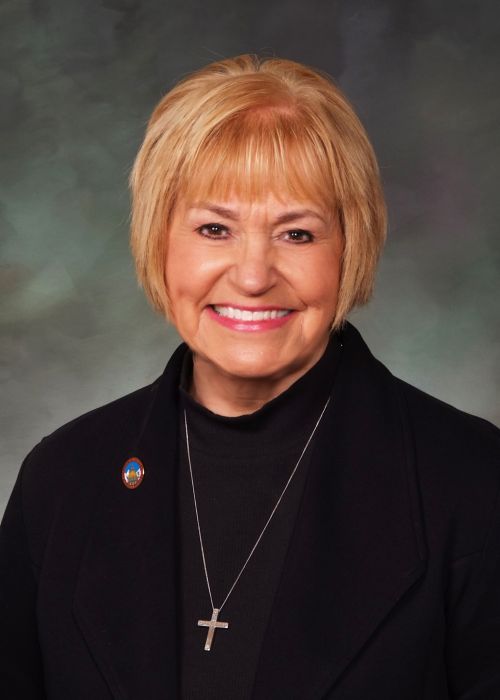
Sen. Janice Rich
Sponsored bills
Current law uses the terminology "department of human services" and "department of social services" interchangeably when referring to the department of human services. The act updates the terminology to refer only to the "department of human services". Current law uses the terminology "county department of human services or social services", "county department of human services", and "county department of human or social services" interchangeably. The act updates the terminology to refer only to the "county department of human or social services". Current law uses the terminology "state board of social services" and "state board of human services" interchangeably when referring to the state board of human services. The act updates the terminology to refer only to the "state board of human services". APPROVED by Governor May 3, 2024 EFFECTIVE August 7, 2024(Note: This summary applies to this bill as enacted.)
The act extends immunity from civil liability for damage or injury, other than that which arises from gross negligence or willful misconduct, to an individual, nonprofit organization, for-profit corporation, private organization, or other person (person) that voluntarily operates or arranges for the use of a helicopter, or assists as a helicopter crew member, during backcountry search and rescue operations (search and rescue operations), if the person: Arranges for the use of or operates, or assists as a crew member of, the helicopter on behalf of the governmental entity that is leading the search and rescue operation; Has an agreement with the governmental entity; Is, employs, or otherwise contracts with a pilot that is properly licensed to operate the helicopter; Is not compensated by the governmental entity for assisting in the search and rescue operation, other than reimbursement for actual expenses incurred; and Meets certain safety and training certifications and requirements. The act also establishes criteria that volunteer helicopter pilots and the helicopters used in search and rescue operations must satisfy in order for the volunteer helicopter owner or operator to qualify for immunity under the act. The act establishes the airspace deconfliction working group within the department of public safety. The working group consists of representatives from the department of public safety, the department of military and veterans affairs, and county sheriffs' offices. The working group must develop guidelines for airspace deconfliction when there could be multiple aircraft involved in a search and rescue operation. APPROVED by Governor May 3, 2024 EFFECTIVE May 3, 2024(Note: This summary applies to this bill as enacted.)
Under current law, an evaluation report and all public records used in preparing the evaluation report for licensed education personnel (personnel) are confidential and available only to the personnel being evaluated, to the duly elected official and appointed public officials who supervise the personnel's work, and to a hearing officer conducting a hearing or a court of appeals reviewing a decision of the board of education. The act extends the confidentiality of evaluation reports and public records that are used in preparing the evaluation reports to all teachers, principals, administrators, special service providers, and education support professionals. APPROVED by Governor April 19, 2024 EFFECTIVE August 7, 2024(Note: This summary applies to this bill as enacted.)
The act requires the department of higher education (department) to: Identify and designate state institutions of higher education (state institutions) as first-generation-serving institutions if: The average resident first-generation undergraduate population share for the most recent year and the 2 previous years equals or exceeds the statewide average resident first-generation undergraduate student population share for the fall 2022 term; or The state institution secured a First Scholars Network of Institutions designation from the Center for First-generation Student Success or a similarly rigorous independent third-party designation; Post on the department's website the names of the state institutions that are so designated; and Notify the state institutions and the Colorado general assembly of the designations. APPROVED by Governor April 11, 2024 EFFECTIVE August 7, 2024(Note: This summary applies to this bill as enacted.)
Current law exempts certain small cooperatives and limited-expense planned communities from most of the requirements of the "Colorado Common Interest Ownership Act", which governs the conduct of homeowners' associations (associations). A cooperative or planned community may avail itself of the exemption if: A cooperative was created on or after July 1, 1992, but before July 1, 1998, and either contains only units restricted to nonresidential use or contains no more than 10 units and is not subject to any development rights; A planned community was created on or after July 1, 1992, but before July 1, 1998, and contains no more than 10 units and is not subject to any development rights, or if a planned community provides in its declaration that the annual average common expense liability of each unit restricted to residential purposes may not exceed $400, as adjusted for changes in the consumer price index (CPI); A cooperative or planned community was created on or after July 1, 1998, and contains only units restricted to nonresidential use or contains no more than 20 units and is not subject to any development rights; or A planned community was created after July 1, 1998, and provides in its declaration that the annual average common expense liability of each unit restricted to residential purposes may not exceed $400, as adjusted for changes in the CPI. The act combines these exemptions, with amendments, to state that a cooperative or planned community may avail itself of the exemption if: A cooperative or planned community was created on or after July 1, 1992, and either contains only units restricted to nonresidential use or contains no more than 20 units and is not subject to any development rights; or A planned community provides in its declaration that the annual average common expense liability of each unit restricted to residential purposes must not exceed $400, as adjusted annually since July 1, 1999, for changes in the CPI. A cooperative or planned community that may avail itself of the exemption may elect instead to be subject to the entire "Colorado Common Interest Ownership Act" by adopting an amendment to its declaration evidencing its election. The act requires the HOA information officer in the department of regulatory agencies to provide notice of the act to cooperatives and planned communities that are affected by the act, including notice of the option to opt out of the exemption. APPROVED by Governor April 11, 2024 EFFECTIVE August 7, 2024(Note: This summary applies to this bill as enacted.)
The act defines "seasonal outdoor adventure day camp program" (program) as a type of children's resident camp for licensing purposes or to ensure the programs are licensed. Programs serve children who are 5 years of age or older. APPROVED by Governor April 4, 2024 EFFECTIVE April 4, 2024(Note: This summary applies to this bill as enacted.)
The act prohibits a peer support team member or recipient of group peer support services from being examined as a witness without the consent of the person to whom the examination relates. APPROVED by Governor March 22, 2024 EFFECTIVE August 7, 2024(Note: This summary applies to this bill as enacted.)
The bill establishes a refundable state income tax credit for parental engagement in schools for income tax years commencing on or after January 1, 2025, but before January 1, 2030, that allows a taxpayer who is a parent, guardian, or legal custodian (taxpayer) to claim a credit when the taxpayer volunteers in the school of the taxpayer's child. Taxpayers are allowed a credit of $20 for each volunteer hour, up to $500. An eligible school includes a school of a school district, a district charter school, an institute charter school, or a board of cooperative services at which the percentage of students receiving free or reduced-cost lunch under the national school lunch program equals at least 40%. An eligible school shall issue a credit certificate to any taxpayer who volunteers in the school. The credit certificate allows the taxpayer to claim a credit with respect to the income taxes imposed by the state. To claim a credit, the taxpayer must submit the credit certificate to the department of revenue (department) with the taxpayer's income tax return for the income tax year for which a credit is claimed. The amount of the credit that exceeds the taxpayer's income taxes due is refunded to the taxpayer. The bill encourages eligible schools to promote the credit to parents at the start of each school year and to provide volunteer opportunities throughout the year to accommodate parent schedules and interests. The bill requires the Colorado state advisory council for parent involvement in education (council) to develop marketing materials to promote the credit to parents. The council shall conduct training sessions to instruct eligible schools on how to implement and manage a volunteer program to align with the credit. The training sessions must use best practices for parental engagement. On or before May 1, 2026, the council shall create and distribute a statewide parental engagement feedback survey (survey) to solicit and collect parental engagement feedback from parents. The purpose of the survey is to measure parental engagement participation and to determine whether parental engagement provides support to eligible schools. At the end of each school year through 2030, eligible schools are required to solicit feedback, using the council's survey, from parents concerning volunteer experiences. On or before July 1, 2026, and each July 1 thereafter through July 1, 2030, eligible schools shall submit the survey data to the school districts. On or before October 1, 2026, and each October 1 thereafter through October 1, 2030, school districts shall report the survey data to the department of education. The bill requires the department of education to submit an annual report summarizing the survey data reported by the school districts to the department on February 15, 2027, and each February 15 thereafter through February 15, 2031, to the state auditor, the education committees of the house of representatives and the senate, or their successor committees, and the finance committees of the house of representatives and the senate, or their successor committees. The bill repeals the state income tax credit, effective July 1, 2033. (Note: This summary applies to this bill as introduced.)