

The act suspends legislative interim committee activities during the 2025 legislative interim (interim). Specifically, the act: Prohibits the legislative council of the general assembly from prioritizing any requests for interim committees, including task forces, for the 2025 interim; For an interim committee that meets during 2025 interim, limits the number of bills the committee can request to be drafted to 5 and can recommend for introduction to 3; Prohibits meetings, field trips, and legislative recommendations and reports by, and suspends for one year certain reports required to be submitted to, existing interim committees, including the legislative emergency preparedness, response, and recovery committee; legislative oversight committee for Colorado jail standards; statewide health care review committee; Colorado health insurance exchange oversight committee; opioid and other substance use disorders study committee; pension review commission and pension review subcommittee; legislative oversight committee concerning tax policy; and sales and use tax simplification task force; and Prohibits members serving on statutorily created interim committees from receiving per diem and travel expenses for attending interim committee meetings during the 2025 interim except for attendance at a meeting of the wildfire matters review committee, the water resources and agriculture review committee, and the transportation legislation review committee. The act removes the authority of the Colorado youth advisory council review committee to recommend legislation through the interim committee process. The act reduces appropriations made in the legislative department's budget bill by $272,355. (Note: This summary applies to this bill as enacted.)
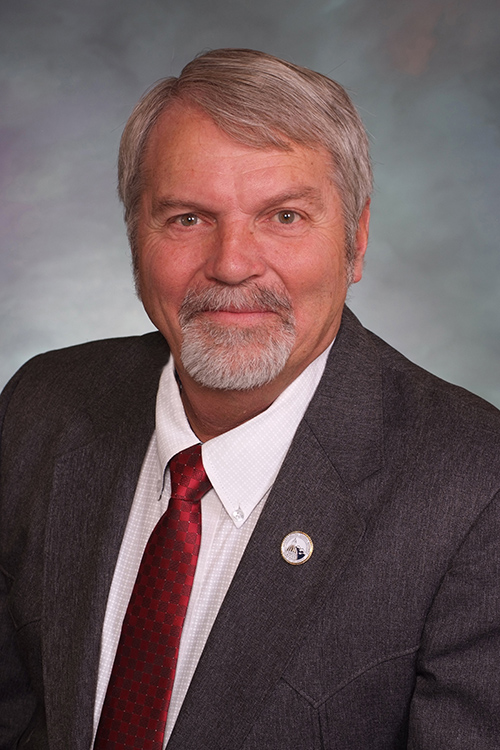
Sen. Rod Pelton
Sponsored bills
The act requires the department of corrections (department) to search all information available to the department to determine whether an offender held at a correctional facility is subject to an outstanding warrant or if the offender has a pending case in a Colorado court. The department is required to conduct the search when the department conducts the initial comprehensive evaluation of the offender's sentence and 3 to 8 months prior to the offender's community correction eligibility date. The act requires the department to establish guidelines and policies that address requests for additional searches as may be needed by the public defender liaison to the department. If the department determines that an offender is subject to a warrant or has a pending case in a Colorado court, the department shall notify the offender, the public defender liaison to the department, and the court that issued the warrant or in which the case is pending, as applicable. The general assembly encourages a court to ensure the offender appears before the court, is assigned counsel if the defendant is eligible for court-appointed counsel, allows the offender to resolve the warrant in a timely manner, and facilitates virtual appearance for the offender. The act does not prohibit the department from searching for outstanding warrants at any other time. The act requires the office of state public defender to designate an email address for the public defender liaisons to the department of corrections to receive notifications from the department. (Note: This summary applies to this bill as enacted.)
Maddy summarySenate Joint Resolution 25-022 is a commemorative resolution concerning the remembrance of the Holocaust. It declares the General Assembly's commitment to remembering the Holocaust and encourages school districts and universities to promote antibias, bullying prevention, and Holocaust and genocide education programs to prevent antisemitic incidents, particularly those targeting Jewish students.
The act establishes certain requirements for social media companies and social media platforms in order to protect users. Specifically, the act: Relocates, with amendments, certain language requiring a social media platform to include a function that provides minor users information about their engagement in social media, which language was enacted in 2024 by House Bill 24-1136; Requires a social media company to publish policies for each social media platform owned or operated by the social media company (published policies) and establishes mandatory contents for published policies; Requires a social media company to submit to the department of law an annual report that includes, for each social media platform owned or operated by the social media company, information concerning the published policies and violations of the published policies; Requires a social media company to annually make publicly available a report that includes, for each social media platform owned or operated by the social media company, certain data concerning how minor users used the social media platform; In satisfying the reporting requirements described in the act, requires a social media company to make commercially reasonable efforts to identify the age categories of users; Requires a social media company, upon the notification of a user's alleged violation of the published policies or of state law, to determine within 48 hours whether the violation occurred and, if so, to remove the user from the applicable social media platform within 24 hours after the determination is made; Requires a social media platform with at least one million discrete monthly users to provide a streamlined process to allow Colorado law enforcement agencies to contact the social media company that operates the social media platform and, under certain conditions, to comply with a search warrant within 72 hours after receiving the search warrant; Makes a violation of the new requirements an unfair or deceptive trade practice under the "Colorado Consumer Protection Act", to be punished accordingly; and Authorizes the attorney general to adopt rules to carry out the new requirements. VETOED by Governor April 24, 2025(Note: This summary applies to this bill as enacted.)
Maddy summaryHouse Joint Resolution 25-1025 is a commemorative resolution by the Colorado General Assembly. It officially recognizes the week of April 6-12, 2025, as National Crime Victims' Rights Week in Colorado. The resolution aims to honor crime victims and those who serve them, and encourages Colorado citizens to seek justice and show compassion for victims.
Maddy summaryHouse Joint Resolution 25-1024 authorizes the installation of a memorial on the State Capitol Grounds to honor the victims of the Sand Creek Massacre of November 29, 1864. The bill designates the former location of the "Union Soldier" statue on the west grounds of the capitol as the appropriate site for this memorial. Its purpose is to respect and memorialize the Cheyenne and Arapaho people and their ancestors, promote cross-cultural understanding, and educate the public about the massacre.
Maddy summaryHouse Joint Memorial 25-1001 serves to memorialize former Representative Rodney Bockenfeld, who passed away on February 13, 2025, at the age of 69. The resolution pays tribute to his years of dedicated public service as both an Arapahoe County Commissioner and a State Representative and extends sympathy to his family.
Maddy summaryHouse Joint Resolution 25-1022 designates May 2025 as "Motorcycle Safety Awareness Month" in Colorado. This resolution, affecting motorcycle riders and all motorists, aims to promote safety through education and training and encourages motorists to "share the road."
Maddy summarySenate Joint Resolution 25-017 designates the North Academy Bridge spanning Interstate 25 in Colorado Springs as the "Naval Aviation Pilot and Aviation Machinist Mate Petty Officer First Class Daniel T. Griffin Bridge." This resolution honors Daniel T. Griffin, recognized as the first Coloradan killed during the attack on Pearl Harbor. It also allows the Colorado Department of Transportation to explore a cooperative agreement with the Colorado Springs City Council for the maintenance of the bridge's signs.
The bill requires the public utilities commission (commission) to evaluate electrical generation and grid resilience against geomagnetic storms (evaluation) and report the findings of the evaluation to the general assembly. The bill requires each electrical utility that is subject to the jurisdiction of the North American Electric Reliability Corporation to annually submit a critical energy infrastructure information request to the federal energy regulatory commission. If the utility receives the permission, each of these electrical utilities must annually brief the general assembly on the utility's contingency action plan and any information necessary to: Evaluate the ability of and identify shortfalls to restoring electrical power operation, fuel delivery, and equipment function within specified time frames following certain types of geomagnetic storms; and Evaluate the certification of hardware and software monitoring and controlling systems for energy generation and distribution. The bill sets standards for the evaluation. Based on the evaluation, the commission shall adopt rules requiring an electrical utility to meet resiliency standards for geomagnetic storms. The rules include: Requiring the monitoring of the space weather prediction center of the national oceanic and atmospheric administration in order to isolate large power transformers and power generation from the grid; Mechanically isolating critical components if or when a coronal mass ejection is likely to cause geomagnetically induced currents; Restricting or closing fuel pipeline valves to mitigate damage in a sectional failure; Installing automatic neutral ground blocking devices in large power transformers; Ensuring that computer equipment can be mechanically isolated from the grid and sheltered from geomagnetically induced surges; Requiring all networked systems that operate electrical generation and distribution to be electronically and physically separable from the outside networks; and Requiring the cyber-certification of hardware and software that operate electrical generation and distribution. (Note: Italicized words indicate new material added to the original summary; dashes through words indicate deletions from the original summary.) (Note: This summary applies to the reengrossed version of this bill as introduced in the second house.)