

The division of housing in the department of local affairs (division) administers an affordable home ownership program (program) that makes grants to nonprofit organizations, local governments, community development financial institutions, and community land trusts (eligible organizations) and tribal governments to support affordable home ownership, including the development of residential housing units that are described in an eligible organization's funding request (project). Current law specifies that only a household with an income less than or equal to 120% of the area median income is eligible for assistance through the program, but it is unclear whether this requirement applies to housing units constructed by an eligible organization through one of its projects. The act clarifies that only a household with an income less than or equal to either 120% of the area median income of households of that size in the jurisdiction of a local government in which the households are located, or 120% of the statewide area median income of households of that size, is eligible for housing constructed by an eligible organization through one of its projects. In addition, the act requires the program to offer housing that costs not more than 38% of a household's monthly income unless the ownership program is providing a homeowner with assistance for home rehabilitation. The act also requires the program to offer grants and loans to groups or associations of mobile home owners and their assignees to support affordable homeownership for households with income less than or equal to 120% of the area median income of households of that size in the territory or jurisdiction of the local government in which the households are located, and specifies that the monthly housing payment must not cost more than 35% of the monthly household income. The act allows the division to modify the maximum percentage of income that a household may allocate pursuant to the program as applied to a residential unit constructed by an eligible organization as part of an affordable housing project pursuant to a waiver process initiated by an eligible organization if a substantial need for housing the project's target population exists, the unit has been adequately marketed to eligible buyers for purchase for at least 6 months after final completion of the unit, and the unit has not been purchased by an eligible buyer within that 6-month period. For grants from the program to support tribal government programs, the tribe is responsible for establishing limitations on household income and maximum percentage of income that a household may allocate for monthly housing costs and a tribal affordability mechanism in lieu of any state-prescribed use covenant. The tribe shall submit evidence to the division that it has satisfied these requirements but is not required to disclose confidential tribal data, including the specific limitations or mechanisms it sets. The division also administers a land banking program (land banking program) that makes grants to local and tribal governments and loans to nonprofits to acquire and preserve land for the development of affordable housing. For grants made to local governments or loans to nonprofits, the development of affordable housing includes rental housing projects with an imputed income limit by household size not to exceed 60% of area median income. Regulated units in the project must have a gross rent limit that does not exceed 30% of the imputed income limitation applicable to the units. Current law requires that a project provide for-sale housing that may be purchased by a household with an annual income of 100% of area median income. The act changes the income limit to 120% of area median income. For land banking program grants to support tribal government programs, the tribe is required to establish income limits by household size and gross rent limits and is not required to use the limits otherwise required for eligible organizations. The tribal government is required to submit evidence that it has established income and gross rent limits but is not required to disclose confidential tribal data, including what the specific limitations are. The division may issue a waiver with housing cost limits that are different from those requested by an eligible organization if different housing cost limits would better serve needs identified in the community, the project remains financially feasible, and there are eligible buyers that meet the division's requirements. Alternatively, the division may modify the total amount of funding to account for an increase in the sales price of the unit. In lieu of this process, the division may approve an eligible organization's process for determining when to exceed the maximum monthly household income for a unit funded by the program, which shall not require a 6-month marketing period. The division may allow an eligible organization to rent residential units constructed as part of the project. On or before December 31, 2026, the division is required to issue guidance for when units within a project may be rented and develop a process by which rented units may return to the for-sale market. A homeowner may rent a unit funded by the ownership program as long as the unit remains their primary residence.(Note: This summary applies to this bill as enacted.)
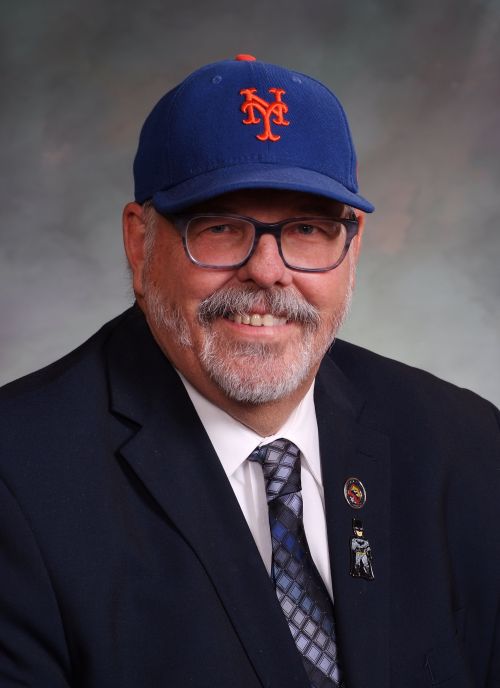
Sen. Tom Sullivan
Sponsored bills
Maddy summaryThis Senate Resolution officially recognizes the 125th anniversary of Western Colorado University and honors its contributions to higher education and workforce development in Colorado. The document commends the university's students, faculty, staff, and alumni for their dedication over the past century and a quarter. It serves as a symbolic acknowledgment rather than a law that changes policy or allocates funding.
The act makes changes and clarifications in the provisions related to the department of early childhood (department). The act:Eliminates the scheduled repeal of licensing exemptions for certain in-home child care arrangements in which the children are related to the caregiver, are siblings, or number fewer than five;Updates provisions related to early care and education provider reimbursement for services performed before final eligibility determinations in the Colorado child care assistance program;Lowers the age limit for children served by the early childhood mental health consultation program from 8 years old to 6 years old and adjusts that program's reporting requirements;Clarifies the sources of money appropriated to the universal preschool program;Requires the department to keep confidential identifying records and facts regarding children and their relatives;Clarifies that child care facilities approved, certified, or licensed by tribal governments are exempt from the department's licensing rules; andAdjusts the membership requirements and duties of the early childhood leadership commission and subcommittee membership requirements for the rules advisory council.(Note: This summary applies to this bill as enacted.)
When a peace officer has reasonable suspicion that a crime of domestic violence has occurred, the peace officer is required to search the national crime information center database to determine whether a military protection order has been issued against one of the parties. If a military protection order has been issued against a party, the peace officer shall notify the military law enforcement agency that entered the protection order into the database. The act includes the existence of a military protection order as relevant evidence that the court shall consider when determining whether to issue a temporary civil protection order.(Note: This summary applies to this bill as enacted.)
The bill creates a tuition waiver for qualified dependents of disabled veterans to attend state colleges or universities.(Note: This summary applies to this bill as introduced.)
The act requires coaches of youth athletic activities to complete a biennial mental health education course. The required mental health education course must address a coach's impact on the mental health of a youth athlete, a wellness framework for youth athletes, mental health disorders, trauma, substance abuse, and suicide prevention. The act requires a coach of a youth athlete, or other designated personnel, to advise the parent or guardian of the youth athlete to seek a medical evaluation from a licensed health-care provider for appropriate medical and behavioral health guidance if the youth athlete is removed from play for a suspected concussion.(Note: This summary applies to this bill as enacted.)
Maddy summaryThis bill establishes new educational requirements for individuals seeking to become licensed school counselors in Colorado. To qualify for an initial school counselor license, applicants must now hold a master's degree or higher specifically in school counseling from an accredited institution, with the program requiring at least 48 graduate semester credit hours. The legislation aims to ensure that school counselors entering the profession have comprehensive graduate-level preparation in counseling practices, student development, and strategies to support students facing behavioral and academic challenges. This change directly affects current and future school counselor candidates in Colorado who must meet these updated academic standards to obtain their professional license.
The act defines 3-dimensional printing to mean additive and subtractive manufacturing. The act prohibits knowingly manufacturing or producing a potentially functioning firearm, unfinished frame or receiver, large-capacity magazine, or rapid-fire device (firearm or firearm component) by 3-dimensional printing. The prohibition does not apply to a federally licensed firearm manufacturer, an instructor or student of an accredited gunsmithing program, or an institution that operates an accredited gunsmithing program. Unlawful 3-dimensional printing of a firearm or firearm component is a class 1 misdemeanor; except that a second or subsequent offense is a class 5 felony. The prohibitions in the act only apply to potentially functional firearms and firearm components.(Note: This summary applies to this bill as enacted.)
Existing law specifies that an individual must be a certified death investigator or forensic pathologist to be eligible to hold the office of county coroner in a county with a population greater than 150,000. The act changes this requirement to apply in a county with a population greater than 300,000. The act also requires a county coroner to disclose, on the coroner's website, their financial interest in businesses regulated by their office, including a mortuary, funeral home, crematory, embalming service, or other death-care business. A coroner who has disclosed a financial interest shall not participate in an official action that would directly and specifically affect the business in which the coroner has a financial interest. The act does not prohibit a coroner or candidate for coroner from operating a death-care business.(Note: This summary applies to this bill as enacted.)
Maddy summaryThis bill proposes that Colorado lawmakers consider adding guaranteed lifetime income options to the state public employees' retirement defined contribution plan and voluntary savings plans. The measure aims to ensure public employees have access to a reliable income stream in retirement, similar to what is already available in the state's traditional defined benefit plan. By allowing workers to choose options that provide lifetime payouts, the bill seeks to improve retirement security and financial confidence for over 226,000 active public employees. The resolution encourages the General Assembly to study how these new options could help workers retire with dignity while maintaining the portability of their savings.