Maddy summaryThis is a ceremonial resolution designating March 17, 2025, as "Colorado FFA Day." It recognizes the Future Farmers of America (FFA) organization's role in supporting agricultural education and youth development in Colorado. The resolution directly affects Colorado FFA members, educators, and supporters by formally honoring their contributions through this annual recognition. It does not create new laws or policy changes, as it is a symbolic gesture celebrating the organization's work.
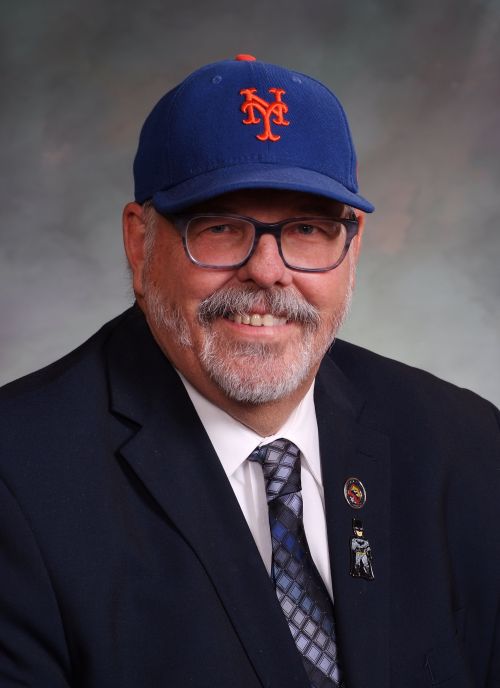
Sen. Tom Sullivan
Sponsored bills
In an action against a construction professional, section 2 of the bill requires the construction professional to provide the claimant or the claimant's legal representative with: Copies of all plans, specifications, soils reports, and available engineering calculations; Any maintenance and preventive maintenance recommendations; The name, last-known address, and scope of work of each construction professional that performed work or services; and Copies of all insurance policies held by the construction professional during the appropriate time. The construction professional may charge reasonable copying costs for the documents. Failure to provide the identifying information of the other construction professionals bars the construction professional from designating the unidentified construction professionals as nonparties at fault in any subsequent action. Section 3 requires a court to award prejudgement interest of 8% to a prevailing claimant who alleges defects in a residential property construction. Section 5 voids a provision in a real estate contract that: Prohibits group lawsuits against a construction professional; or Imposes different or additional requirements than the statutory requirements to bring or join a legal action. Section 6 changes the time when a claim of relief arises, for the purposes of the statute of limitation and repose, to include both the discovery of the physical manifestation and the cause of the defect. Current law authorizes, subject to the requirements of the common interest community's (community) declarations, a community to engage in certain actions, such as instituting, defending, or intervening in litigation or administrative proceedings on matters affecting the community. Section 7 exempts an association's authority to institute, defend, or intervene in litigation proceedings concerning construction defects from the requirement that the action be subject to the declaration. Section 8 requires the department of regulatory agencies to include in its "SMART Act" report information concerning construction liability insurance and the basis for rates.(Note: This summary applies to this bill as introduced.)

Maddy summaryThis joint resolution declares February 28, 2025, as Rare Disease Day in Colorado to raise awareness about rare diseases. It directly affects Colorado residents living with rare diseases - over 500,000 people - and their families, recognizing the challenges they face, including high medical costs and limited treatments. The resolution makes no new policy changes but symbolically honors those impacted by urging the state to "show our stripes" in solidarity. It references national statistics (e.g., 1 in 10 Americans affected) and the "zebra" awareness symbol for rare conditions, without creating any legal obligations or funding.
Maddy summarySenate Resolution 25-007 designates March 2025 as "Women's History Month" in Colorado through a symbolic resolution. It acknowledges women's historical and ongoing contributions to society, including their roles in civil rights, economic empowerment, and Colorado's legislative history. The resolution encourages public reflection on women's achievements and commits to advancing gender equality, though it does not create new laws or allocate funding. This commemorative measure directly affects Colorado residents by formally recognizing the month for community observances. As a procedural resolution, it has no binding legal effect beyond the Senate's acknowledgment.
The act requires a board of county commissioners, a governing body of a municipality, or a regional building department operating through an intergovernmental agreement with a board of county commissioners or governing body of a municipality that adopts or substantially amends a building code or updates a building code with a succeeding version of the international building code to ensure that the building code meets or exceeds the accessibility standards in the International Building Code, and the adopted accessibility standards cannot provide less protection than what is required by the federal "Americans with Disabilities Act of 1990". However, this requirement does not apply when energy-efficient building codes are adopted, nor does it apply to one- and 2-family dwellings and townhomes that comply with either the International Residential Code or a local building code whose accessibility standards are equivalent to the standards in the International Residential Code. The act requires the division of fire prevention and control within the department of public safety to ensure that, when certain building codes pertaining to public school and health facilities are substantially amended, the codes meet or exceed accessibility standards in the International Building Code. The act also requires the state housing board to ensure that, when the uniform construction and maintenance standards for hotels, motels, and multiple dwellings in jurisdictions with no local building code are substantially amended, the standards meet or exceed the accessibility standards in the International Building Code. The act also requires the state housing board to ensure that, when the recommendations for uniform housing standards and building codes to the general assembly and local governments are substantially amended, the codes meet or exceed the accessibility standards in the International Building Code. (Note: This summary applies to this bill as enacted.)
The bill makes it a deceptive trade practice under the "Colorado Consumer Protection Act" for a person who advises, assists, or consults a veteran, in connection with a claim for veterans' benefits (veterans' benefits matter), to: Receive compensation in excess of $12,500 for the service, subject to additional limitations linking permissible compensation to results delivered; Receive compensation for referring a veteran to a third party; Collect compensation on behalf of a third party engaged to assist with any aspect of a veterans' benefits matter; Receive compensation in connection with a claim filed within the one-year period following a veteran's release from active duty without a signed waiver from the veteran; Fail to provide a veteran the option of an interest-free payment plan; Guarantee a successful outcome in a veterans' benefits matter or engage in certain direct advertising; Fail to memorialize the payment terms and certain disclosures in a written, signed business agreement; Fail to take various security measures related to veterans' personal information; or Fail to remain a member in good standing of a national veterans' benefit trade organization that holds members to ethics and certification standards. The bill requires the attorney general or district attorney to transmit any civil penalty collected for a violation of the veterans' benefits matter provisions to the state treasurer for deposit in the Colorado state veterans trust fund. (Note: This summary applies to this bill as introduced.)

Maddy summaryHJR 25-1018 is a Colorado legislative resolution recognizing the service of Latina and Latino veterans who have served in the U.S. Armed Forces. It formally commends their contributions across military conflicts from the Revolutionary War through modern operations, highlighting historical units like the "Borinqueneers" and the American GI Forum. The resolution does not create new policies, benefits, or legal obligations - instead, it serves as a symbolic gesture of appreciation. A copy will be sent to the American GI Forum of Colorado, as specified in the resolution.
Maddy summaryHJR 25-1004 is a procedural resolution approving specific additions to Colorado's Drinking Water Project Eligibility List and Water Pollution Control Project Eligibility List. It directly affects water providers like Allenspark Water and Sanitation District, East Boulder County Water District, and Grizzly Peak Water Sales and Distribution LLC, enabling them to qualify for funding from the state's Drinking Water Revolving Fund (DWRF) and Water Pollution Control Revolving Fund (WPCRF). The resolution formally adopts the Water Quality Control Commission's approved project additions, modifications, and deletions for these lists. This allows eligible water and wastewater infrastructure projects to access state financial assistance for facilities such as treatment plants, distribution systems, and storage.
Maddy summaryHJR 25-1019 is a symbolic resolution honoring Native American veterans' military service and contributions. It expresses recognition of their disproportionate service throughout U.S. history, including roles as code talkers in WWII and current high per-capita service rates. The resolution does not create new programs, funding, or legal obligations; it solely affirms Colorado's commitment to acknowledging their sacrifices and addressing unique hardships faced by Native American veterans. It directly affects Native American veterans, service members, and their communities in Colorado, particularly those connected to tribes like the Southern Ute and Ute Mountain Ute. The resolution passed both chambers of the Colorado legislature in February 2025 as a non-binding statement of support.
Maddy summaryHJR 25-1020 is a symbolic resolution recognizing the contributions and historical service of African American veterans. It formally acknowledges their service across all U.S. military conflicts since the Revolutionary War, including challenges they faced with segregation and discrimination. The resolution highlights key milestones like the 1.25 million African Americans who served in WWII and the 1948 desegregation order (Executive Order 9981), while noting ongoing barriers to full equality. It does not create new benefits, policies, or legal obligations - it solely serves as a statement of recognition. The resolution passed unanimously in both chambers in early 2025.