Current law requires that bond can be posted online. The act makes clarifying changes to the bond statutes to ensure that bond can be posted online. (Note: This summary applies to this bill as enacted.)
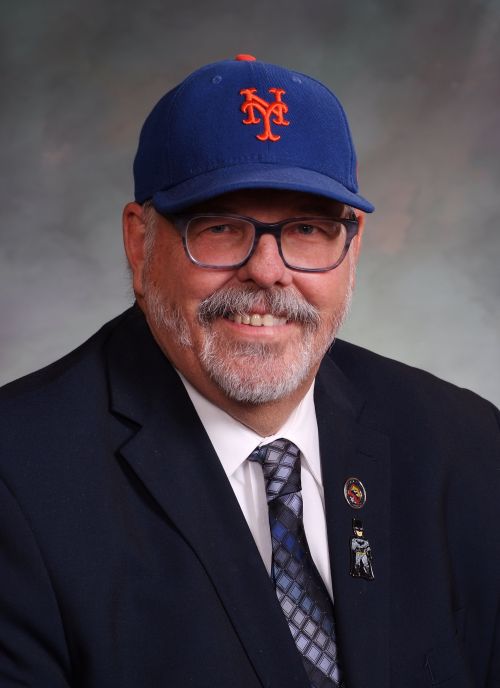
Sen. Tom Sullivan
Sponsored bills
The state maintains a stockpile of essential materials (stockpile), including personal protective equipment, that the division of homeland security and emergency management (division), in consultation with the department of public health and environment, is authorized to distribute in response to a declared disaster emergency to any state agency, school, local public health agency, hospital, primary care provider, other health-care provider, tribal government with jurisdiction in Colorado, or other entity or individual (eligible recipient) that the director of the division (director) determines is in need as a result of a declared disaster emergency. The act broadens the authority of the director over the stockpile so that the director or the director's designee may distribute essential materials from the stockpile: After the governor has declared a disaster emergency; When the director or the director's designee determines that there are other circumstances in which there is a need for or benefit to distribution; or When the director or the director's designee determines that their distribution will enhance the ability of eligible recipients and their community partners to respond to future disaster emergencies or other circumstances in a way that would help protect public health or safety, including the distribution of essential materials for the purposes of ensuring that they can be used in normal, nonemergency times before their useful life ends. While included under current law as "any other entity", the act also explicitly adds "nonprofit organizations" and "faith-based organizations" to the statutory list of eligible recipients. The act also requires the department of public safety to annually include, as part of its presentation during its "SMART Act" hearing, specified information concerning the acquisition of essential materials for and distribution of essential materials from the stockpile. (Note: This summary applies to this bill as enacted.)
The act grants a right for defense counsel to review a tangible object related to a criminal case at least 35 days before a trial, except for cases involving sexually exploitative material, and create confidential work product following their review. Law enforcement shall designate a specific location for the evidence viewing and be present during the evidence viewing to ensure chain of custody and integrity of the evidence. The act does not limit the defense's ability to request testing or a hearing, or the court's ability to conduct a hearing, on a tangible piece of evidence. Law enforcement officers and other state officials may record an evidence viewing by either the prosecution or the defense for the purpose of ensuring the chain of custody, integrity, or safety of the evidence held by the law enforcement agency, and must provide notice to the prosecuting authority and defense if a recording occurs. Law enforcement may view the recording for purposes of organization or cataloguing the evidence, or as authorized by a court order. A trial court may enter protective orders relating to a recording of an evidence viewing. When a member of the defense team is viewing evidence and is incidentally recorded on a law enforcement body-worn camera, it is not an interaction with law enforcement for purposes of the body-worn camera statute and is not for the purpose of enforcing the law or investigating possible violations of the law. (Note: This summary applies to this bill as enacted.)
The act requires the Colorado bureau of investigation (CBI) to spend $3,000,000 in specifically appropriated money from House Bill 24-1430, concerning the provision for payment of the expenses of the executive, legislative, and judicial departments of the state of Colorado, and of its agencies and institutions, for and during the fiscal year beginning July 1, 2024, except as otherwise noted, on backlogged DNA evidence and sexual assault kit tests, as well as DNA retesting related to CBI's laboratory misconduct that was discovered in 2023. Additionally, the act allows CBI to contract with external labs to perform the testing. The act requires CBI to create a dashboard on the department of public safety's website to update the public on the backlog at least every 30 days. CBI shall provide the general assembly with updates on the sexual assault kit backlog, including the number of cases pending, the number of tests CBI's lab conducted, the number of tests CBI contracted out, an update on CBI's laboratory staffing levels, the average turnaround time for a sexual assault kit test, and other relevant data points every 30 days from March 10, 2025, through June 30, 2026. (Note: This summary applies to this bill as enacted.)
No later than June 30, 2026, the act requires the department of public safety (DPS), in collaboration with the behavioral health administration (BHA), to consult with stakeholders to identify: Existing resources and model programs that communities throughout Colorado utilize when responding to behavioral health crises, including, but not limited to, co-responder programs, alternative response programs, and mobile crisis response programs, and the reimbursement shortages and gaps within the continuum of care for behavioral health crisis response; and The reimbursement shortages and gaps within the continuum of care for behavioral health crisis response, and reimbursement and funding options that are available at the state and federal levels to address the shortages and gaps, including funding for treatment in place. The act requires DPS to compile a list of the existing resources and model programs, and report reimbursement shortages and gaps identified by the stakeholder group and develop recommendations for addressing the shortages and gaps. The act requires DPS to make the resources, model programs, and recommendations publicly available on DPS's website. On or before January 1, 2027, the act requires the BHA, in collaboration with the department of health care policy and financing (HCPF), to provide information to the general assembly regarding the reimbursement shortages and gaps within the continuum of care for behavioral health crisis response and the reimbursement and funding options at the state and federal level that are available to address the shortages and gaps, including funding for treatment in place. The act requires HCPF to reimburse an institution for mental diseases for providing inpatient mental health treatment to a member for up to 60 days or to the extent permitted by federal law. Current law requires each person detained for an emergency mental health hold to receive an evaluation as soon as possible after the person is presented to a facility, and the evaluation may, but is not required to, include an assessment to determine if the person continues to meet the criteria for an emergency mental health hold and requires further mental health care in a facility designated by the commissioner. The act requires the evaluation to include the assessment determination. The act requires a hospital that is subject to the federal "Emergency Medical Treatment and Labor Act" to only discharge a person placed on an emergency mental health hold if the person no longer meets the criteria for an emergency mental health hold; except that a hospital may transfer the person to another hospital if the hospital is unable to provide the appropriate medical or behavioral health care to the person and the receiving hospital agrees to the transfer. (Note: This summary applies to this bill as enacted.)
Maddy summarySJR 25-013 is a symbolic resolution recognizing Thursday, March 20, 2025, as Nowruz Day in Colorado. It honors the ancient Persian New Year celebration observed by Iranian, Kurdish, Afghan, and Central Asian communities, acknowledging its cultural significance and the contributions of Colorado's Iranian-American residents. The resolution has no legal effect but formally extends recognition to the traditions of Nowruz, including its themes of renewal and community. It directly affects Colorado's Iranian-American community by affirming their cultural heritage through state acknowledgment.
Beginning July 1, 2025, the act increases by one the number of district court judges in the fourth, seventeenth, eighteenth, and twenty-third judicial districts and increases by one the number of county court judges in La Plata county. Beginning July 1, 2026, the act increases by one the number of district court judges in the fourth, seventh, thirteenth, seventeenth, eighteenth, and nineteenth judicial districts and increases by one the number of county court judges in Larimer county, Douglas county, Mesa county, and Eagle county. Current law requires district court judges regularly assigned to Arapahoe county to maintain offices within Arapahoe county. The act allows the district court judges assigned to Arapahoe county to maintain offices outside of the county seat. For the 2025-26 state fiscal year, the act appropriates $2,638,326 from the general fund to the judicial department to implement the increased number of judges and appropriates $621,337 from the general fund to the judicial department for use by the office of state public defender. (Note: This summary applies to this bill as enacted.)

Maddy summaryThis resolution (SJR 25-009) expresses Colorado's support for federal management of national public lands, including parks, forests, and monuments. It formally opposes efforts to sell, transfer, or dispose of these lands and urges Colorado's governor, attorney general, and congressional delegation to take action against such proposals. The resolution is non-binding but directs state officials to advocate for continued public stewardship by federal agencies like the National Park Service and Bureau of Land Management. It was passed by the Colorado Senate and referred to the House for consideration.
The act repeals a requirement that investigative reports be kept confidential and replaces it with a grant of rule-making authority to make ongoing investigations and security information confidential. The confidentiality rules must not make final reports of investigations confidential and must require the timely release of information if public knowledge of the information would protect the public safety, health, or welfare. (Note: This summary applies to this bill as enacted.)

Maddy summarySJR 25-011 is a symbolic resolution passed by the Colorado General Assembly to recognize the 19th annual Latino/a Advocacy Day 2025. It honors the contributions of Latinas and Latinos to Colorado's political engagement and their advocacy for equitable policies addressing systemic inequities in health, housing, education, and economic opportunity. The resolution directs copies to the event organizers, the Colorado Organization for Latina Opportunity and Reproductive Rights (COLOR) and Voces Unidas de las Montañas, and expresses the legislature's commitment to creating a Colorado that works for all residents regardless of immigration status. As a commemorative resolution, it has no legal effect but serves as a formal acknowledgment of community advocacy efforts.