

The act codifies a definition of "nonmedical exemption" to mean an immunization exemption based upon a religious belief whose teachings are opposed to immunizations or a personal belief that is opposed to immunizations. The act requires the department of public health and environment (department) to develop standardized forms and a submission process for persons who want to claim a nonmedical exemption for an immunization for a religious or personal belief. A person who wants to claim a nonmedical exemption for an immunization can do so by submitting to the school either: A certificate of completion of the online education module; or A certificate of nonmedical exemption. The act requires the department to annually evaluate the state's immunization practices, including an examination of best practices and guidelines recommended by the advisory committee on immunization practices. The state board of health may update the state's immunization practices pursuant to the annual evaluation. The act creates a vaccinated children standard, whereby the immunization rate goal for every school is 95% of the student population to be vaccinated. The act requires the department to amend an immunization document it currently publishes annually to include information about the vaccinated children standard. Every school shall publish its immunization rate and exemption rate for the measles, mumps, and rubella vaccine on the document and annually distribute it to the parents, legal guardians, and students of the school. The act requires, as applicable, a practitioner who is a licensed physician, physician assistant, advanced practice nurse, or person authorized to administer immunizations within their scope of practice to students to submit immunization, medical, or nonmedical exemption data to the immunization tracking system. The practitioner is not subject to a regulatory sanction for noncompliance. The act appropriates $41,906 from the general fund to the department of public health and environment for the following uses: $31,884 for use by the environmental epidemiology division for program costs and an additional 0.1 FTE; and $10,022 for the purchase of information technology services, which is reappropriated to the office of the governor for use by the office of information technology.(Note: This summary applies to this bill as enacted.)
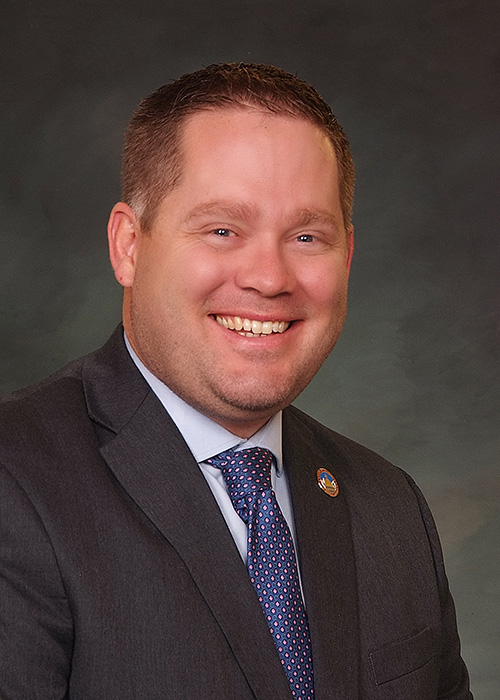
Sen. Kyle Mullica
Sponsored bills
Beginning in the 2020-21 budget year, the bill allows a school district, a board of cooperative services, a charter school, or the state charter school institute (local education provider) that operates a pathways in technology early college high school (p-tech school) to apply to the department of education (department) for reimbursement for the amount of tuition and fees and the costs of books and materials incurred in enrolling p-tech school students in postsecondary courses. The amount of the reimbursement is based on the average of the in-state tuition for local district colleges or community colleges, depending on the type of institution that provides the course, and is payable only for each successfully completed course credit hour. The state board of education must promulgate rules to implement the reimbursements. For the 2020-21 budget year and each budget year thereafter, the general assembly is directed to appropriate at least $2 million for the amount of the reimbursements. As part of the annual budget preparation process, the department will report the actual amount reimbursed and the amount expected to be reimbursed in the current and future budget years.(Note: This summary applies to this bill as introduced.)
The bill codifies a number of preventive health care services currently required to be covered by health insurance carriers pursuant to the federal "Patient Protection and Affordable Care Act" and adds them to the current list of services required to be covered by Colorado health insurance carriers, which services are not subject to policy deductibles, copayments, or coinsurance. The bill expands certain preventive health care services to include osteoporosis screening, urinary incontinence screening, and screening and treatment of a sexually transmitted infection (STI). Current law requires a health care provider or facility to perform a diagnostic exam for an STI and subsequently prescribe treatment for an STI at the request of a minor patient. The bill allows a health care provider to administer, dispense, or prescribe preventive measures or medications where applicable. The consent of a parent is not a prerequisite for a minor to receive preventive care, but a health care provider shall counsel the minor on the importance of bringing the minor's parent or legal guardian into the minor's confidence regarding the services. Current law requires the executive director of the department of health care policy and financing to authorize reimbursement for medical or diagnostic services provided by a certified family planning clinic. The bill defines family planning services and authorizes reimbursement for family planning services. The bill allows staffing by medical professionals to be accomplished through telemedicine. (Note: This summary applies to this bill as introduced.)
The bill provides that, for purposes of the "Workers' Compensation Act of Colorado", if an essential worker who works outside of the home contracts COVID-19, the contraction is: Presumed to have arisen out of and in the course of employment; and A compensable accident, injury, or occupational disease. An essential worker is considered to have contracted COVID-19 if the worker tests positive for the virus that causes COVID-19, is diagnosed with COVID-19 by a licensed physician, or has COVID-19 listed as the cause of death on the worker's death certificate. (Note: This summary applies to this bill as introduced.)
The bill creates the offense of unlawful storage of a firearm if a person stores a firearm in a manner that the person knows, or should know: That a juvenile can gain access to the firearm without the permission of the juvenile's parent or guardian; or A resident of the premises is ineligible to possess a firearm under state or federal law. Unlawful storage of a firearm is a class 2 misdemeanor. The bill requires licensed firearms dealers to provide with each firearm, at the time of a firearm sale or transfer, a locking device capable of securing the firearm. Transferring a firearm without a locking device is an unclassified misdemeanor punishable by a maximum $500 fine. The bill requires the state court administrator to annually report to the general assembly about the number of charges related to safe firearms storage, and the disposition of those charges. The bill requires the department of public health and environment to develop and implement a firearms storage education campaign to educate the public about the safe storage of firearms and state requirements related to firearms safety and storage. The bill creates the firearms safe storage education campaign fund (fund) in the state treasury. A voluntary contribution designation line for the fund will appear on the state individual income tax return form (form) for the 5 income tax years following the year that the executive director of the department of revenue certifies to the revisor of statutes that there is a space available on the form and the fund is next in the queue. (Note: This summary applies to this bill as introduced.)
The bill directs the department of health care policy and financing (state department), or a third party with whom the department contracts, to collect, analyze, and report prescription drug production cost data regarding the 20 highest-cost prescription drugs per course of therapy and the 20 highest-cost prescription drugs by volume that were purchased or paid for by the departments of corrections, human services, personnel, and health care policy and financing (departments) during the 2019-20 and future state fiscal years. Upon receipt of a list of the highest-cost prescription drugs purchased or paid for by the departments, the state department or its designated contractor, as applicable, is directed to request from the manufacturers of the drugs on the list information showing the basis for and components of the wholesale acquisition cost (WAC) of each drug on the list. The state department or its designated contractor, as applicable, is to analyze the data received from drug manufacturers and report its findings regarding the basis for the WAC for each prescription drug on the list, specifying the percentage of the WAC that is attributable to each component driving the WAC. The state department is required to provide an annual prescription drug price transparency report by December 1, 2021, and each December 1 thereafter to specified legislative committees. The state department and its designated contractor, as applicable, are required to maintain the confidentiality of any proprietary information received from a drug manufacturer, and that information is exempt from the "Colorado Open Records Act". The executive director of the state department is authorized to adopt rules as necessary to implement and administer the bill. A manufacturer that fails to report the required information is subject to a civil penalty of up to $10,000 per day. (Note: This summary applies to this bill as introduced.)
A central service technician (CST) is a person who decontaminates, inspects, assembles, packages, and sterilizes reusable medical instruments or devices in a hospital or ambulatory surgical center. The bill generally prohibits any individual from functioning as a CST unless the individual has successfully passed a nationally accredited exam and holds at least one of 2 professional credentials. The bill also generally prohibits hospitals and ambulatory surgical centers from employing a CST who does not satisfy these requirements. However, the new requirements do not apply to an individual who: Was employed as a CST in one or more hospitals or ambulatory surgical centers for a cumulative period of at least one year during the period beginning December 31, 2015, and ending December 31, 2020; Is employed as a CST by a hospital or ambulatory surgical center on December 31, 2020; and Remains continuously employed as a CST after December 31, 2020. Additionally, an individual who does not satisfy the new requirements may function as a CST in a hospital or ambulatory surgical center for up to 18 months so long as the individual continues to make a good-faith effort to satisfy the requirements during this time. A hospital or ambulatory surgical center may employ a CST who does not satisfy the new requirements if the CST qualifies for one of the described exceptions. At the request of an individual who was employed as a CST by a hospital or ambulatory surgical center, the hospital or ambulatory surgical center shall verify in writing the individual's dates of employment or the contract period during which the individual provided services. (Note: This summary applies to the reengrossed version of this bill as introduced in the second house.)
The bill requires the parent or legal guardian (parent) of a student who has been diagnosed with a seizure disorder, including epilepsy, (student) to submit a signed seizure action plan (plan) to the school if the student may need assistance with seizure-related care in a school setting. The parent is required to provide updated information to the plan when necessary. K-12 public schools are required to, and private schools are encouraged to, provide annual seizure-related training to school personnel who have direct contact with or supervise students who have a seizure disorder. (Note: This summary applies to this bill as introduced.)
The bill eliminates the ability for an exporter of fireworks licensee (exporter) to sell certain fireworks for transport in the purchaser's vehicle if the purchaser displays to the exporter a valid driver's license issued by a state other than Colorado and a valid vehicle registration showing the purchaser owns a vehicle in a state other than Colorado. The bill allows an exporter to sell certain fireworks for transport in the purchaser's vehicle if the purchaser displays to the exporter a valid driver's license issued by a jurisdiction other than Colorado and a valid wholesale or retail license number or resale license number regardless of the issuing state issued by a state or local authority located outside the state of Colorado. (Note: Italicized words indicate new material added to the original summary; dashes through words indicate deletions from the original summary.) (Note: This summary applies to the reengrossed version of this bill as introduced in the second house.)